Beyond the Glow: How Screen-Free STEM Toys Are Reshaping Childhood Learning
—
Introduction: The Digital Dilemma
In an era where toddlers swipe before they speak and preschoolers navigate tablets more adeptly than picture books, the term “screen time” has become a parental obsession. Yet while digital devices offer undeniable educational potential, a growing body of research warns of the cognitive and social costs of excessive screen exposure: diminished attention spans, reduced creative play, and a decline in hands-on problem-solving skills. Enter the quiet revolution of screen-free STEM toys—physical, tactile, and analog tools that teach science, technology, engineering, and mathematics without a single pixel. These toys are not a nostalgic retreat from modernity; they are a deliberate, evidence-based response to the need for deeper, more embodied learning. This article explores why screen-free STEM toys matter, what forms they take, how they foster real-world skills, and how parents and educators can choose them wisely.
—
1. The Science of Tangible Learning: Why Screens Fall Short
Embodied cognition and the power of touch
Human beings learn best when multiple senses are engaged simultaneously. Psychologists call this “embodied cognition”—the idea that our physical interactions with the world shape our mental models. When a child builds a bridge with wooden blocks, she feels the weight, tests the balance, and witnesses collapse. That failure is visceral, immediate, and instructive. A digital simulation of bridge building, by contrast, abstracts away friction, gravity, and material properties. The child clicks an icon and the bridge holds—or doesn’t—but the feedback loop lacks the kinaesthetic richness that cements understanding. Screen-free STEM toys restore this fundamental sensory connection.
Attention, patience, and the slow reward
Digital apps are designed to optimise engagement through rapid rewards, bright animations, and endless variation. This can train the brain to expect instant gratification, undermining the patience required for true problem-solving. Screen-free STEM toys—a marble run, a chemistry set, a gear construction kit—demand slower, iterative effort. A child must align the gears just so, adjust the angle of the ramp, or mix the exact ratio of baking soda to vinegar. The payoff may take minutes or hours, but it is earned, remembered, and internalised. Studies in developmental psychology indicate that such “slow learning” experiences build executive function, frustration tolerance, and metacognitive skills far more effectively than gamified apps.
Social interaction and language development
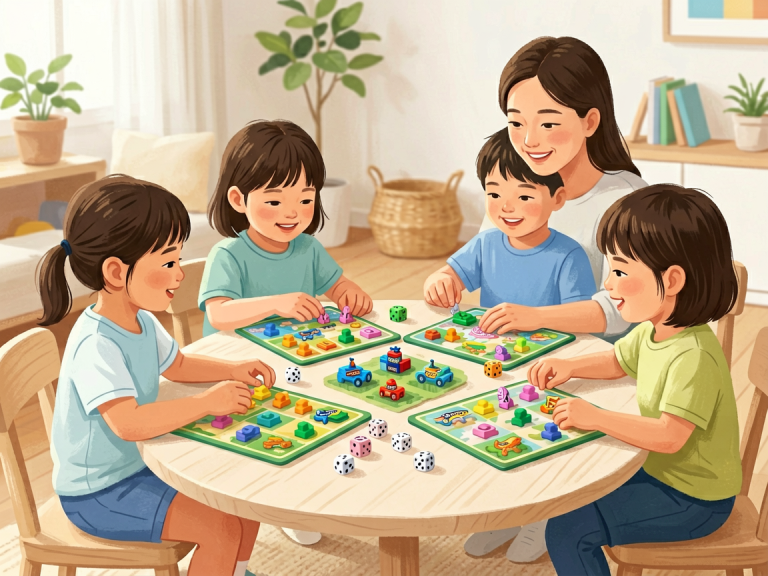
When children play with screen-based STEM toys, they typically play alone or in parallel, each absorbed in their own glowing rectangle. Screen-free STEM toys, conversely, invite collaboration. A child building a Rube Goldberg machine with a sibling must negotiate roles, explain ideas, and resolve conflicts. A group designing a catapult in a classroom must articulate hypotheses and coordinate actions. These interactions are rich in spoken language, turn-taking, and empathy—none of which can be replicated by even the most sophisticated artificial intelligence.
—
2. A Taxonomy of Screen-Free STEM Toys: From Blocks to Robots
Building and construction kits
The simplest and most enduring category: wooden blocks, magnetic tiles, interlocking plastic bricks, and architectural beams. Modern versions incorporate principles of structural engineering—Geometric shapes that fit only at specific angles, pieces that mimic trusses and arches, or sets that allow children to construct working pulleys and levers. Brands like Magna-Tiles, LEGO Technic, and Kapla planks provide open-ended exploration of geometry, balance, and load distribution. Unlike digital building games, these toys require hand-eye coordination, spatial reasoning, and the physics of real materials.
Mechanics and simple machines
Gears, pulleys, levers, and inclined planes are the building blocks of mechanical engineering. Toys such as the *Engino* or *K’NEX* sets allow children to construct everything from a working crane to a gear-driven car. By turning a crank and watching a series of gears transfer motion, a child internalises concepts of torque, speed ratio, and mechanical advantage. Some advanced kits include wheels and axles, springs, and even rudimentary hydraulic systems. These toys are not merely “play”—they are practical demonstrations of principles that later appear in physics textbooks.
Chemistry and physics experiment sets
Think chemistry sets with real test tubes, beakers, and safe but exciting reactions—crystals growing, volcanoes fizzing, pH indicators changing colour. Physics sets may include prism kits for light refraction, magnet sets for magnetic fields, or Bernoulli’s principle demonstrators with fans and balls. The key is that the child conducts the experiment herself, mixing, measuring, observing, and sometimes cleaning up the mess. The experiential learning is far more memorable than watching a video of the same reaction. Modern sets also emphasise safety and eco-friendly materials, ensuring that young scientists can explore without toxic substances.
Coding without computers: logic and sequencing toys
Screen-free coding toys are a rapidly growing subcategory. They teach computational thinking through physical tokens, cards, or blocks that represent commands. For example, *Botley the Coding Robot* is programmed by pressing buttons on a remote control—no screen required. *Cubetto* uses a wooden board and coloured blocks to direct a wooden robot. *Code-a-pillar* allows toddlers to rearrange segments representing forward, turn, and sound commands. These toys teach sequence, debugging, and cause-and-effect relationships exactly as screen-based coding apps do, but without the eyestrain, the distraction of animations, or the addictive reward loops. Moreover, they make coding tangible: a child can see the robot move in real space, which strengthens spatial-temporal reasoning.
Engineering challenges and robotics kits
For older children (ages 8 and up), kits like *Thames & Kosmos’s* engineering series or *Makeblock’s mBot* (which can be programmed via a physical blockly pad or Bluetooth from a tablet—but often a screen-free version exists) offer more complex projects. Some kits focus on specific topics like pneumatic systems, solar energy, or electricity. The assembly process itself is a lesson in following instructions, debugging, and perseverance. Once built, the child can test, modify, and improve the design—an iterative engineering cycle that mirrors professional practice.
—
3. Beyond Academics: The Hidden Benefits of Analog STEM Play
Resilience through constructive failure
One of the greatest gifts of screen-free STEM toys is that they teach failure as a friend. A bridge built from popsicle sticks collapses. A chemical reaction fails to fizz. A gear train jams. In the digital world, a child can simply restart the level. In the physical world, failure is messy, noisy, and final. The child must pick up the pieces, analyse what went wrong, and try again. This process builds what Stanford psychologist Carol Dweck calls a “growth mindset”—the belief that intelligence and skill can be developed through effort. Screen-free toys, because they are unreliable (wood warps, glue dries, gravity wins), force children to become comfortable with imperfection and persistence.
Creativity and divergent thinking
Screen-free STEM toys are inherently open-ended. A set of magnetic tiles can become a castle, a spaceship, a dinosaur, or a mathematical pattern. A chemistry set can be used to create an exploding volcano, to test which liquids are acidic, or to make a homemade lava lamp. There is no single “correct” outcome. This contrasts sharply with many digital STEM games, which often have a predetermined path or a limited set of solutions. Unstructured play with analog materials encourages divergent thinking—the ability to generate multiple solutions to a problem. This skill is critical for innovation and is notoriously difficult to cultivate in screen-based environments.
Physical activity and fine motor development
Building, assembling, pouring, and balancing require fine motor control. Manipulating small gears and screws strengthens the same muscles used for handwriting and tool use. While screen-based play often involves only finger swipes and taps, screen-free STEM toys require gripping, twisting, aligning, and applying pressure. For young children in particular, these activities are essential for developing proprioception and hand-eye coordination. Moreover, many STEM toys—like large building blocks or outdoor marble runs—encourage gross motor movement, combating the sedentary habits associated with screen time.
Screens as a context, not the content
It is worth noting that screen-free does not mean anti-screen. The best STEM education integrates both. But screen-free toys create a foundation of physical understanding that screens can later build upon. A child who has built a real catapult with rubber bands and spoons will understand mechanics viscerally; when she later encounters a physics simulation of projectile motion, she will connect the dots. The screen becomes a tool for abstraction, not a crutch for experience.
—
4. Choosing the Right Screen-Free STEM Toy: A Parent’s Guide
Match the toy to the child’s developmental stage
For toddlers (ages 2–4), focus on large, safe, and simple pieces. Wooden stacking blocks, magnetic shapes, and large peg boards. Avoid small parts that present choking hazards. At this age, cause and effect is the central lesson: “When I push this block, it falls.” For preschoolers (4–6), introduce basic gears, marble runs, and simple coding robots like Cubetto. The emphasis should be on open-ended building and pretend play combined with STEM concepts. For elementary-aged children (6–10), consider more complex construction kits, chemistry sets, and solar-powered models. For preteens and teens (10+), look for robotics kits (like Arduino starter kits with breadboards and LEDs but using physical components), advanced mechanics, or even computer-numerically controlled (CNC) cardboard cutters that are screen-dependent but can be used in conjunction with physical materials—though careful selection should minimise passive screen time.
Quality over quantity; durability and safety
Screen-free STEM toys often face more wear and tear than digital ones—dropped, thrown, chewed, stepped on. Invest in well-made materials: solid wood, non-toxic plastics, stainless steel components. Avoid toys with flimsy hinges or sharp edges. Check for certifications like ASTM (American Society for Testing and Materials) or EN71 (European safety standard). A good STEM toy should withstand hundreds of uses and provide open-ended possibilities.
Encourage tinkering, not following instructions
Some kits come with step-by-step blueprints. While it’s fine to start there, the real learning happens when the child deviates. A set that can only be assembled one way is not a STEM toy—it’s a puzzle. Look for sets that include extra pieces, encourage modifications, or include blank templates for the child to design their own projects. The best STEM toys are “loose parts” that can be combined with other toys—think recycled cardboard tubes, string, bottle caps, and rubber bands. A screen-free STEM toy should be a catalyst for invention, not a scripted performance.
Consider gender-neutral design
Unfortunately, many STEM toys are marketed with gendered colours and themes—pink for “princess engineering” or blue for “action builders.” Research shows that children of all genders benefit equally from hands-on STEM play. Choose toys with neutral colours, diverse characters on packaging, and themes that appeal to a wide range of interests (animals, nature, vehicles, architecture, etc.). Avoid sets that reinforce stereotypes. The goal is to foster curiosity, not to sort children into boxes.
Balance with outdoor and unstructured play
No toy, however brilliant, can replace the open-ended exploration of nature—digging in mud, building a fort from sticks, floating leaves in a puddle. Screen-free STEM toys are most effective when used as part of a diverse play diet that includes reading, imaginative play, art, and outdoor time. A child who spends two hours building a marble run and then goes outside to find real rocks and water currents is learning far more than a child who simply cycles through electronic toys.
—
5. The Future of Play: Why Screen-Free STEM Toys Are Here to Stay
As artificial intelligence becomes ever more adept at simulating reality, one might assume that physical toys would become obsolete. Yet the opposite is occurring. The global market for screen-free STEM toys is growing at a compound annual rate of over 8%, driven by parents who are increasingly aware of the dangers of early screen dependency. Schools are rediscovering the value of maker spaces stocked with cardboard, glue guns, and real tools. Toy manufacturers are innovating with new materials—biodegradable plastics, plant-based dyes, and modular components that can be endlessly reconfigured.
The screen-free movement does not reject technology; it insists that technology should serve human development, not replace it. A child who learns to code with a physical robot, who feels the resistance of a real lever, who smells the vinegar in a chemical reaction, develops a richer, more embodied understanding of the world than one who merely observes it through a pane of glass. These toys remind us that the most powerful computer of all is the human brain—and that it learns best when the hands are busy, the eyes are focused on three-dimensional reality, and the imagination is allowed to roam without the glow of a backlit screen.
In the end, screen-free STEM toys are not about rejecting the future. They are about ensuring that the next generation of scientists, engineers, and inventors does not lose touch with the raw, tactile, unpredictable joy of making things that actually work. They are about building not only machines, but also minds—minds that are curious, persistent, and deeply connected to the physical world they are learning to shape. And that is a goal worth playing for.