Beyond the Wrapping: The Transformative Power of Learning Through Play in Birthday Gifts
Every birthday party begins with the rustle of wrapping paper and the eager eyes of a child. Yet, once the excitement fades, many toys are quickly abandoned—consigned to the back of a closet or the bottom of a toy box. What if, instead of fleeting amusement, a birthday gift could plant the seeds of curiosity, creativity, and lifelong learning? The concept of "learning through play" offers precisely this possibility. By carefully selecting presents that blend fun with educational value, we give children more than just a moment of joy; we give them tools to explore, experiment, and grow. This article delves into the philosophy behind play-based learning, explores how to choose meaningful gifts, and highlights the lasting impact of such presents on a child’s development.
The Science of Playful Learning
To understand why learning through play is so powerful, we must first look at how children naturally interact with the world. Play is not merely a pastime—it is the brain’s preferred mode of discovery. Neuroscientific research shows that during play, children’s brains release dopamine, a neurotransmitter associated with motivation and pleasure. This chemical response enhances attention and memory, making lessons learned through play more durable than those delivered through rote instruction.
Moreover, play allows children to engage in what psychologist Lev Vygotsky called the "zone of proximal development"—the sweet spot where a task is challenging enough to stretch abilities but not so difficult that it becomes frustrating. A well-designed plaything provides just that: a scaffold for learning. For instance, building blocks encourage spatial reasoning and problem-solving; board games teach turn-taking and strategic thinking; art supplies foster creativity and fine motor skills. When a birthday gift is chosen with this principle in mind, it becomes a catalyst for cognitive, social, and emotional growth.
But the benefits go beyond academics. Through imaginative play, children practice empathy, negotiation, and conflict resolution. They learn to fail safely and try again, building resilience. As play expert Stuart Brown once said, "Play is the work of childhood." By giving a child a gift that invites active engagement, we honor their natural drive to learn and make that learning feel effortless.
Choosing Gifts That Spark Curiosity, Not Dependency
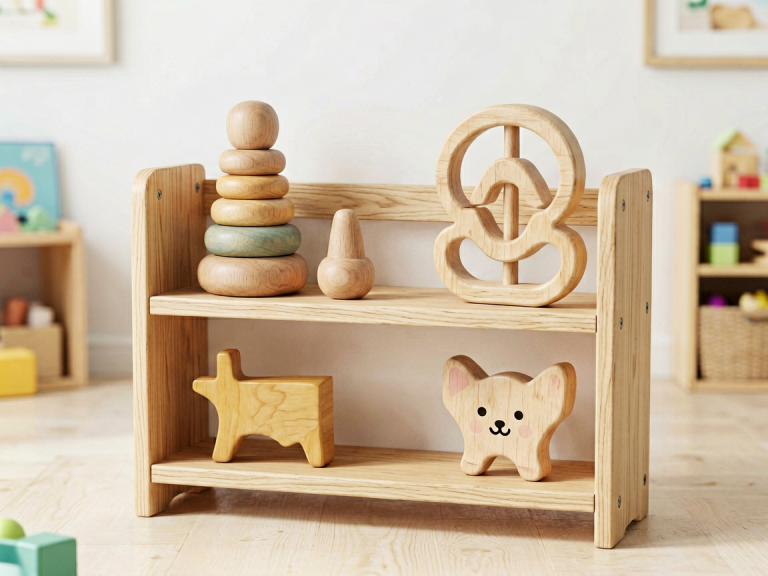
Not all toys labeled "educational" truly support learning through play. The key distinction lies in whether the gift promotes open-ended exploration or passive consumption. A flashy electronic toy that lights up and makes sounds when a button is pressed may hold a child’s attention briefly, but it often teaches a simple cause-and-effect relationship without inviting deeper thought. In contrast, a set of simple wooden blocks, a collection of natural objects, or a science experiment kit encourages the child to become the director of their own play.
When selecting a birthday gift focused on learning through play, consider these principles:
First, age-appropriateness. A gift that is too advanced may frustrate, while one that is too simple may bore. For toddlers, sensory toys that involve stacking, sorting, and matching are ideal. Preschoolers benefit from pretend-play sets (kitchen, doctor, or construction tools) that allow them to reenact real-life scenarios. School-age children thrive on strategy games, coding kits, or construction sets like LEGO Technic or magnetic tiles that require planning and persistence.
Second, interest alignment. A child who is fascinated by dinosaurs will learn more from a fossil-digging kit than from a generic puzzle. By tapping into a child’s existing passions, the gift becomes a vehicle for deeper knowledge. For example, a microscope set for a budding biologist, a high-quality telescope for a future astronomer, or a musical instrument for a little composer—all these honor the child’s curiosity and invite extended engagement.
Third, social potential. Learning through play is often enriched when shared. Gifts that require cooperation—such as a cooperative board game, a large-scale building set, or a craft project that can be done with siblings or friends—teach collaboration and communication. They transform the birthday party into a learning community, even after the cake is gone.
Age-Appropriate Play and Learning: A Practical Guide
To make the concept actionable, here is a breakdown of gift ideas across developmental stages, each chosen to maximize learning through play.
For Infants and Toddlers (0–3 years): At this stage, learning is sensory and motor-based. Look for gifts that stimulate all five senses: soft fabric books, textured balls, stacking cups, and simple shape sorters. These items help develop hand-eye coordination, cause-and-effect understanding, and object permanence. A pull-along animal toy encourages crawling and walking, while a set of nesting blocks introduces early concepts of size and order. Remember: the best gift for a toddler is one that invites them to touch, mouth, and manipulate—not one that does the work for them.
For Preschoolers (3–5 years): This is the golden age of imaginative play. Dress-up costumes, puppet theaters, and play kitchens allow children to mimic adult roles, which builds narrative thinking and emotional intelligence. Construction toys like DUPLO or magnetic tiles introduce basic engineering principles. Art supplies (washable paints, clay, safety scissors) foster creativity and fine-motor control. Puzzles with 12–24 pieces teach pattern recognition and patience. Additionally, simple board games that involve counting or color matching (e.g., "Candy Land" or "Hi Ho! Cherry-O") lay the groundwork for understanding rules and turn-taking.
For Early Elementary (6–9 years): As children enter school, their attention spans lengthen and reasoning skills grow. Gifts that combine technology with hands-on activity, such as beginner coding robots (like Botley or Code & Go Robot Mouse), teach logical sequencing without screens. Science kits—crystal growing, volcano eruptions, or simple circuits—satisfy the "why" questions of this age. Strategy games like "Blokus" or "Qwirkle" develop critical thinking, while advanced LEGO sets (based on specific models) improve following instructions and spatial visualization. Journaling or diary kits, complete with prompts and stickers, encourage literacy and self-expression.
For Tweens (10–12 years): Pre-teens crave autonomy and real-world relevance. Gifts that offer authentic challenges—such as a digital piano with learning apps, a chess set with strategy books, or a chemistry set with proper lab equipment—honor their growing sophistication. Subscription boxes for crafts, electronics, or engineering projects (like KiwiCo or Thames & Kosmos) provide ongoing learning. Collaborative strategy games like "Catan Junior" or "Ticket to Ride" require negotiation and planning. The goal is to provide a gift that feels "grown-up" yet still permits playful experimentation.
Long-Term Benefits of Play-Based Birthday Gifts
The impact of a well-chosen play-learning gift extends far beyond the birthday week. Children who regularly engage in self-directed, playful learning develop a growth mindset—they come to see challenges as opportunities rather than obstacles. They become more comfortable with ambiguity and more willing to take intellectual risks. Studies have shown that play-based learning in early childhood correlates with higher academic achievement in later years, particularly in STEM fields, because it builds foundational problem-solving skills.
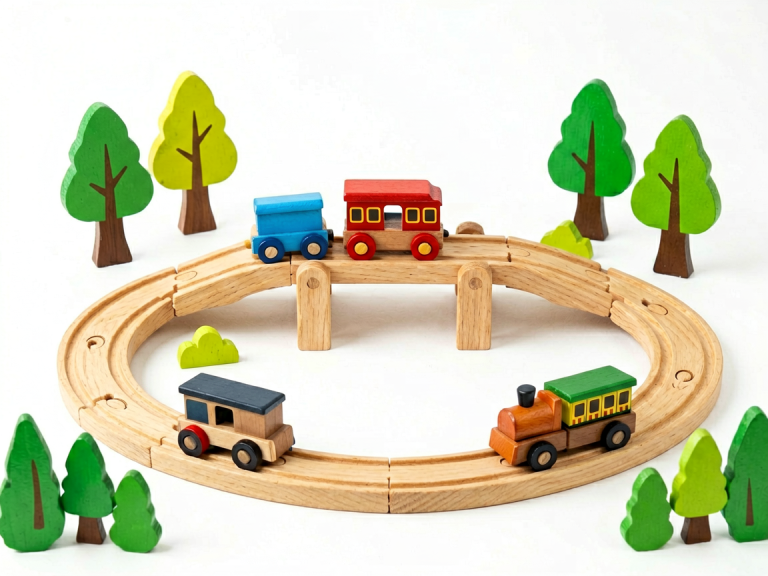
Furthermore, these gifts often create lasting memories. A wooden train set passed down through siblings, a rock collection started with a birthday geology kit, or a first guitar that sparked a lifelong passion—these objects become touchstones of childhood. They represent not just a present, but a relationship with learning that is joyful and personal. In a world increasingly dominated by screens and passive entertainment, a gift that invites active creation is a powerful counterbalance.
How to Encourage Playful Learning at Home
A birthday gift is only as effective as the environment that surrounds it. Parents and caregivers can amplify the educational potential of any present by fostering a "playful learning" mindset. This means stepping back to let the child lead, resisting the urge to correct or over-instruct, and celebrating the process rather than the product. When a child builds a wobbly tower of blocks, praise their effort and ask questions: "What would happen if you put the biggest block on the bottom?" Such questioning encourages critical thinking without breaking the flow of play.
It also helps to rotate toys. Instead of leaving every gift available at once, store some away and bring them out in rotation. This keeps the novelty alive and encourages deeper engagement with each item. Finally, model playful learning yourself. Build alongside your child, solve a puzzle together, or conduct a silly science experiment. Your enthusiasm is contagious.
Conclusion
The next time you search for a birthday gift, look beyond the flashy packaging or the latest trend. Ask yourself: Will this present invite the child to wonder, to test, to create? Will it stretch their mind and warm their heart? A gift rooted in learning through play is not just a toy; it is an invitation to a lifetime of curiosity. It whispers, "Here is the world—go explore." And that, perhaps, is the most precious gift any birthday can offer.