Nurturing Little Hands: Essential Fine Motor Activities for 4-Year-Olds
Introduction: The Magic of Small Movements
At four years old, a child’s world is expanding rapidly. They are no longer toddlers stumbling through daily routines, but preschoolers eager to explore, create, and assert their independence. One of the most critical yet often overlooked aspects of this developmental stage is the refinement of fine motor skills. Fine motor skills involve the coordination of small muscles in the hands, fingers, and wrists, working in concert with the eyes to perform precise movements. For a four-year-old, these skills are the foundation for writing, buttoning a shirt, using utensils, and countless other tasks that will shape their school readiness and self-confidence.
Why focus on fine motor activities at this specific age? Because the brains of four-year-olds are exceptionally plastic, meaning neural connections are being formed at a remarkable rate. Engaging them in purposeful, playful activities that challenge their hand-eye coordination, finger dexterity, and grip strength not only prepares them for academic tasks like handwriting but also fosters patience, concentration, and problem-solving abilities. In this article, we will explore a rich array of fine motor activities tailored to four-year-olds, each designed to be fun, accessible, and developmentally appropriate. Parents, caregivers, and educators will find practical ideas that can be easily integrated into daily routines, using common household items or simple materials. Let us dive into the world of tiny fingers and big discoveries.
Understanding Fine Motor Development at Age Four
Before jumping into activities, it is helpful to understand what a typical four-year-old can already do and what they are working toward. At this age, most children can:
- Use a fork and spoon with increasing control.
- Draw circles and lines, and some may begin to trace shapes or letters.
- Snip with scissors along a straight line.
- Build towers of small blocks.
- String large beads onto a lace.
- Button and unbutton large buttons.
- Turn pages of a book one at a time.
However, they may still struggle with tasks requiring sustained precision, such as cutting complex curves, writing letters within a defined space, or manipulating very small objects. The activities we recommend target the next steps: strengthening the intrinsic muscles of the hand, refining the pincer grip (thumb and forefinger), and improving bilateral coordination (using both hands together). Each activity is designed to be incremental—challenging enough to promote growth but not so difficult that it causes frustration.
Essential Fine Motor Activities for Four-Year-Olds
Playdough Creations and Tools
Playdough is a timeless classic for developing hand strength and dexterity. Four-year-olds are ready to move beyond simply squishing and rolling. Provide them with rolling pins, plastic knives, cookie cutters, and garlic presses. Encourage them to roll snakes, cut them into pieces, and form balls. The squeezing, pinching, and pressing motions work the small muscles of the palm and fingers. For an extra challenge, ask them to use a plastic knife to “cut” a playdough snake into identical segments, or to press small objects like buttons or beads into the dough to create patterns. You can also make homemade playdough with your child, involving them in measuring and mixing—a wonderful sensory and fine motor experience in itself.
Scooping, Pouring, and Transferring
These activities mimic real-life tasks and strengthen the hand’s grip and control. Fill a shallow bin with dried beans, rice, or small pasta. Give your child a small spoon, a scoop, or tweezers (child-safe). Ask them to transfer the material from one container to another. For example, use a tablespoon to move rice from a bowl into an empty ice cube tray. This requires careful aim, a steady hand, and the ability to adjust the angle of the spoon. For advanced play, introduce tweezers or tongs to pick up individual beans and drop them into a bottle with a narrow opening. This builds the pincer grip essential for holding a pencil. Another variation: use a small pitcher to pour water from one cup to another, focusing on not spilling. Add a little food coloring to the water for visual appeal.
Beading and Lacing
Stringing beads onto a lace or pipe cleaner is a classic fine motor exercise that enhances hand-eye coordination and bilateral coordination. For four-year-olds, start with beads that have large holes (about the size of a pencil) and a stiff lace with a tip. Show them how to pinch the bead with one hand while guiding the lace with the other. As they improve, introduce smaller beads (watch for choking hazards—always supervise) or wooden beads with varying shapes. You can also use dry pasta like penne or rigatoni, which are inexpensive and easy to grasp. Ask your child to create patterns: “red, blue, red, blue” or “circle, star, circle.” This adds a cognitive component that reinforces working memory and sequencing. Lacing cards (cardboard shapes with holes punched around the edges) are another excellent tool—threading a shoelace through the holes strengthens the same muscles used in sewing and writing.
Scissors Skills and Paper Craft
Cutting with scissors is a complex skill that requires both hand strength and coordination. Give your child child-safe scissors that actually cut (blunt tip but sharp enough to slice paper). Start with cutting straight lines drawn on a sheet of paper. Gradually move to zigzags, curves, and simple shapes like circles or squares. A fun activity: draw a spiral on a piece of paper and have your child cut along the line to create a “snake.” After cutting, the pieces can be used for a collage. Gluing small paper scraps onto a larger sheet using a glue stick also works the fingers—spreading glue, picking up bits of paper, and pressing them down. For an added challenge, ask your child to tear paper into small pieces first; tearing requires opposing thumb and finger movements that strengthen the intrinsic hand muscles.
Clothespin and Tongs Activities
Clothespins (the spring-loaded kind) are fantastic for building grip strength. Have your child open clothespins and attach them to the edge of a cardboard box, a paper plate, or a clothesline (a string tied between two chairs). You can color-code the pins: for instance, ask them to attach red pins to a red strip of paper, blue pins to a blue strip, and so on. This combines color recognition with fine motor work. Tongs or tweezers work similarly. Place a pile of cotton balls, pom-poms, or small erasers in one bowl. Using tongs, your child must transfer them to another bowl—one at a time. To make it a game, time them or see how many they can move in one minute. The squeezing and releasing motion mimics the action of holding and releasing a pencil.
Finger Painting and Sensory Bags
While finger painting might seem messy, it is invaluable for finger isolation and tactile exploration. Instead of using the whole hand, encourage your child to paint using only one finger at a time—draw circles, lines, or dots. This promotes the isolated finger movements needed for tasks like pointing and eventually typing. A less messy alternative: provide a sealed plastic bag filled with a small amount of paint (or even hair gel with glitter). Your child can press on the bag to “paint” without getting dirty. They can practice tracing letters or shapes on the bag’s surface. Another sensory fine motor activity: play with shaving cream on a tray. Squeeze, spread, and draw with a finger. The resistance of the cream builds finger strength.
Puzzles and Manipulatives
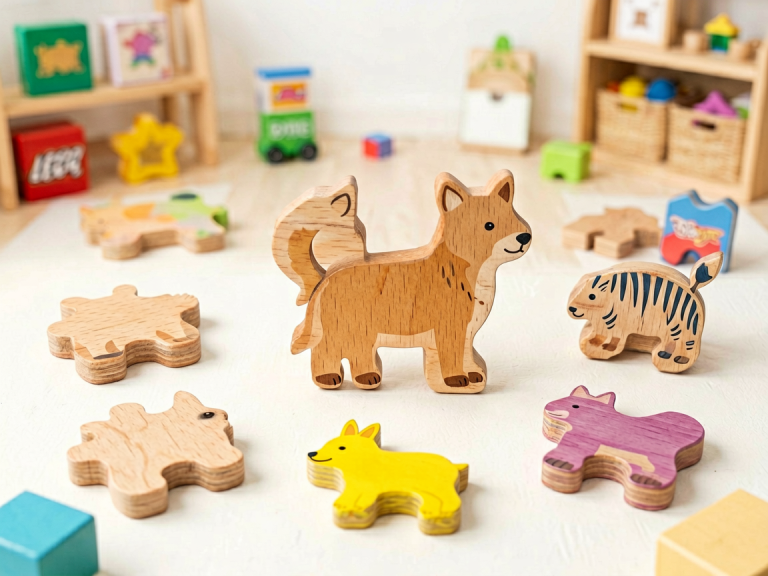
Jigsaw puzzles with large pieces are excellent for developing the pincer grip and spatial reasoning. Four-year-olds often enjoy puzzles with 12 to 24 pieces. Encourage them to pick up pieces using the thumb and forefinger, rotate them to fit, and press them into place. Similarly, building sets like Lego Duplo, Mega Bloks, or magnetic tiles require precise placement and pushing. For a homemade activity: take a piece of cardboard and draw a simple shape (like a house or car). Then cut that shape into several pieces to create a DIY puzzle. Have your child put it back together. Another manipulative toy: connecting links (plastic chains that snap together). Opening and closing the links exercises hand muscles and bilateral coordination.
Daily Living Skills: Dressing and Feeding
The best fine motor practice often happens during everyday routines. At four, children can be encouraged to dress themselves independently. Practice buttoning and unbuttoning large buttons on a shirt or jacket. Zippering is also a skill—show them how to align the zipper tab and pull up. Snaps and buckles on shoes or backpacks provide additional challenges. In the kitchen, let your child help prepare simple snacks. Spreading peanut butter (or cream cheese) on a cracker using a child-safe knife requires a controlled spreading motion. Peeling a banana or an orange (with supervision) uses peeling motions that strengthen fingers. Stirring a bowl of batter with a whisk or spoon works on wrist rotation and grip. These activities are meaningful because they give the child a sense of accomplishment and contribution.
Drawing, Coloring, and Tracing
While many four-year-olds love to scribble, you can introduce more structured drawing activities to refine their pencil grip. Provide thick crayons, markers, or triangular pencils that promote a tripod grip. Have them trace dotted lines, shapes, or letters. You can also create “pre-writing” worksheets: mazes, connect-the-dots, and path-following activities. For a more engaged experience, use a salt or sand tray. Pour a thin layer of salt in a shallow tray. Your child can use a finger or a stick to draw letters, numbers, or shapes in the salt. The tactile feedback is satisfying and helps reinforce motor memory. Encourage them to use a paintbrush to “write” in the sand, which requires a more controlled grip than a finger.
Creating a Supportive Environment
To maximize the benefits of these fine motor activities, consider the following tips:
- Consistency over intensity: Short, daily sessions (10–15 minutes) are more effective than long, infrequent ones.
- Follow the child’s lead: If your child is frustrated, step back. Offer a simpler version or a different activity. The goal is joyful engagement, not perfection.
- Model and talk: Describe what you are doing as you demonstrate. For example, “I am holding the scissors with my thumb in the small loop and my two fingers in the big loop. Now I am opening and closing.”
- Use both hands: Many fine motor tasks are one-handed, but encourage your child to use their non-dominant hand as a stabilizer. For instance, hold the paper with the non-dominant hand while cutting with the dominant hand.
- Celebrate effort: Praise the process, not just the outcome. “I saw how hard you worked to get that bead onto the string!” builds resilience and motivation.
Conclusion: Small Hands, Big Futures
Fine motor activities for four-year-olds are far more than mere busywork. They are the building blocks of independence, creativity, and academic preparedness. Every time a child squeezes a clothespin, snips a piece of paper, or threads a bead onto a string, they are wiring their brain for future success in writing, typing, art, and self-care. The beauty of these activities is that they require no expensive equipment—only a little time, attention, and a willingness to embrace a bit of mess. By incorporating a variety of playful tasks into daily life, parents and educators can nurture not only the hands but also the confidence and perseverance of young learners. So roll out that playdough, open those drawers of clothespins, and watch as your four-year-old’s fingers—and their world—grow stronger, more precise, and more capable each day.