Why Early Learning Toys Matter for Elementary-Age Children
In the bustling world of elementary education, where standardized tests and structured curricula often dominate the conversation, one essential element can easily be overlooked: the profound power of play. For children aged six to twelve, play is not merely a break from learning—it is learning. The toys they engage with during these formative years can shape cognitive development, social skills, emotional resilience, and even physical dexterity. However, not all toys are created equal. The right early learning toys for elementary kids are those that strike a delicate balance between fun and function, challenge and encouragement, independence and collaboration. This article explores why these toys matter, what types are most effective, how to choose them wisely, and the crucial roles that parents and educators play in guiding children’s playtime journeys. By the end, you will have a comprehensive understanding of how to turn play into a powerful engine for growth.
Why Early Learning Toys Matter for Elementary-Age Children
The elementary years are a period of remarkable brain development. Neuroscientific research shows that between ages six and twelve, the brain undergoes significant pruning and strengthening of neural connections, particularly in areas responsible for executive functions like planning, impulse control, and problem-solving. Early learning toys are specifically designed to harness this neuroplasticity. Unlike passive entertainment such as television or video games, these toys require active engagement, prompting children to think critically, experiment, and learn from failure.
For example, consider a set of building blocks with gears and pulleys. A child might attempt to construct a simple machine that lifts a small weight. The first attempt may fail because the gear ratio is wrong. The child must then troubleshoot, try a different configuration, and persist. This process strengthens not only spatial reasoning but also resilience—a life skill that no worksheet can teach. Moreover, toys that involve social interaction, such as cooperative board games or science kits for group experiments, teach negotiation, turn-taking, and empathy. These are the soft skills increasingly valued in the 21st-century workplace but often neglected in traditional academic settings.
Another critical reason early learning toys matter is their ability to make abstract concepts tangible. A child struggling with fractions can suddenly understand the concept when using a set of fraction circles that physically show how 1/4 + 1/4 equals 1/2. When mathematical ideas become hands-on, they move from memorization to deep comprehension. This is particularly vital for elementary kids, who are transitioning from concrete operational thinking to more abstract reasoning. Toys that bridge this gap can prevent the "math anxiety" that often sets in around third or fourth grade.
Finally, early learning toys offer a safe space for emotional regulation. Many elementary children face increasing academic and social pressures. A well-designed toy, such as a simple wooden puzzle or a set of magnetic tiles, can provide a calming, focused activity that reduces stress. In an era where childhood anxiety is on the rise, integrating such toys into daily routines can be a simple yet powerful mental health tool.
Key Types of Early Learning Toys and Their Benefits
To maximize developmental impact, it helps to categorize early learning toys by the skills they target. Below are five major categories, each with specific examples and evidence-based benefits.
1. STEM and Construction Toys
STEM (Science, Technology, Engineering, and Mathematics) toys are perhaps the most celebrated category for elementary kids. Construction sets like LEGO, K'Nex, or magnetic building tiles (e.g., Magna-Tiles) encourage spatial visualization, logical sequencing, and creativity. Advanced kits that include motors, lights, and sensors (such as those from littleBits or Snap Circuits) introduce basic electronics and engineering principles. Studies have shown that children who regularly engage with construction toys score higher on tests of spatial reasoning, which is a strong predictor of future success in STEM fields.
Beyond the obvious cognitive gains, these toys also teach iterative design. A child building a bridge from straws and tape will inevitably see it collapse. Instead of giving up, they analyze the failure, reinforce weak points, and try again. This "fail-forward" mentality is exactly what innovation demands. For teachers, incorporating such toys into classroom makerspaces can transform a dry lesson on forces into a lively engineering challenge.
2. Language and Literacy Toys
Reading readiness doesn’t end in kindergarten. For elementary kids, toys that promote vocabulary expansion, storytelling, and phonetic awareness remain crucial. Examples include magnetic word tiles, Scrabble Junior, Bananagrams, and story cubes (dice with pictures that prompt creative narratives). Older elementary children benefit from subscription boxes like KiwiCo's "Atlas Crate" that incorporate journaling and cultural exploration.
These toys do more than build language skills—they foster a love of words. When a child creates a silly sentence with magnetic words on the fridge, they are practicing syntax unconsciously. When they use story cubes to invent a tale about a dinosaur and a robot, they are learning narrative structure and cause-and-effect reasoning. Importantly, language toys that require reading aloud or collaborative storytelling also improve listening comprehension and public speaking confidence. In a world dominated by screens, any toy that encourages face-to-face verbal interaction is a win.
3. Logic and Strategy Games
Puzzles, board games, and card games that involve logic and strategy are excellent for developing executive functions. Games like chess, checkers, Blokus, Rush Hour, and Set teach planning, pattern recognition, and flexible thinking. Unlike many digital games, these analog toys demand patience and sustained attention—skills that are increasingly scarce in the age of TikTok.
Take the game "Rush Hour," where a player must slide cars and trucks out of a traffic jam. This requires working memory (remembering previous moves), inhibition (resisting the urge to make a random move), and cognitive flexibility (trying new approaches). Research from the University of California found that children who played logic-based board games for just 20 minutes a day showed improvements in their working memory and mathematical reasoning within two months. Teachers can use these games in "brain break" stations to re-energize students while still engaging their minds.
4. Creative and Artistic Toys
Creativity is not a luxury; it is a fundamental cognitive skill that fuels innovation across all disciplines. Toys that encourage open-ended art, music, and design include modeling clay, watercolor sets, origami paper, and musical instruments like xylophones or ukuleles. For elementary kids, more complex options like origami kits with geometric patterns or circuit paper (paper that lights up with conductive ink) blend art with STEM.
The benefits are multifaceted. First, artistic play reduces stress and improves mood by activating the parasympathetic nervous system. Second, it enhances fine motor skills, which are still developing in elementary years. Third, it promotes divergent thinking—the ability to generate many possible solutions to a problem. A child asked to create a sculpture from recycled materials must think beyond the obvious use of each item. This skill transfers directly to real-world problem-solving. Importantly, creative toys should be process-oriented rather than product-oriented. The goal is not a perfect picture but the joy of experimentation.
5. Social and Emotional Learning (SEL) Toys
A growing body of research emphasizes the importance of social-emotional learning in elementary education. Toys that specifically target SEL include cooperative board games (where players work together against a common challenge), emotion cards, role-playing kits (like a pretend grocery store or doctor's kit), and puppets for storytelling. Games such as "The Sneaky, Snacky Squirrel Game" teach turn-taking and patience, while "Feelings in a Flash" flashcards help children label and express emotions.
These toys are particularly valuable for children who struggle with social cues or anxiety. Through play, they can practice scenarios in a low-stakes environment. For instance, a child who finds it hard to share can practice negotiating turns over a popular toy during a cooperative game. SEL toys also benefit the whole class: teachers can use them during morning meetings to build community. The long-term payoff is substantial—children with strong SEL skills are more likely to succeed academically, have positive relationships, and experience better mental health later in life.
How to Choose the Right Toys for Different Developmental Stages
Not every toy works for every child. Age, interests, and developmental needs vary widely among elementary kids, from a bright-eyed first-grader to a more independent fifth-grader. Here is a rough guide to matching toys to stages.
For younger elementary children (ages 6–7), toys should emphasize concrete, hands-on exploration. They are still mastering fine motor control and basic logic. Good choices include large-piece puzzles, pattern blocks, simple board games with a single rule (e.g., "Candy Land"), and art supplies that are easy to manipulate (chunky crayons, finger paints). At this stage, social play is often parallel rather than fully cooperative, so toys that can be used individually or alongside a friend work best.
For middle elementary children (ages 8–9), cognitive abilities expand rapidly. They can handle multi-step instructions and enjoy more complex challenges. This is the sweet spot for construction kits with detailed blueprints, strategy games like checkers or "Qwirkle," and science kits that require following a procedure. Socially, they begin to thrive in cooperative games and team-based challenges. Interest-driven toys—such as a dinosaur excavation kit for a paleontology fan—become highly motivating.
For older elementary children (ages 10–12), abstract thinking emerges. They can grasp algebraic concepts, historical timelines, and sophisticated cause-and-effect relationships. Choose toys that blend complexity with autonomy: coding kits (e.g., "Sphero" or "Micro:bit"), advanced board games like "Settlers of Catan" or "Ticket to Ride," and creative tools like stop-motion animation kits. At this age, many children also crave peer interaction, so group-friendly toys or those that can be used in club-like settings are ideal. However, do not assume that all 11-year-olds want high-tech toys; many still find deep satisfaction in a challenging wooden puzzle or a set of mechanical gears.
Beyond age, consider your child's unique temperament. A highly active child might benefit from a magnetic building set that allows for large-scale structures they can move around. A more introverted child might prefer a detailed art journal or a solo logic puzzle. The best early learning toys are those that respect the child's pace and provide just the right amount of challenge—not so easy that they become bored, not so hard that they become frustrated.
The Role of Parents and Educators in Facilitating Learning Through Play
Even the most brilliant toy is inert without an engaged adult. Parents and educators serve as play facilitators, and their role can dramatically amplify a toy's educational value. Here are several key strategies.
First, adults should model a playful, curious attitude. When a parent sits down with a child to build a circuit kit and says, "I wonder what happens if we swap these two wires?" they are teaching scientific inquiry. Children learn attitudes from the adults around them; if play is treated as frivolous, they will internalize that message. Instead, frame play as important work. Use language like, "You are such a good engineer—you figured out how to balance the bridge!" This reinforces identity and motivation.
Second, ask open-ended questions that guide discovery without giving answers. When a child struggles with a tangram puzzle, instead of solving it for them, ask: "What shape do you need to fill that corner? How could you rotate the piece?" This encourages problem-solving and metacognition. For educators, incorporating a "play reflection" time after free play—where children share what they discovered or what was hard—solidifies learning.
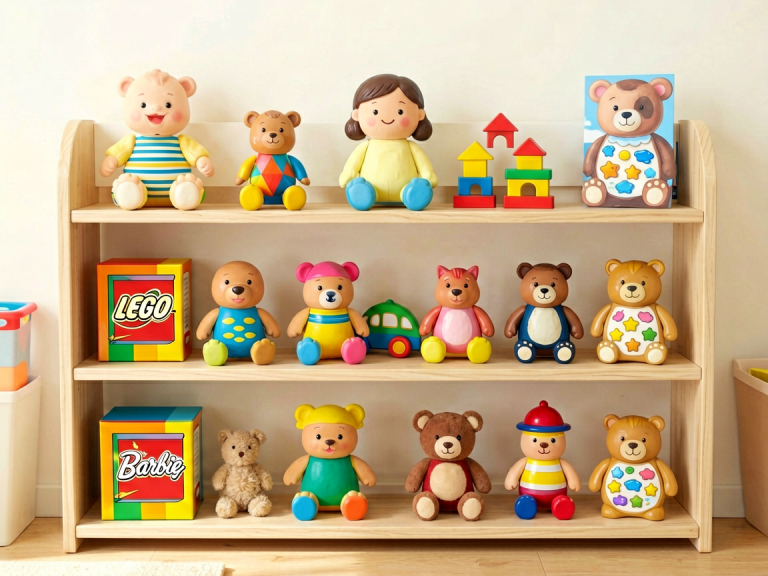
Third, create a rich environment with easy access to a variety of toys. A "toy rotation" system, where a subset of toys is available for a few weeks and then swapped, keeps novelty alive and prevents overwhelm. In classrooms, a designated "maker station" with construction toys, art supplies, and logic games invites spontaneous exploration. The physical space matters: low shelves, clear bins, and labeled containers empower children to choose and clean up independently, building executive function and responsibility.
Fourth, adults must resist the urge to overschedule. True deep play requires uninterrupted time. If a child spends 45 minutes carefully arranging magnetic tiles into a castle, they are building concentration and flow. Modern schedules that jump from soccer practice to tutoring to piano lessons leave little room for this kind of immersive play. Prioritize at least 30 to 60 minutes of unstructured playtime daily, with technology turned off.
Finally, both parents and educators should critically evaluate toys for inclusivity, safety, and non-stereotyping. A toy marketed as "for boys" that only features trucks and tools sends a harmful message to girls who love engineering. Look for toys that depict diverse characters, promote multiple ways to play, and avoid gender-coded packaging. The best toys are those that invite everyone to the table.
Conclusion
Early learning toys for elementary kids are far more than simple diversions. They are the architects of young minds, building cognitive frameworks, social bonds, and emotional strength one playful interaction at a time. From the satisfying click of a magnetic tile snapping into place to the triumphant cheer after a cooperative board game victory, these moments of play lay the foundation for a lifetime of learning, curiosity, and resilience.
As parents, educators, and caregivers, our challenge is not to find the "perfect" toy—there is no such thing—but to curate a diverse collection of open-ended, skill-targeted, and emotionally safe playthings. We must also step back at times, allowing children to lead their own explorations, while stepping in when guidance is needed. In doing so, we honor the truth that childhood is not a race to be won but a garden to be tended. The seeds we plant through thoughtful play will grow into the innovators, collaborators, and compassionate leaders of tomorrow.
So next time you see a child deeply engaged with a set of building blocks or a strategy game, know that you are witnessing something profound: the beautiful, messy, essential work of learning through play.