Boosting Language Skills: Creative Activities for Elementary School Kids
Introduction
Language development is one of the most critical foundations of a child’s academic and social success. For elementary school children, the ability to express thoughts clearly, understand others, and build a rich vocabulary directly influences reading comprehension, writing ability, and interpersonal communication. While formal classroom instruction plays a role, the most powerful language gains often come through engaging, hands-on activities that make learning feel like play. This article explores a variety of practical and enjoyable activities designed to enhance language development in elementary school children. Each activity targets different aspects of language—listening, speaking, reading, writing, and vocabulary—while keeping children motivated and curious. Parents, teachers, and caregivers can easily adapt these ideas for home, classroom, or afterschool settings.
—
Storytelling and Discussion Circles
One of the most effective ways to foster language development is through storytelling. Children naturally love stories, and when they are actively involved in creating or retelling them, their language skills flourish. A storytelling circle can be as simple as gathering a small group of children and taking turns adding sentences to a collaborative story. For example, one child starts with “Once upon a time, a little rabbit found a magical key,” and the next child continues the plot. This activity encourages creative thinking, narrative structure, and the use of descriptive language. It also requires children to listen carefully to each other, building comprehension and sequential thinking.
Discussion circles go a step further by prompting children to talk about a story they have heard or read. After reading a short picture book, ask open-ended questions such as, “Why do you think the main character made that choice?” or “How would you have solved the problem differently?” Such questions push children to articulate their reasoning, use cause-and-effect language, and consider multiple perspectives. For older elementary kids, you can introduce a “question jar” filled with prompts like “What was the most surprising moment in the story?” or “If you could change one thing in the book, what would it be?” The key is to create a safe, non-judgmental environment where every child feels comfortable speaking. Over time, these circles expand vocabulary, improve sentence complexity, and boost confidence in oral expression.
—
Role‑Playing and Dramatic Play
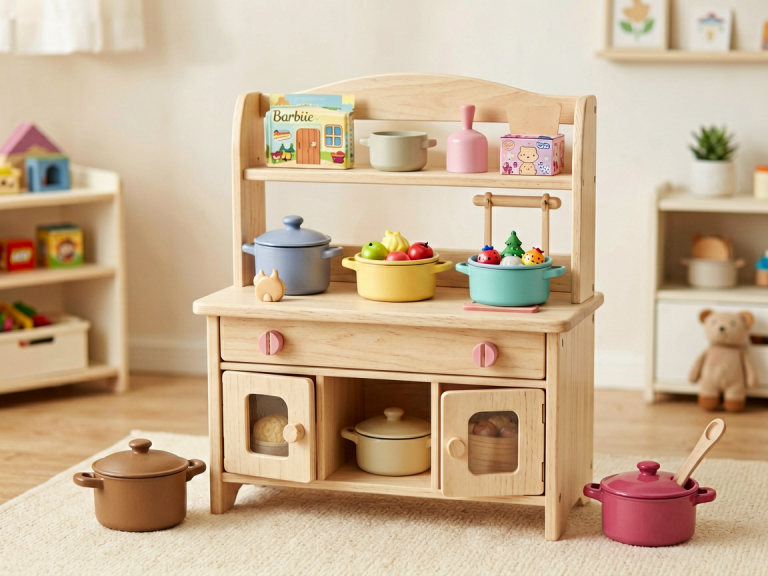
Young children learn language best when they are immersed in meaningful contexts, and role‑playing provides exactly that. Whether it is pretending to be a doctor, a shopkeeper, a chef, or an astronaut, dramatic play forces children to use specific vocabulary and negotiate meaning with peers. Set up a simple “pretend grocery store” with empty food boxes, a toy cash register, and play money. Children take turns being the cashier and the customer. The cashier might say, “That will be three dollars. Would you like a bag?” while the customer responds, “Yes, please, and can I have a receipt?” This real‑world language practice is natural and repetitive, reinforcing sentence patterns and social conventions of communication.
For older elementary students, more structured role‑plays—such as acting out a historical event or a scene from a book—help them practice formal and informal registers. Assign roles and give each child a line or a prompt. For instance, if studying the solar system, one child can be the Sun and another can be Earth, engaging in a dialogue about orbits and distance. Teachers can also use “hot seating,” where one child sits in a chair as a character from a story, and the rest of the class asks questions. The child must answer in character, using the character’s voice and vocabulary. This not only improves language fluency but also teaches empathy and perspective‑taking.
—
Word Games and Vocabulary Building
Vocabulary expansion is a cornerstone of language development, and games turn what could be a dry memorization task into an exciting challenge. One classic activity is “Word Bingo.” Create bingo cards with vocabulary words (e.g., “enormous,” “giggle,” “fragile”) and call out definitions or sentences. Children mark the corresponding word. This reinforces word meanings and listening skills. Another popular game is “I Spy” with a language twist. Instead of just colors, play “I spy with my little eye something that starts with the letter ‘S’” or “something that is a synonym for ‘happy’.” This stretches children’s mental lexicon and phonetic awareness.
For slightly older kids, “Category Brainstorming” works wonders. Choose a category like “things you might find in a kitchen” and give children two minutes to list as many items as possible, but with a rule: no repeating words already used by others. This pushes them to retrieve less common vocabulary (e.g., “colander,” “whisk,” “grater”). You can also play “Word Association Chains,” where one child says a word, and the next says a word that is somehow related, explaining the connection. For instance, “dog” → “puppy” (same animal, younger version), then “puppy” → “collar” (something a puppy wears). Each turn requires verbal reasoning and vocabulary recall, making it both a language and logic exercise.
—
Writing Workshops and Journaling
Writing is an essential component of language development because it allows children to organize their thoughts, experiment with sentence structure, and practice spelling and grammar in a low‑pressure context. A “Writing Workshop” approach gives children choice and ownership. Provide a variety of prompts, such as “Write a letter to your future self,” “Describe your perfect day,” or “Invent a new animal and explain how it survives.” Let children choose what they want to write about and encourage them to illustrate their work. After writing, have a “share and celebrate” time where children read their pieces aloud to a partner or small group. This builds both writing and oral presentation skills.
Journaling can be a daily or weekly habit. For younger children, a “draw and write” journal works well: they draw a picture of something they did, then write a sentence or two about it. For older children, prompt them to reflect on questions like “What was the most interesting thing you learned today?” or “Write about a time you felt proud.” To make it collaborative, try a “Dialogue Journal.” The child writes an entry, and a parent or teacher responds in writing, asking follow‑up questions or sharing their own thoughts. This creates a written conversation that models correct writing and pushes the child to respond in turn. Over time, both vocabulary and writing fluency improve dramatically.
—
Reading Buddies and Shared Reading
Reading aloud is one of the most powerful language‑building activities. But when children read with a buddy—either an adult or a peer—the experience becomes interactive and social. Set up a “Reading Buddy” program where an older elementary student reads with a younger one. The older child practices fluency and expression while modeling good reading habits; the younger child hears rich language and can ask questions. Alternatively, pair children of the same age, taking turns reading pages aloud. After each page, the listener can summarize what happened or predict what will come next, which strengthens comprehension and expressive language.
Shared reading with an adult is equally valuable. Choose a book slightly above the child’s independent reading level. Read together, stopping periodically to discuss new words, interesting phrases, or plot points. Point out that authors often use “juicy words” (like “sprinted” instead of “ran”) and ask the child what those words make them imagine. This explicit instruction in vocabulary and literary devices builds a deeper understanding of language. You can also use “Echo Reading”: the adult reads a sentence, and the child repeats it, mimicking the rhythm and intonation. This helps with syntax, pronunciation, and confidence. For variety, try “Reader’s Theatre,” where children read scripts with expression, practicing dialogue and character voices.
—
Songs, Rhymes, and Chants
Music and rhythm are natural allies of language learning. Songs and rhymes help children internalize sound patterns, word stress, and sentence rhythms without conscious effort. For elementary kids, classic nursery rhymes, folk songs, and even catchy pop songs with clear lyrics provide excellent material. Sing along together, and then ask children to change some words to create new verses. For example, take the song “Twinkle, Twinkle, Little Star” and replace “star” with “moon” and adjust the rest of the verse: “Twinkle, twinkle, little moon, / How I wonder where you’ll swoon.” This activity develops phonological awareness and creative language use.
Chants are especially effective for practicing grammar patterns. Create a chant for irregular verbs: “Go, went, gone / See, saw, seen / Take, took, taken / Now you know what I mean!” Children clap or stomp to the beat while chanting. Another idea is “Call and Response” chants, where the leader says a phrase and the group echoes it with a slight variation. For instance:
Leader: “I see a cat.”
Group: “I see a cat, a furry cat.”
Leader: “I see a dog.”
Group: “I see a dog, a happy dog.”
This reinforces sentence expansion and descriptive adjectives. The joy of music and movement reduces anxiety and makes repetition feel like play, leading to better retention.
—
Descriptive Language Activities
Helping children become more precise and vivid in their language is a key goal of language development. Descriptive activities challenge them to notice details and translate observations into words. One simple but powerful game is “Mystery Object.” Place an object inside a bag or box. A child reaches in without looking, feels the object, and describes it using as many adjectives as possible: “It’s smooth, cold, round, and about the size of a marble.” The other children guess what it is. This builds tactile vocabulary and encourages the use of sensory words. For a more advanced version, use two similar objects (e.g., an apple and a tomato) and have children describe the differences.
Another favorite is “Partner Drawing.” Pair children back‑to‑back. One child has a simple picture (e.g., a house with a tree and a sun), and the other has a blank paper and pencil. The first child describes the picture step‑by‑step without naming the objects directly. For example, “Draw a large square at the bottom center. Above it, draw a triangle. On the left side of the square, draw a tall rectangle with a small circle on top.” The partner draws based only on the verbal instructions. Afterward, compare the original and the drawn version. This activity forces precise vocabulary (shapes, sizes, positions) and careful listening. It also shows children how clear language prevents misunderstandings.
—
Conclusion
Language development in elementary school children is not a passive process—it thrives on active, engaging experiences that connect words to real life. The activities described above—storytelling circles, role‑play, word games, writing workshops, reading buddies, songs, and descriptive games—each contribute to different facets of language growth, from vocabulary and grammar to fluency and comprehension. What makes these activities particularly effective is their interactive nature: children talk, listen, think, and create together. Parents and educators can mix and match these ideas according to children’s interests and developmental levels. Best of all, these activities require no expensive materials—just time, creativity, and a willingness to play with language. By weaving such experiences into daily routines, we give children the tools they need to become confident, articulate communicators for life.