Building Tiny Fingers: Playful Activities to Enhance Fine Motor Skills in Babies
From the moment a newborn curls their tiny hand around your finger, the journey of fine motor development begins. These small, precise movements—grasping, pinching, twisting, and releasing—form the foundation for everything from self-feeding to writing. As parents and caregivers, we can support this critical growth through intentional, joyful play. Below, I will explore a rich variety of play activities designed to strengthen babies’ fine motor skills, organized by developmental stages, with clear explanations of how each activity nurtures those tiny, growing fingers.
Why Fine Motor Skills Matter
Fine motor skills refer to the coordination of small muscles in the hands, fingers, and wrists, often in conjunction with the eyes. For babies, these skills are not just about manual dexterity; they are deeply tied to cognitive development, problem-solving, and eventual independence. When a baby learns to pick up a single cheerio, they are simultaneously practicing hand-eye coordination, spatial awareness, and the pincer grasp—a milestone that later enables them to hold a pencil. Engaging in purposeful play activities from birth through toddlerhood creates neural pathways that support these abilities. Moreover, these activities are bonding moments, filled with laughter, discovery, and the simple joy of cause and effect.
Activities for Newborns to 3 Months: Reflexive Grasping and Sensory Awakening
At this earliest stage, babies have a reflexive grasp—they will automatically close their fingers around anything placed in their palm. However, they cannot yet release objects on purpose. Our goal here is to stimulate their sense of touch and begin building awareness of their own hands.
Texture Exploration with Soft Fabric Strips
Cut several small strips of different fabrics: velvet, fleece, corduroy, silk, and cotton. Gently stroke each fabric across your baby’s open palm, the back of their hand, and their fingers. Describe the sensation in a calm, sing-song voice: “Oh, this velvet is so soft and smooth. Now feel the bumpy corduroy.” This activity encourages tactile discrimination and, as your baby instinctively grasps the fabric, they practice that reflexive squeeze. Over time, they will begin to hold onto the fabric for longer periods, strengthening the tiny muscles in their hands.
Rattle Holding and Shaking
Choose a lightweight, easy-to-grasp rattle with a slim handle. Place the handle into your baby’s palm and let their fingers curl around it. Gently jiggle the rattle to produce sound. Even though your baby cannot yet shake it intentionally, they will enjoy the auditory feedback. As they bat at the rattle with their arms, they start connecting movement with sound. This early cause-and-effect learning is the precursor to more deliberate fine motor actions. Always supervise to ensure the rattle is secure and free of small parts.
Activities for 3 to 6 Months: Reaching, Batting, and Beginning Grasp
During these months, babies transition from reflexive to voluntary grasping. They start reaching for objects, batting at dangling toys, and bringing items to their mouth—a primary way they explore. The following activities target these emerging skills.
Tummy Time with Hanging Toys
Place your baby on a soft mat with an activity gym or a simple suspended toy bar. Hang lightweight, visually stimulating toys just within their reach—soft rings, crinkly fabric shapes, a small mirror. As your baby lies on their tummy, they will try to swipe at the toys. Each swipe strengthens their shoulder, arm, and hand muscles. The effort to make contact with the toy refines their hand-eye coordination. Encourage them by gently guiding their hand toward the toy, then letting them bat it on their own. Celebrate every tiny success with praise.
Easy-to-Grasp Soft Blocks
Offer your baby soft, fabric blocks (about 3-4 inches square) with varied textures. Some blocks have hidden rattles or crinkle paper inside. Place the block in front of your baby while they are seated with support (or lying on their back). They will likely reach for it with both hands, then bring it to their mouth. The act of holding the block, transferring it from one hand to the other (even clumsily), and squeezing it encourages the development of palmar grasp—where the whole hand closes around an object. Rotate blocks with different colors and sounds to maintain interest.
Activities for 6 to 9 Months: The Pincer Grasp Emerges
This is an exciting period because babies begin to use the thumb and index finger in a pincer-like motion. They also learn to release objects voluntarily (often by dropping them repeatedly, much to your chagrin). These activities are designed to refine that pincer grasp and encourage intentional release.
Finger Foods for Self-Feeding
Once your pediatrician gives the green light for solids (around 6 months), introduce soft, easily dissolvable finger foods such as small pieces of ripe banana, steamed carrot sticks, or low-sugar puffs. Place a few pieces on a high chair tray and let your baby pick them up. The size and shape encourage them to use their thumb and forefinger. Do not worry about the mess; this is a learning process. Your baby will practice scooping, poking, and eventually pinching. Each successful pick-up builds neural connections. For bonus fine motor work, offer foods of different shapes—like small O-shaped cereal or tiny strips of avocado.
Drop-and-Discover Containers
Provide a small, open plastic container (like a yogurt cup) and a few large, safe objects such as wooden rings or plastic bottle caps (large enough not to be a choking hazard). Show your baby how to drop an object into the container. Then let them try. At first, they may simply put the object close to the container and let go, missing the target. That is okay. Over time, they will learn to release the object precisely. This activity practices voluntary release, hand-eye coordination, and the pincer grasp. You can also use a container with a hole in the lid (like a small treasure basket) for more challenge.
Activities for 9 to 12 Months: Precision and Purposeful Play
By this age, babies can manipulate objects with increasing control. They begin to stack, turn pages, and imitate simple actions. Their fine motor play becomes more intentional and goal-oriented.
Stacking and Nesting Cups
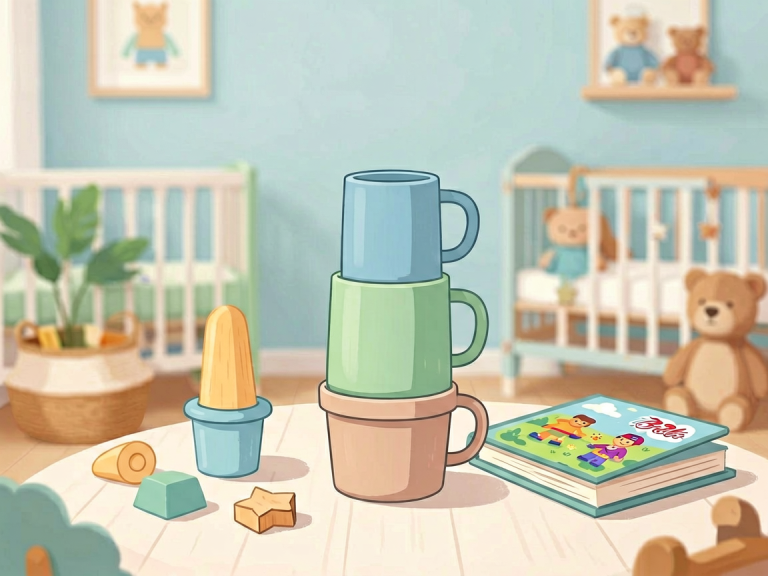
A set of brightly colored plastic cups that nest inside each other is a classic fine motor tool. Show your baby how to stack one cup on top of another. They will likely try to put cups inside each other first, which is also valuable. The act of aligning the cups and placing them requires careful hand-eye coordination and controlled wrist rotation. Stacking develops bilateral coordination—using both hands together. Encourage your baby to knock the tower down too; the cause-and-effect delight is wonderful motivation to try again.
Simple Puzzles with Large Knobs
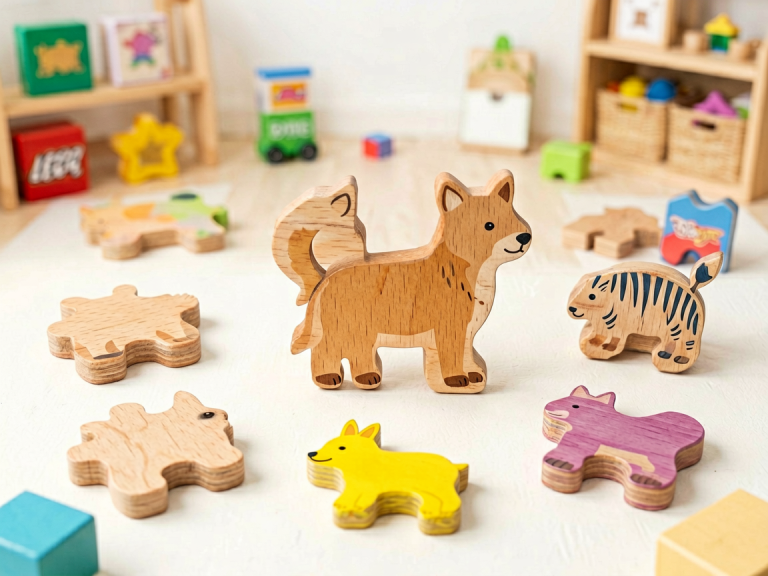
Introduce a wooden puzzle with 3 to 4 large pieces, each with a knob for gripping. Show your baby how to lift a piece out of its slot. Then guide their hand to replace it. The large knob encourages a tripod grasp (thumb, index, and middle finger), which is a precursor to holding a pencil. Your baby will learn to match shapes and rotate their wrist to fit the piece into the correct orientation. Start with puzzles that have animal shapes or familiar objects to maintain interest. Be patient; the process of trial and error is exactly how fine motor skills advance.
Tearing and Crinkling Paper
Give your baby a sheet of tissue paper, wax paper, or even an old newspaper. Show them how to crinkle it up and then tear it. The resistance of the paper provides excellent finger strengthening. Crinkling requires squeezing and twisting motions. Tearing involves a lateral pinch and pulling. Supervise closely to prevent mouthing large pieces of paper, but a small amount of crumpled paper is generally safe if baby mouths it (avoid glossy or printed paper that may have ink). This activity also provides wonderful sensory feedback through sound and texture.
Activities for 12 to 18 Months: Advanced Manipulation and Tool Use
As babies become toddlers, their fine motor abilities explode. They can now use simple tools, thread objects, and engage in more complex creative play. These activities build on earlier skills and prepare them for preschool tasks.
Crayon Scribbling and Stamping
Provide chunky, non-toxic crayons (the egg-shaped or triangular ones are easier for small hands to hold). Set out large pieces of paper and let your toddler scribble freely. They will likely hold the crayon in a fist at first, but encourage them to use their fingertips. Even scribbling requires wrist movement and finger pressure. For variation, give them a large, easy-grip stamp with a foam shape. Dipping the stamp in washable ink and pressing it onto paper practices controlled wrist and finger movements. These activities are foundational for later writing.
Stringing Large Beads or Pasta
Using a shoelace or a thick piece of yarn with a knot at one end, offer your child large, hollow beads (like wooden beads with holes at least 1/2 inch in diameter). Show them how to thread the bead onto the string. This activity demands bilateral coordination (one hand holding the string, the other guiding the bead), pincer grasp, and visual targeting. If you do not have beads, use large tube-shaped pasta like ziti. Dye the pasta with food coloring for extra appeal. Expect many dropped beads; the repetition is part of building neural pathways.
Play Dough Exploration
Homemade or store-bought, non-toxic play dough is a fine motor treasure. Let your toddler squeeze, roll, flatten, and poke the dough. Provide plastic knives (safe for cutting dough), small rolling pins, or even cookie cutters. Squeezing the dough strengthens the intrinsic hand muscles. Poking holes or making “snakes” requires refined finger isolation. Rolling a ball between both palms uses cooperative hand movements. Adding small items like beads or buttons (with supervision) allows your child to practice embedding them into the dough using a precise pinch.
Safety Tips and Final Thoughts
While encouraging fine motor play, always prioritize safety. Use only age-appropriate items that are free of small parts (choking hazard rule: nothing that can fit through a toilet paper tube). Supervise all activities, especially those involving food, paper, or small objects. Wash hands after play dough or messy foods. Rotate toys regularly to keep interest high, but do not overwhelm your baby with too many options at once—two or three activities per session is ideal.
Remember that every baby develops at their own pace. Some babies will master the pincer grasp at 7 months; others may take until 9 months. What matters most is the consistent opportunity to practice. These play activities are not drills or tests; they are moments of connection and discovery. As you sit on the floor with your baby, watching their face light up when they finally pick up that tiny piece of cereal or stack a cup all by themselves, you are not just building fine motor skills. You are building confidence, curiosity, and the joyful foundation of a lifelong learner. So let the mess happen, celebrate the dropped toys, and cherish each small, determined grasp of those perfectly imperfect little hands.