Building Young Minds: The Transformative Role of Early Science Toys for Preschoolers
Introduction
The preschool years—typically ages three to five—are a period of extraordinary cognitive, social, and emotional growth. During this window, children’s brains are forming neural connections at a remarkable rate, driven by curiosity and hands-on exploration. While traditional toys like dolls, blocks, and puzzles have long been staples of early childhood, a new category has emerged as both powerful and indispensable: early science toys. These are not miniature microscopes or chemistry sets designed for older children; rather, they are thoughtfully crafted playthings that introduce foundational concepts of physics, biology, engineering, and observation through safe, age-appropriate interaction. The value of such toys extends far beyond entertainment. They cultivate a mindset of inquiry, build vocabulary related to cause and effect, and lay the groundwork for later STEM education. This article explores why early science toys matter, what types are most effective, and how parents and educators can integrate them meaningfully into a preschooler’s daily life.
The Cognitive and Developmental Foundations of Science Play
Science toys for preschoolers are built on the principle that young children learn best through concrete, sensory experiences rather than abstract explanations. When a toddler pours water from one cup to another, they are intuitively exploring volume and conservation. When a preschooler stacks magnetic tiles, they are engaging with magnetism, balance, and geometry. The cognitive benefits are threefold. First, these toys promote *executive function skills*—working memory, flexible thinking, and self-control—as children plan a ramp for a ball, adjust a tower before it falls, or predict what happens when they mix colored water. Second, they foster *language development*. Descriptive words such as “float,” “sink,” “heavy,” “light,” “transparent,” and “opaque” become part of a child’s active vocabulary through repeated play. Third, and perhaps most importantly, early science toys normalize *failure as a learning tool*. A block tower that collapses is not a mistake but an invitation to rebuild differently. This resilience and iterative thinking are core to scientific reasoning.
Types of Early Science Toys That Deliver Real Value
Not all toys labeled “educational” are created equal. The most effective early science toys share common characteristics: open-endedness, sensory richness, and opportunities for adult-child interaction. Below are several categories with proven benefits.
*Water and Sand Play Tables*
Water tables and sand tables are perhaps the original science toys. They allow preschoolers to experiment with fluid dynamics, displacement, and material properties. Adding simple tools like scoops, funnels, sieves, and water wheels introduces concepts of flow, pressure, and cause-and-effect. Children immediately observe that a wide funnel fills a container faster than a narrow one—a concrete lesson in rate and volume. Sand, when wet, changes its structural properties, offering a natural introduction to states of matter.
*Magnetic Building Sets*
High-quality magnetic tiles (such as Magna-Tiles or Magformers) are a staple in many preschool classrooms. They enable children to build 2D and 3D structures while exploring magnetic attraction and repulsion. The simple act of connecting two tiles with a satisfying “click” demonstrates polarity. When a child creates a cube and then pushes on one side to collapse it, they learn about structural stability. These sets also support symmetry, counting, and pattern recognition.
*Simple Machines and Construction Kits*
Preschoolers can grasp the basic function of levers, pulleys, and inclined planes long before they learn the technical terms. Toy sets that include a simple lever (like a plastic seesaw with adjustable fulcrum), a toy crane with a pulley, or a set of interlocking gears offer hands-on exposure to mechanical advantage. Watching a small gear turn a large gear at a different speed is a vivid lesson in ratios. Construction kits with large, chunky pieces—like Duplo or wooden unit blocks—also serve as science toys when children build bridges and test how much weight they can hold.
*Living Things Observation Kits*
Biology for preschoolers means direct observation of life cycles. Butterfly gardens, ant farms, and seed-growing kits (with clear plastic cups to watch root growth) provide an intimate look at living systems. Children learn that caterpillars eat leaves, spin a chrysalis, and emerge as butterflies—a process that teaches patience and the passage of time. Similarly, a simple worm bin (safely encased) lets children observe decomposition, soil aeration, and the role of decomposers. Such experiences cultivate empathy and environmental awareness.
*Light and Color Exploration Tools*
Light tables, translucent geometric shapes, and color-mixing paddles are superb for introducing optics. On a light table, a child can place a red filter over a blue shape and see it turn purple. This tactile discovery of color mixing is far more memorable than a worksheet. Flashlights, prisms (for older preschoolers with supervision), and shadow puppets further explore how light travels, bends, and casts shadows. These toys also support creative play and storytelling.
*Sound and Vibration Toys*
Drums, xylophones, and simple devices like a “sound tube” (a flexible plastic tube that amplifies whispers) introduce the concept that sound is caused by vibrations. Tuning forks (with supervision) or a rice-filled drum whose surface vibrates with sound waves can fascinate a four-year-old. Some science toys include a stethoscope for listening to one’s own heartbeat, merging body awareness with physics.
How to Choose the Right Science Toy for a Preschooler
With an overwhelming market, parents and educators need a reliable framework for selection. The first criterion is *safety*. Toys for children under five must have no small parts that pose choking hazards, no sharp edges, and non-toxic materials. The second criterion is *durability*. Preschoolers are not gentle; toys that break easily lead to frustration and potential hazards. Third, look for *open-ended play potential*. A toy that can be used in multiple ways—like a set of wooden ramps and balls—will engage a child longer than a single-purpose gadget. Fourth, consider *developmental appropriateness*. A toy that is too complex (e.g., a kit that requires precise steps) may cause boredom or frustration, while one that is too simple offers no challenge. For example, a simple pulley system that a child can load with toy animals is perfect; a pulley with complex knots is not. Fifth, seek toys that offer *a modest degree of unpredictability*. A magnet set where the pieces always attract in a fixed pattern is less stimulating than one where the polarity varies. Finally, choose toys that encourage *conversation*. If a toy does not naturally prompt the child to ask “what if?” or “why?”, its educational value is limited.
Strategies for Parents and Educators to Maximize Learning
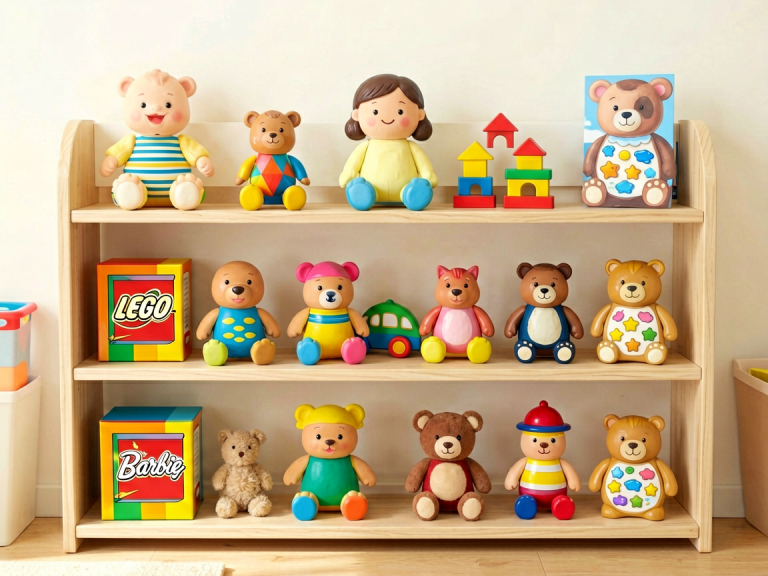
The presence of science toys alone does not guarantee deep learning. Adults play a crucial mediating role. The most effective approach is to practice “guided discovery”—posing questions without giving direct answers. For instance, when a child is playing with a water table, a parent might ask, “What happens if you put the big rock in the small boat?” or “Why do you think that funnel works faster?” These open-ended questions push the child to hypothesize, test, and articulate their observations. Equally important is *modeling wonder*. When an adult exclaims, “Wow! The shadow got bigger when I moved the flashlight closer!” the child internalizes that curiosity is valued. Another strategy is to create a “science shelf” at home—a low, accessible shelf where rotating science toys are displayed. This signals to the child that science is not a special event but a routine part of exploration. Finally, avoid rushing to “correct” a child’s mistaken hypothesis. If a child insists that a heavy ball will float, let them test it. The resulting surprise is more powerful than any lecture. The goal is to nurture the process, not the immediate answer.
The Long-Term Impact of Early Science Exposure
Research in developmental psychology and education consistently shows that early exposure to scientific thinking correlates with later academic achievement in STEM fields, but the benefits are even more profound. Children who engage regularly with science toys develop stronger critical thinking skills, a greater tolerance for ambiguity, and a habit of seeking evidence. They are more likely to approach problems with curiosity rather than anxiety. Furthermore, these toys bridge the gap between abstract concepts and tangible reality. A child who played with a pulley at age four will have a concrete mental model of mechanical advantage when they encounter a formal physics lesson at age fourteen. Importantly, early science toys also counteract gender and cultural stereotypes about who “does science.” When all preschoolers—regardless of gender—regularly use microscopes, build with magnets, and raise caterpillars, they internalize science as a universal, inclusive endeavor. This early normalization is critical for diversifying future STEM fields.
Conclusion
Early science toys for preschoolers are far more than a passing trend in the toy industry. They are thoughtfully designed learning tools that align with how young brains develop—through hands-on, sensory-rich, and joyful exploration. From water tables that teach fluid dynamics to magnetic tiles that reveal the invisible force of attraction, these toys transform abstract concepts into concrete experiences. The key lies not in the toys themselves but in how they are used: with patient adult guidance, open-ended questions, and a celebration of curiosity. By investing in quality early science toys and using them deliberately, we equip preschoolers with a foundation not only for future academic success but for a lifetime of wonder, resilience, and inquiry. In a world that increasingly demands scientific literacy, the humble science toy is a powerful first step.