The Silent Revolution: Why Quiet Screen-Free Toys Are Essential for Preschool Development
Introduction: The Case for Silence in a Noisy World
In an era where digital screens dominate every corner of childhood—from educational apps to endless YouTube videos—the humble, quiet, screen-free toy is staging a quiet revolution of its own. For preschoolers, whose brains are developing at a staggering rate, the presence of silent, tactile playthings is not merely a nostalgic alternative but a neurological necessity. The term “quiet screen-free toys” might evoke images of wooden blocks and soft fabric dolls, but their impact goes far deeper than mere nostalgia. They are tools for concentration, creativity, emotional regulation, and even language development. This article delves into the profound benefits of these toys, explores the best categories for different developmental needs, and offers practical guidance for parents and educators seeking to create a calmer, more engaging play environment.
Why Silence Matters: The Science Behind Undisturbed Play
Preschoolers live in a sensory overload. Bright flashing lights, sudden sound effects, and rapid scene changes—hallmarks of digital media—train the brain to expect constant novelty. This hyper-stimulation can impair a child’s ability to engage in deep, sustained attention. Quiet screen-free toys, by contrast, offer a low-stimulus environment where children must generate their own entertainment. Research in developmental psychology shows that when children play with simple, non-electronic toys, their brain waves shift into a more relaxed, focused state. This is the “flow state”—a condition of complete absorption in an activity, which is crucial for developing executive functions like self-control, planning, and problem-solving.
Moreover, silence is not emptiness; it is a canvas. Without the external noise of a screen, preschoolers learn to listen to their own thoughts. They develop inner monologues, which are foundational for reading comprehension and self-reflection. A child stacking wooden rings, for instance, must decide the order, adjust pressure, and coordinate hand-eye movements—all without a voice telling them what to do. This self-directed learning builds intrinsic motivation, a quality that screen-based rewards often undermine.
The Best Quiet Screen-Free Toys: Categories and Their Benefits
1. Construction and Building Sets: The Architects of the Mind
Classic wooden blocks, magnetic tiles, and interlocking plastic bricks top the list of quiet screen-free toys. Unlike digital building games that snap pieces into place with a tap, physical blocks require fine motor precision, spatial reasoning, and an understanding of physics. A preschooler who tries to build a tower learns about balance and gravity through trial and error—lessons that no app can truly replicate.
Beyond motor skills, building toys foster social cooperation when used in groups. Two children working on a castle must negotiate, share space, and resolve conflicts without a screen mediating their interactions. The quietness of the activity does not mean passivity; it means the only sounds are the soft clicking of blocks and the murmured conversations of collaboration.
2. Sensory and Textured Toys: Grounding the Overstimulated Child
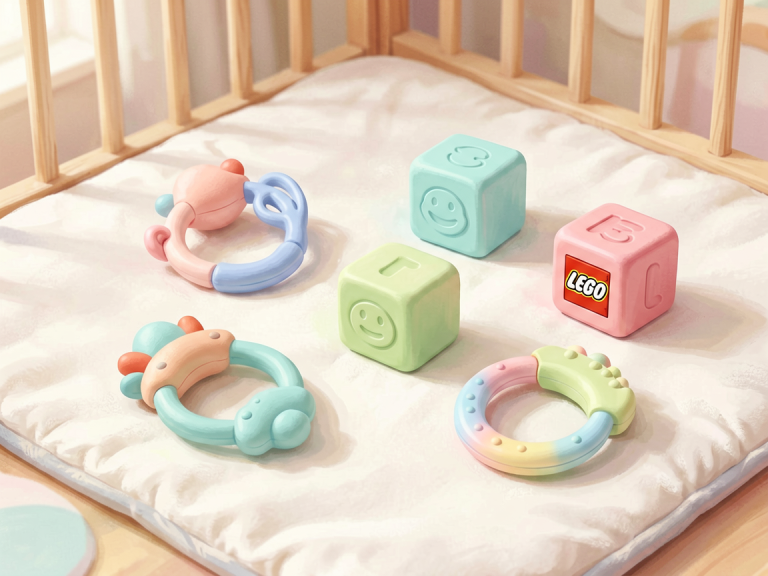
Many preschoolers are sensory seekers or, conversely, sensory avoiders. Quiet screen-free toys that engage touch, weight, and texture are invaluable for emotional regulation. Silicone teethers, fabric busy boards with zippers and buttons, and weighted stuffed animals provide deep pressure stimulation that calms the nervous system. For children prone to anxiety or hyperactivity, these toys act as a non-verbal comfort object—a tangible anchor in a chaotic world.
Sensory toys also support cognitive development. A simple container filled with rice, beans, or kinetic sand offers endless possibilities for scooping, pouring, and hiding small objects. These activities strengthen hand muscles for writing and promote cause-and-effect understanding. Best of all, they require no batteries, no Wi-Fi, and no adult intervention beyond occasional clean-up.
3. Open-Ended Pretend Play: The Theater of the Imagination
Dress-up costumes, wooden play food, dolls, and miniature animals are quintessential quiet toys for preschoolers. Unlike screen-based pretend play—where characters are voiced and actions are programmed—physical props demand that children invent their own narratives. A cardboard box becomes a spaceship; a wooden spoon becomes a magic wand. This kind of imaginative play is directly linked to advanced language skills, empathy, and problem-solving.
Importantly, quiet pretend play often occurs in solitude or in small groups. A child holding a stuffed bear and whispering to it is practicing social scripts, experimenting with tone, and developing emotional vocabulary. These moments of quiet dialogue—between child and toy, or between two children—are the seeds of sophisticated communication. They are lost in the noise of a screen.
4. Puzzles and Pattern Games: Quiet Concentration in Action
Jigsaw puzzles, shape sorters, and matching games are classic screen-free toys that demand focused attention. The cognitive load of a puzzle is substantial: a child must compare shapes, remember positions, and mentally rotate pieces. This process strengthens working memory and visual-spatial skills, which are precursors to math and reading.
What makes puzzles especially valuable in the “quiet” category is their naturally calming rhythm. The repetitive action of trying, failing, and trying again teaches resilience without frustration. A screen puzzle might offer hints or auto-solve, robbing the child of the struggle—and the triumph. In the silent world of a wooden puzzle, the only reward is the satisfying click of the last piece falling into place.
5. Art and Craft Supplies: The Original Analog
Crayons, watercolor paints, clay, and safety scissors are perhaps the most versatile quiet screen-free toys. Unlike digital coloring apps that snap colors perfectly within lines, real art allows for mess, discovery, and personal expression. A preschooler mixing blue and yellow paint to make green is exploring chemistry without a textbook. Cutting paper strips develops bilateral coordination. Gluing macaroni onto a piece of cardboard creates a tactile, three-dimensional composition.
The quietness of art play is deceptive—internally, a child’s brain is ablaze with creativity. They are making decisions about color, composition, and balance. They are telling stories through images. For a child who struggles with verbal expression, art becomes a powerful, silent voice.
Addressing Common Parental Concerns: Are Quiet Toys Enough?
Some parents worry that screen-free toys might be “boring” or insufficient for preparing children for a digital future. This concern is understandable but misguided. Preschoolers do not need screens to learn—they need hands-on experiences that build foundational skills. A child who can concentrate on a wooden puzzle for twenty minutes will later be able to focus on a reading lesson. A child who negotiates with a friend over a building block learns social dynamics that no online chat can teach.
Furthermore, quiet screen-free toys do not have to be expensive. Many of the best options are household items: cardboard tubes, fabric scraps, buttons, and empty containers. The key is not the toy itself but the space it creates for uninterrupted, self-directed play. Parents should also model quiet engagement—reading a book, knitting, or simply sitting in silence—to show that calm is valuable.
Practical Tips for Introducing Quiet Screen-Free Toys
Transitioning from a screen-filled environment to one rich in quiet toys requires intentionality. Start by creating a “quiet corner” in the playroom: a basket with a few carefully chosen items—a set of rainbow blocks, a puzzle, a felt storyboard, and a small basket of natural objects like pinecones and stones. Rotate toys weekly to maintain novelty without overstimulating.
Observe your child’s preferences. Some preschoolers gravitate toward fine motor challenges (threading beads, pegboards), while others prefer large-motor quiet activities (building forts with blankets). Honor these inclinations. Additionally, avoid the temptation to direct play. Let a child explore a toy in their own way, even if it means using a wooden spoon as a drumstick. The unstructured nature of quiet play is its greatest gift.
Conclusion: The Gift of Silent Presence
In a world that constantly clamors for attention—notification pings, video autoplays, animated advertisements—quiet screen-free toys offer preschoolers a sanctuary. They are not merely “old-fashioned” substitutes but powerful developmental tools that cultivate focus, creativity, and emotional resilience. By choosing silence over sound, and touch over tap, we give our children the gift of being fully present in their own play. And in that stillness, they discover something far more engaging than any screen: the endless world of their own imagination.
Word count: approximately 1,180 words