Fine Motor Activities for Kids: Building Skills for a Lifetime of Success
Introduction: The Power of Little Hands
In the early years of childhood, every tiny movement matters. From the first time a baby grasps a parent’s finger to the moment a preschooler learns to hold a crayon and draw a circle, the development of fine motor skills lays the foundation for countless future achievements. Fine motor activities for kids are not merely pastimes or ways to keep little ones occupied—they are essential building blocks that support academic readiness, self-care independence, and cognitive growth. Yet in a world increasingly dominated by screens and passive entertainment, many children are missing out on the hands-on experiences that strengthen the small muscles in their hands, fingers, and wrists. This article explores the importance of fine motor development, offers practical activity ideas for different age groups, and provides guidance for parents and educators who want to nurture these critical skills in a fun, engaging, and developmentally appropriate way.
Understanding Fine Motor Skills: What They Are and Why They Matter
Fine motor skills refer to the coordinated movements of small muscle groups, particularly those in the hands, fingers, and thumbs, often in conjunction with the eyes. These skills enable children to perform tasks such as picking up small objects, buttoning a shirt, writing with a pencil, cutting with scissors, tying shoelaces, and using utensils. Unlike gross motor skills, which involve larger muscle groups for activities like running and jumping, fine motor activities demand precision, control, and hand-eye coordination.
The development of fine motor skills is closely linked to brain development. Each time a child manipulates a small object, the brain forms new neural pathways that enhance hand-eye coordination, spatial awareness, and problem-solving abilities. Moreover, strong fine motor skills are directly correlated with academic success. A child who can hold a pencil correctly and control its movements is better prepared for handwriting tasks in kindergarten and beyond. Similarly, the ability to manipulate small objects like puzzle pieces or beads fosters concentration, patience, and the ability to follow sequential steps—all of which are essential for learning mathematics, reading, and science.
Beyond academics, fine motor skills are crucial for everyday independence. Dressing, feeding, grooming, and even playing with certain toys require a certain level of manual dexterity. Children who struggle with these tasks may become frustrated or overly reliant on adults, potentially affecting their self-esteem and social interactions. Therefore, incorporating intentional fine motor activities into a child’s daily routine is not just beneficial—it is necessary for holistic development.
Age-Appropriate Fine Motor Activities: A Developmental Guide
Infants and Toddlers (0–2 Years): The Foundations of Grasping and Manipulation
From birth, babies begin to develop their fine motor skills through reflexive grasping and eventually voluntary reaching. For infants, the simplest activities can have profound effects. Providing a variety of safe, textured objects for the baby to hold, shake, and mouth encourages the development of the palmar grasp—the ability to wrap the whole hand around an object. Soft fabric books, rattles, and teething rings are excellent choices. As the baby grows, introducing toys that require two hands to manipulate, such as stacking rings or nesting cups, promotes bilateral coordination, which is the ability to use both sides of the body together.
By around nine months, babies often develop the pincer grasp—the ability to pick up small objects between the thumb and forefinger. This is a major milestone. Activities that encourage this include offering soft pieces of food like cooked peas or small pieces of banana (under supervision), or providing large, safe beads that the baby can pick up and drop into a container. Tearing paper, rolling a ball of playdough, and pressing buttons on a busy board are also excellent for this age group. It is important to remember that repetition is key. A toddler may want to drop a toy into a box over and over again—this is not just play, but a serious workout for developing hand muscles and hand-eye coordination.
Preschoolers (3–5 Years): Refining Precision and Control
The preschool years are a golden period for fine motor development. Children at this age are eager to imitate adults and take pride in their newfound abilities. Arts and crafts activities are particularly beneficial because they combine creativity with purposeful hand movements. Cutting with safety scissors, for instance, strengthens the hand muscles needed for writing and requires bilateral coordination as the child holds the paper with one hand and cuts with the other. Start with cutting straight lines and gradually progress to curves and shapes. Playdough is another versatile tool: rolling snakes, pinching balls, and using cookie cutters all work the small muscles in different ways.
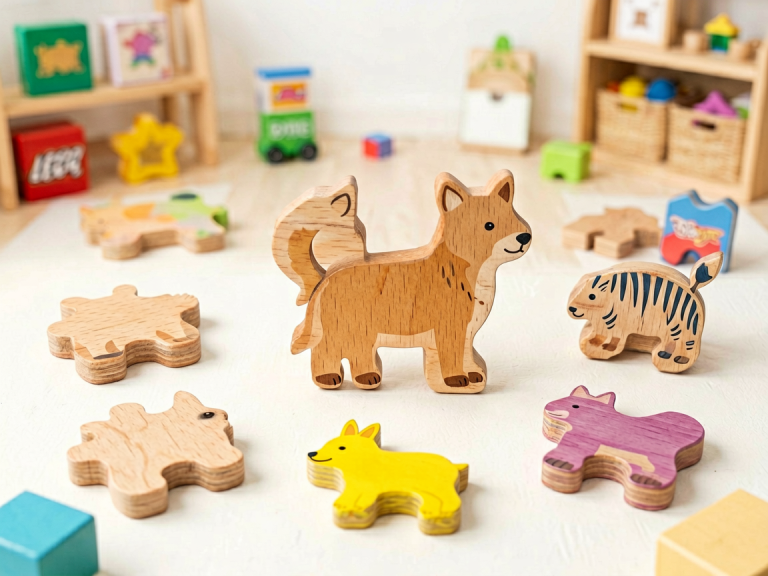
Bead stringing is a classic fine motor activity that also teaches pattern recognition and concentration. Use large beads and a stiff lace or shoelace, and as the child improves, introduce smaller beads and more complex patterns. Similarly, puzzles—especially those with knobs or small pieces—require the child to rotate and manipulate objects to fit them into precise spaces. Lacing cards, where children thread a string through holes in a cardboard shape, are another excellent choice.
Writing and drawing are, of course, central to this age group. However, before expecting a child to write letters, they need to develop pre-writing skills. Activities like tracing lines, connecting dots, and copying shapes help build the muscle memory and control needed for later handwriting. Finger painting, using chalk on a vertical surface, and drawing with a variety of tools (crayons, markers, pencils of different thicknesses) all contribute to hand strength and dexterity. It is also important to encourage the correct pencil grip—a tripod grip (thumb and forefinger holding the pencil, resting on the middle finger)—from the start, as correcting an improper grip later can be challenging.
School-Age Children (6–8 Years and Beyond): Application and Independence
As children enter elementary school, fine motor activities shift from basic skill-building to practical application and more complex tasks. Handwriting becomes a major focus, but it should not be the only activity. Continued engagement in crafts, such as origami, knitting, or model building, helps refine precision and patience. Sewing cards, embroidery, or even simple stitching on fabric can be incredibly beneficial for developing fine motor control and concentration.
Building with small construction toys like LEGO, K’NEX, or magnetic tiles requires the child to manipulate tiny pieces with precision, often for extended periods. This not only strengthens hand muscles but also fosters planning and spatial reasoning. Similarly, board games that involve picking up small game pieces, rolling dice, or using tweezers to move items can turn fine motor practice into a fun family activity.
For older children, musical instruments—especially those that require finger dexterity like the piano, guitar, or recorder—are outstanding for fine motor development. Typing on a keyboard can also be a valuable skill, though it should be balanced with handwriting practice to maintain pencil control. Cooking and baking activities involve measuring, pouring, stirring, and decorating—all of which demand hand-eye coordination and fine motor precision. Even simple tasks like peeling a banana, spreading butter on bread, or using a vegetable peeler (with supervision) contribute to developing independence and manual skills.
Creative and Sensory-Based Fine Motor Activities
While structured activities are valuable, the most effective fine motor practice often comes from play that engages multiple senses. Sensory bins—containers filled with rice, sand, beans, or water—allow children to scoop, pour, and dig, using their hands in varied ways. Adding scoops, funnels, tweezers, and small objects to find or sort turns this into a rich fine motor experience. Another favorite is using tongs or tweezers to transfer small objects like pom-poms or beads from one container to another. This mimics the pincer grasp and is surprisingly challenging for young children.
Playdough and clay can be extended beyond simple rolling and cutting. Add tools like garlic presses, rolling pins, plastic knives, and stamps to increase the variety of movements. Similarly, using squeeze bottles to squirt water, paint, or glue builds hand strength. Activities that involve poking—like threading pipe cleaners through a colander or poking toothpicks into a foam block—are also excellent for finger isolation and control.
For children who resist traditional tabletop activities, consider incorporating fine motor practice into gross motor play. For example, a scavenger hunt for small objects hidden in the yard requires the child to pick up items with precision. Climbing on playground equipment often involves grasping bars and rings, which strengthens the hands. Carrying a tray with a cup of water or a small ball requires careful balance and hand control. The key is to integrate fine motor challenges into everyday moments so that practice feels natural and enjoyable.
The Role of Parents and Educators: Encouragement Without Pressure
Perhaps the most important element in developing fine motor skills is the attitude of the adults guiding the child. Children learn best through exploration and play, not through drills or forced practice. If a child struggles with a particular activity, it is essential to offer encouragement and adapt the task rather than push harder. For example, if a child has difficulty with scissors, try using spring-loaded scissors that open automatically. If beading is too frustrating, use larger beads and a thicker string. Celebrate small victories, and focus on effort rather than the final product.
It is also crucial to provide a variety of activities that appeal to different interests. A child who loves dinosaurs may be more motivated to use tweezers to pick up small dinosaur figures than to thread beads. A child who enjoys art will naturally gravitate toward drawing and painting. By following the child’s lead, parents and educators can create a positive association with fine motor practice.
Moreover, screen time should be limited, especially for young children. While some apps claim to develop fine motor skills through tapping and swiping, these movements are limited compared to the rich, three-dimensional manipulation required by physical objects. Hands-on play with real materials—clay, paper, fabric, food, tools—cannot be replicated on a tablet. The tactile feedback, resistance, and cause-and-effect relationships offered by physical materials are irreplaceable for fine motor development.
Finally, remember that every child develops at their own pace. Some children may master scissors quickly but struggle with buttons; others may excel at puzzles but resist writing. Patience and consistency are key. Fine motor skills are built over time, much like muscles in the body—they require regular, varied practice to grow strong. By integrating fine motor activities into daily routines, from mealtime to bath time to playtime, parents and educators can ensure that children develop the hand skills they need to succeed in school, in self-care, and in life.
Conclusion: Small Hands, Big Potential
The journey of fine motor development is one of patience, creativity, and small, incremental triumphs. When a toddler manages to pick up a single Cheerio and bring it to their mouth, or a preschooler cuts through a piece of paper for the first time, or a first-grader writes their name legibly—these are not just cute moments. They are milestones of neurological and physical growth that set the stage for future learning and independence. Fine motor activities for kids are far more than a list of crafts and games; they are opportunities to build confidence, concentration, and capability. In a world that increasingly demands both manual dexterity and cognitive flexibility, nurturing these skills from an early age is one of the most meaningful investments we can make in a child’s future. So let us fill their days with playdough, puzzles, beads, and crayons—not as busywork, but as the joyful, essential work of growing up.