The Power of Tiny Hands: A Comprehensive Guide to Fine Motor Activities for Toddlers
Introduction: Why Fine Motor Skills Matter More Than You Think
Every time a toddler picks up a cheerio, scribbles on a piece of paper, or buttons a single button, they are engaging in a complex process that wires their brain and body for future success. Fine motor skills—the coordinated movements of the hands, fingers, and wrists—are not merely about dexterity. They are the foundation for self‑care, academic readiness, and even social confidence. When a child learns to manipulate small objects, they are simultaneously developing hand‑eye coordination, bilateral coordination (using both sides of the body together), and the intrinsic hand muscles that will later enable them to write, type, and tie shoelaces.
For parents and caregivers, understanding how to nurture these skills through play is both a privilege and a responsibility. The toddler years—roughly from 12 to 36 months—are a critical window of neural plasticity. During this period, the brain forms connections at an astonishing rate, and the hands serve as a primary tool for exploration. Yet, many well‑intentioned adults either over‑estimate what a toddler can do (causing frustration) or under‑estimate it (missing opportunities for growth). This article provides a structured, evidence‑based guide to fine motor activities that are developmentally appropriate, engaging, and easily integrated into daily life.
—
1. Understanding the Developmental Progression of Fine Motor Skills
Before diving into activities, it is essential to grasp the typical trajectory of fine motor development. Each stage builds on the previous one, and activities should match the child’s current abilities while offering a gentle challenge.
1.1 The Grasp Evolution (12–18 Months)
At around 12 months, most toddlers transition from a whole‑hand palmar grasp to a pincer grasp—using the thumb and index finger to pick up small items like raisins or peas. This is a monumental milestone because it signals the emergence of precise finger control. Activities at this stage should focus on releasing objects willingly (not just dropping them) and transferring items from one hand to the other.
1.2 The Tool‑Use Phase (18–24 Months)
Between 18 and 24 months, toddlers become fascinated with cause‑and‑effect and begin to imitate simple tool use. They may attempt to hold a crayon (though often with a fisted grip), stir a spoon in a cup, or push a button that makes a toy pop. The ability to rotate the wrist—supination and pronation—develops gradually, enabling actions like turning a doorknob or winding a jack‑in‑the‑box.
1.3 The Precision Phase (24–36 Months)
By the second birthday, many children can build a tower of four or more blocks, snip with scissors (with assistance), and string large beads. Their hand preference may become clearer, though ambidexterity is still common. The challenge now is to refine control: learning to use one hand as a stabilizer while the other performs a task, and practicing the tripod grip (thumb, index, and middle finger) that will eventually support handwriting.
—
2. Essential Categories of Fine Motor Activities for Toddlers
Rather than presenting a random list of ideas, it is helpful to group activities by the specific skill they target. This makes it easier to create a balanced “fine motor diet” over the week.
2.1 Squeezing, Pinching, and Picking
These activities strengthen the small intrinsic muscles of the hand and improve the pincer grasp. The key is to provide objects that are small enough to require precision but large enough to avoid choking hazards (always supervise).
- Tweezer or Clothespin Transfer: Give your toddler a pair of plastic tweezers (or a spring‑loaded clothespin) and a bowl of pompoms, cotton balls, or large pasta pieces. Have them move the items from one container to another. This is excellent for developing the dynamic tripod grip.
- Peeling and Sticking: Provide a sheet of circle stickers or small strips of tape. The act of peeling a sticker off a backing requires the precise coordination of two hands—pulling with one while stabilizing with the other. Let your child stick them onto a paper or a window.
- Play Dough Pinching: Roll play dough into small balls and show your toddler how to pinch each ball between thumb and forefinger, flattening it. You can also hide small beads or buttons inside the dough for them to find.
2.2 Threading and Lacing
Threading is a bilateral coordination activity that also demands visual‑motor integration—the eyes guiding the hands.
- Bead Stringing: Start with large, chunky beads (1‑2 inches in diameter) and a shoelace or a stiff string with a taped end. For younger toddlers, use pieces of drinking straws cut into short lengths, which are easy to grasp.
- Pasta Necklaces: Dye penne or rigatoni pasta with food coloring and let it dry. Provide a piece of yarn with a knot at one end and a piece of tape at the other (like a makeshift needle). Show your child how to push the pasta onto the yarn.
- Lacing Cards: Purchase or make simple cardboard shapes with punched holes. Give your toddler a shoelace and let them weave it through the holes. This requires sustained attention and hand‑eye coordination.
2.3 Mark‑Making and Scribbling
Mark‑making is not about creating recognizable art; it is about the sensory feedback of the tool on a surface and the growing awareness that movements leave traces.
- First Crayons and Chalk: Use triangular or egg‑shaped crayons that promote a tripod grip rather than a fisted grip. Sidewalk chalk on a vertical surface (like a wall or easel) strengthens the wrist and shoulder muscles differently than a horizontal surface.
- Finger Painting with Tools: Instead of bare hands, offer a paintbrush, a cotton swab, or even a small car with wheels dipped in paint. The goal is to practice holding a handle and applying variable pressure.
- Sticker Dot Art: Give your child a page with simple outlines (like a tree or a fish) and a sheet of small circle stickers. They must peel and place the stickers inside the lines, practicing fine placement.
2.4 Pouring, Scooping, and Transferring
These activities mimic real‑life tasks and teach hand‑eye coordination, wrist control, and the concept of cause‑and‑effect.
- Rice or Sand Bin: Fill a shallow bin with uncooked rice, lentils, or sand. Provide a small cup, a spoon, a funnel, and a scoop. Let your toddler practice pouring from one container to another. The mess is part of the learning.
- Water Play with Pipettes or Basters: Use a turkey baster or an eye dropper to transfer colored water from one cup to an ice‑cube tray. Squeezing the bulb requires sustained finger strength.
- Sponging: Offer a damp sponge and two bowls—one with water, one empty. Show your child how to squeeze the sponge over the empty bowl. This is fantastic for building hand strength and motor planning.
2.5 Construction and Stacking
Stacking and building objects teach spatial reasoning, grasp release, and precision.
- Small Blocks and Duplo: Unlike large blocks, smaller blocks (like unit blocks or Duplo) force a toddler to use a more refined grip. Challenge them to build a tower as high as possible.
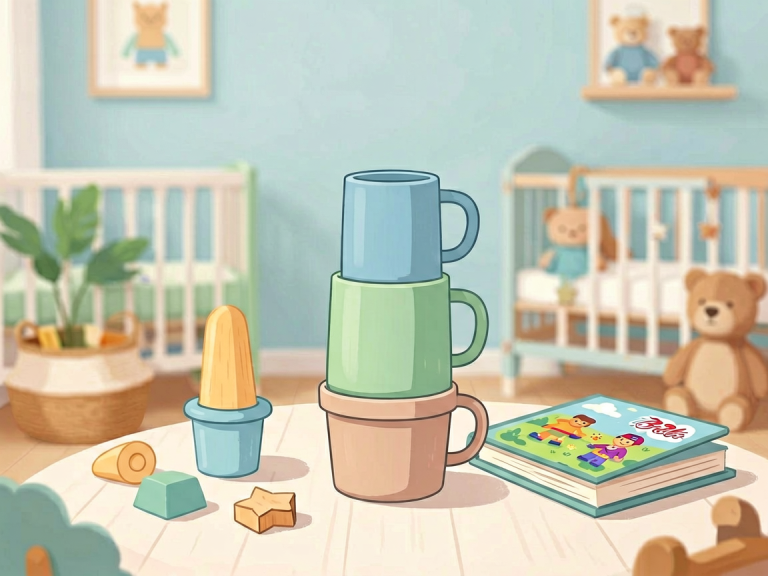
- Nesting Cups or Rings: Start with cups that nest inside each other or stacking rings on a post. The child must align the opening correctly, which requires visual and motor precision.
- Magnetic Building Tiles: The magnetic connection provides satisfying feedback. Toddlers can attach tiles edge‑to‑edge, which demands careful placement.
—
3. Integrating Fine Motor Activities into Daily Routines
You do not need to set aside a special “activity time.” Some of the best fine motor work happens during everyday tasks. By reframing routine moments as opportunities, you can provide practice without pressure.
3.1 Mealtime as Fine Motor Practice
Let your toddler use a fork or spoon (even if it gets messy). Offer “finger‑food” challenges: small pieces of soft cheese, peas, or blueberries that require a pincer grasp. Spread peanut butter or yogurt on a piece of toast and let your child “paint” it with a butter knife (under supervision). Pouring their own water from a small pitcher into a cup is an advanced fine motor task that builds confidence.
3.2 Dressing and Self‑Care
Encourage your toddler to unzip their own jacket, pull off socks, or unbutton large buttons. Velcro shoes are a great entry point; later, introduce a simple buckle or a single button on a practice board. Toothbrushing, using a washcloth, and opening a snack container all require hand strength and coordination. Let them struggle a little—rescue too quickly and you steal a learning moment.
3.3 Sensory Play in the Bath and Outdoors
Bath time is perfect for water‑based fine motor play. Provide cups, small rubber ducks, a squirt toy, and a mesh bag. Squeezing a washcloth or pouring water over a toy requires precise control. Outdoors, collecting leaves, pinecones, or pebbles into a bucket, and later sorting them by size or color, develops the same skills.
—
4. Common Pitfalls and How to Avoid Frustration
Despite the best intentions, adults sometimes hinder fine motor development by misjudging the difficulty level or by over‑directing.
4.1 The “Too Hard” Trap
If your toddler throws a crayon or walks away from a threading activity in frustration, the task is likely too advanced. Scale back: offer a thicker crayon, a larger bead, or a shorter lacing cord. The goal is *just* beyond their current ability—a zone where they can succeed with a little effort.
4.2 The “Too Easy” Trap
Conversely, if your toddler finishes an activity in ten seconds and looks bored, increase the challenge. Ask them to stack five blocks instead of three, or sort beads by color as they thread. Children often signal readiness for harder tasks by repeating them quickly and accurately.
4.3 Avoiding Over‑Correction
Never grab a toddler’s hand to “help” them hold a pencil correctly. The tripod grip emerges naturally between age 4 and 6. Forcing it earlier can create tension and aversion. Instead, provide tools that naturally guide the hand—like broken crayons (which force a pinch grip) or short pencils. Praise the *process* (“I see you working hard with your fingers!”) rather than the product.
—
5. Sample Weekly Activity Plan for 18–24 Month Olds
To make the theory practical, here is a simple schedule that rotates categories:
| Day | Activity | Skill Focus |
|——|———-|————-|
| Monday | Sticker peeling and sticking | Pincer grasp, bilateral coordination |
| Tuesday | Play dough ball pinching | Finger strength, precision |
| Wednesday | Water transfer with a baster | Wrist control, force modulation |
| Thursday | Pasta threading (large penne) | Eye‑hand coordination, threading |
| Friday | Crayon scribbling on vertical easel | Wrist flexion, mark‑making |
| Saturday| Scooping rice into an egg carton| Hand control, spoon use |
| Sunday | Building with Duplo | Grasp release, spatial planning |
Repeat each week, gradually introducing new materials (e.g., switch rice to beans, or add a sorting element). Observe which activities your child gravitates toward—repetition is how they master a skill.
—
6. The Role of Screen Time and Technology
In today’s digital world, many parents wonder if tablet apps can substitute for hands‑on fine motor activities. The answer is clear: they cannot. While tapping a screen involves finger movement, it does not provide the resistive feedback, proprioceptive input, or bilateral coordination that real‑world materials offer. A child who only swipes will not develop the muscle tone needed for writing. However, used sparingly, certain apps that require tracing shapes or dragging objects can complement physical play. The golden rule: no more than 15–20 minutes per day, and only after the child has had ample hands‑on practice.
—
Conclusion: Celebrating the Journey of Tiny Triumphs
Fine motor activities for toddlers are not about rushing development or creating a “genius” child. They are about honoring the slow, messy, beautiful process of learning to control one’s own body. Every dropped bead, every crooked sticker, every frustrated grunt is a step toward independence. By providing a rich variety of opportunities—squeezing, threading, stacking, pouring, and scribbling—we give toddlers the tools to explore the world with confidence. And when a child finally buttons their own shirt for the first time, the joy is not just in the button itself, but in the hundreds of tiny, invisible efforts that made it possible. So roll up your sleeves, dump out that bin of rice, and sit beside your toddler on the floor. The power of tiny hands is waiting to be unleashed.