How to Choose Educational Toys: A Guide to Smart, Skill-Building Play
Introduction
In an age of brightly colored plastic gadgets, flashing screens, and endless product aisles, choosing the right toy for a child has become more overwhelming than ever. Parents and caregivers are no longer just looking for entertainment; they want toys that foster learning, creativity, and development. This is where the concept of “educational toys” comes in. But what truly makes a toy educational? Is it the label on the box, the price tag, or the number of buttons it has? The answer is far more nuanced. An educational toy is one that intentionally promotes cognitive, social, emotional, or physical development through active play. Choosing the right one requires careful thought, observation, and a clear understanding of the child’s age, interests, and developmental stage. This article provides a detailed, research-backed guide to help you navigate the world of educational toys, ensuring that every playtime moment is also a learning opportunity.
1. Understanding the Core Purpose of Educational Toys
Before diving into specific selection criteria, it is essential to grasp why educational toys matter. Unlike passive entertainment (such as watching a video), educational toys require active engagement. They challenge a child to think, solve problems, make decisions, and experiment. For example, a simple set of wooden blocks is far more educational than a battery-operated singing robot because blocks demand spatial reasoning, balance, creativity, and fine motor control. The best educational toys do not “teach” in a lecture-style way; instead, they create a context for discovery. They encourage trial and error, which builds resilience and a growth mindset. They also often involve open-ended play, meaning there is no single correct way to use them. This fosters imagination and intrinsic motivation. When you understand this foundational principle, you can begin to evaluate toys not by their flashy features, but by their capacity to stimulate meaningful interaction.
2. Match the Toy to the Child’s Developmental Stage
One of the most common mistakes parents make is buying a toy that is either too simple (leading to boredom) or too complex (leading to frustration). Educational value is maximized when the toy aligns with a child’s current abilities while offering just enough challenge to encourage growth—a concept psychologists call the “zone of proximal development.”
- Infants (0–12 months): At this stage, sensory exploration is paramount. Look for toys that stimulate sight, sound, and touch: high-contrast black-and-white cards, soft rattles, textured teething rings, and unbreakable mirrors. These toys help develop visual tracking, auditory recognition, and hand-eye coordination. Avoid toys with small parts or sharp edges.
- Toddlers (1–3 years): Toddlers are rapidly developing language, gross motor skills, and a sense of cause and effect. Excellent choices include shape sorters, stacking rings, large pegboard puzzles, push-and-pull toys, and simple musical instruments like drums or xylophones. These toys refine fine motor skills and introduce basic concepts like colors, shapes, and sounds. Pretend-play items like toy phones or plastic food also encourage early social and language skills.
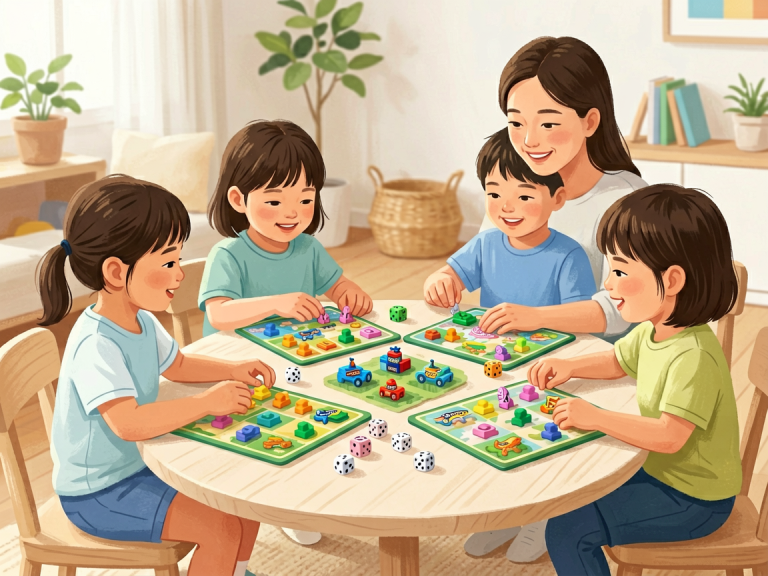
- Preschoolers (3–5 years): This is the golden age for imaginative play and early academic concepts. Building blocks (especially unit blocks or LEGO Duplo), magnetic tiles, art supplies (crayons, playdough, scissors), and simple board games (like Candy Land or matching games) are ideal. They promote counting, letter recognition, narrative thinking, and turn-taking. Puzzles with 12–24 pieces help with pattern recognition and patience.
- School-Age Children (6–12 years): Older children benefit from complex, strategy-based toys. Think of science kits, coding robots (like Sphero or Botley), advanced construction sets (LEGO Technic, K’Nex), strategy board games (chess, Settlers of Catan, Ticket to Ride), and craft or model-building kits. These toys encourage logical reasoning, teamwork, and project management. They also allow for deep, sustained focus, which builds concentration skills.
Always read age recommendations on the packaging, but also use your own judgment. A child who is exceptionally advanced in spatial skills might enjoy a puzzle meant for an older age group, while a child with developmental delays might benefit from simpler toys.
3. Prioritize Open-Ended Play Over Scripted Outcomes
Perhaps the most critical distinction in choosing educational toys is between closed-ended and open-ended toys. Closed-ended toys have a predetermined goal—for example, a light-up toy that says “A, B, C” when you press the corresponding letter. While these can teach specific facts, they are limited. Once the child memorizes the alphabet, the toy loses its appeal.
Open-ended toys, on the other hand, have no fixed endpoint. A set of wooden blocks can become a castle, a spaceship, or a bridge. A bin of natural loose parts (stones, pinecones, fabric scraps) can be used for sorting, building, or storytelling. These toys grow with the child; a two-year-old might simply knock them down, while a five-year-old designs intricate structures. Open-ended toys foster divergent thinking—the ability to come up with multiple solutions to a problem—which is a cornerstone of creativity and innovation. When shopping, ask yourself: “Can this toy be used in more than one way? Does it give the child control over the play?” If the answer is yes, you have a winner.
4. Consider Toys That Target Multiple Developmental Domains
The most valuable educational toys do not focus on one skill alone; they integrate several developmental areas simultaneously. For instance, a simple memory card game does more than train memory—it also requires turn-taking (social skills), pattern recognition (cognitive skills), and manual dexterity (fine motor skills). Similarly, a large wooden marble run teaches gravity and physics (science), encourages patience and persistence (emotional regulation), and involves hand-eye coordination (motor skills). When evaluating a toy, think holistically: Does it promote language development? Does it encourage problem-solving? Does it invite collaboration with other children or adults? A toy that checks multiple boxes is a more efficient and enriching investment.
5. Safety and Material Quality Are Non-Negotiable
An educational toy ceases to be beneficial if it poses a safety risk. Always check for small parts that can become choking hazards for children under three. Avoid toys with sharp edges, long cords, or toxic paints. Look for certifications such as ASTM (American Society for Testing and Materials) or CE (Conformité Européenne) marks. Additionally, consider the durability of the material. Cheap plastic toys often break easily, leading to sharp shards or frustration. Wood, high-quality silicone, and sturdy fabrics tend to last longer and can even be passed down to siblings or other children. Natural materials like untreated wood also offer a richer sensory experience than plastic. Moreover, a well-made toy can withstand enthusiastic play, which means it will continue to provide educational value over months or years.
6. Avoid the Over-Electronic Trap
In today’s digital world, many “educational” toys are essentially electronic devices with screens, sound effects, and limited interactivity. While some digital toys (like coding robots or interactive storybooks) have genuine merit, many are overpriced and underwhelming. Children’s brains develop best through hands-on, three-dimensional experiences. A tablet game that teaches numbers might be engaging, but it does not train the same neural pathways as manipulating physical objects like counting bears or abacuses. Moreover, electronic toys often dictate the pace of play, reducing the child’s agency. The American Academy of Pediatrics recommends limiting screen time for young children and prioritizing unstructured, offline play. When choosing electronic gadgets, ask whether they promote active problem-solving or passive consumption. If the toy mainly requires pressing a button to hear a sound or see a light, it is likely more entertainment than education.
7. Follow the Child’s Lead: Interest Drives Engagement
No toy, no matter how well-designed, will be educational if the child is not interested in it. The best learning happens when a child is intrinsically motivated. Observe what your child naturally gravitates toward. Does she love building? Invest in construction sets. Does he enjoy drawing? Provide high-quality art supplies. Is she fascinated by animals? Look for realistic animal figures or nature exploration kits. Forcing a child to play with a “smart” toy that does not capture their attention is counterproductive. On the other hand, a simple cardboard box can become an educational marvel if the child is enthusiastic about it—they might use it as a fort, a boat, or a time machine. The key is to use toys as tools that amplify existing interests, not as substitutes for genuine curiosity.
8. Choose Toys That Encourage Interaction, Not Solitary Play
While independent play is healthy, many educational benefits come from social interaction. Toys that require two or more players—board games, cooperative puzzles, dress-up sets, or building projects—help children develop communication skills, empathy, negotiation, and sharing. Even solo toys can be used in a group setting: a set of magnetic tiles becomes a collaborative skyscraper when played with a sibling or a parent. When you are choosing toys, consider how they will be used. Will they spark conversations? Will they require the child to explain their thinking? Will they produce a sense of shared achievement? Often, the most memorable learning moments happen not while a child plays alone, but while they play with someone else.
9. Resist Marketing Hype and Look for Genuine Value
Toy packaging is designed to sell, not to educate. A toy labeled “STEAM” or “brain-building” may simply be another gimmick. Do your own research: read reviews from educators, look for awards from organizations like the National Parenting Product Awards or the Oppenheim Toy Portfolio, and ask other parents or teachers for recommendations. Also, consider the toy’s longevity. Will it hold a child’s interest for more than a week? Can it be used in different ways as the child grows? A good educational toy is often simple, durable, and versatile. Classic toys such as LEGO bricks, wooden blocks, crayons, and puzzles have endured for decades precisely because they offer timeless learning value.
10. Trust the Power of Everyday Objects
Finally, remember that not all educational toys come from a store. Kitchen utensils, cardboard boxes, buttons, bottle caps, and fabric scraps can be wonderfully educational. Sorting pasta shapes into different bowls teaches classification. Using a plastic cup and string as a telephone teaches sound vibration. The best “toy” might be a magnifying glass and a leaf collection from the backyard. As you build a toy collection, do not underestimate the value of open-ended, natural, and recycled materials. They encourage resourcefulness and reduce consumerist pressure.
Conclusion
Choosing educational toys is both an art and a science. It requires an understanding of child development, a critical eye for marketing, and—most importantly—a deep connection to the individual child’s needs and passions. The perfect educational toy is not the most expensive or the most advertised; it is the one that invites exploration, adapts to a child’s changing abilities, and sparks joy in discovery. By prioritizing open-ended play, safety, developmental appropriateness, and genuine engagement, you can build a toy collection that supports lifelong learning. Remember: the toy is merely a catalyst. The real magic happens in the child’s hands, mind, and heart. So next time you reach for a toy, pause, observe, and choose wisely—because play is the work of childhood, and the right tools can make that work wonderfully enriching.