learning through sensory play for 5 year old boys
Rough, Smooth, Loud, and Quiet: Why Sensory Play is the Ultimate Learning Tool for 5‑Year‑Old Boys
—
Introduction: The Magic of Messy Hands and Busy Minds
Every parent of a 5‑year‑old boy knows the scene: a pile of mud in the backyard, a bucket of water and a paintbrush, or a handful of dry rice spilled across the kitchen floor. While an adult might see a mess, a child sees a laboratory. For a 5‑year‑old boy, the world is not something to be read about; it is something to be touched, tasted, smelled, heard, and squeezed. This is the essence of sensory play — any activity that stimulates a child’s senses: touch, smell, taste, sight, hearing, movement, and balance.
At age five, boys are in a critical developmental window. Their brains are forming neural connections at an astonishing rate, and their bodies are eager to move, explore, and test boundaries. Sensory play is not just fun; it is a powerful, evidence‑based approach to learning that supports cognitive growth, language development, fine and gross motor skills, social‑emotional regulation, and even early math and science concepts. In this article, we will dive deep into why sensory play is especially beneficial for 5‑year‑old boys, and how parents, educators, and caregivers can harness its potential through simple, engaging activities.
—
1. The Brain Science Behind Sensory Play
Why the Senses Matter More Than Worksheets
A 5‑year‑old boy’s brain is a busy construction site. The prefrontal cortex — responsible for impulse control and planning — is still maturing, while the sensory and motor regions are highly active. Research in developmental psychology and neuroscience shows that when children engage multiple senses simultaneously, they create stronger, more lasting neural pathways. This is called multisensory learning.
For example, when a boy plays with kinetic sand — squeezing it, shaping it, watching it crumble — his brain is not just having fun. He is building tactile discrimination (learning textures), hand‑eye coordination, and cause‑and‑effect reasoning. He is also practicing language if an adult describes the feeling: “It’s soft like flour, but it holds its shape like clay.” The more senses involved, the more the brain “lights up,” and the deeper the learning sticks.
Sensory Play and the Vestibular System
Boys, in particular, often crave movement. Sensory play that involves spinning, swinging, jumping, or balancing activates the vestibular system (the inner ear’s sense of balance and spatial orientation). This system is closely linked to attention, emotional regulation, and even reading readiness. A 5‑year‑old boy who spends ten minutes spinning in an office chair or rolling down a grassy hill is actually “feeding” his brain the input it needs to focus later on a puzzle or a story.
—
2. Key Developmental Benefits for 5‑Year‑Old Boys
A. Fine Motor Skills and Hand Strength
At age five, boys are learning to write letters, use scissors, button shirts, and tie shoelaces. These tasks require fine motor control and hand strength. Sensory play is the perfect gym for little fingers.
- Activities: Playing with play‑dough, squeezing water droppers into ice‑cube trays, digging for hidden objects in a bin of dry beans, pinching and rolling modeling clay, or using tweezers to pick up small beads.
- Why it works: The resistance of materials like dough or wet sand strengthens the small muscles of the hand, which directly translates to better pencil grip and control. For many 5‑year‑old boys who are reluctant to sit and write, these playful activities feel like games, not drills.
B. Language and Communication
Sensory play naturally invites conversation. When a boy describes what he feels — “It’s slimy and cold!” — he is practicing adjectives, sentence structure, and vocabulary. Caregivers can scaffold this by asking open‑ended questions: “What does this feel like? How is it different from the other bin? What happens if you add more water?”
- Activity example: Create a “feely box” (a shoebox with a hole cut in the side) and place objects inside — a pinecone, a piece of velvet, a chilled marble, a sponge. The boy reaches in, feels the object, and guesses what it is, then describes it. This builds descriptive language and working memory.
C. Emotional Regulation and Self‑Control
Many 5‑year‑old boys experience big emotions — frustration, excitement, anger — and haven’t yet mastered the vocabulary or strategies to manage them. Sensory play can be deeply calming. Repetitive, rhythmic actions like stirring a pot of water with a whisk, pouring sand from one container to another, or kneading dough activate the parasympathetic nervous system, reducing stress.
- Pro tip: A “calm‑down bottle” filled with glitter and water can be a sensory tool. When a boy shakes it, he watches the glitter swirl and settle, which gives his brain a visual anchor to slow down. Similarly, a small bin filled with rice and hidden toys can provide a focused, quiet activity that helps him reset after a meltdown.
D. Early STEM Concepts
Science, technology, engineering, and math are not just for older kids. Sensory play introduces foundational ideas in a concrete, hands‑on way.
- Volume and measurement: Pouring water from a small cup into a larger container, or using scoops to fill different‑sized cups.
- Cause and effect: Mixing baking soda and vinegar, watching it fizz.
- Physics: Rolling marbles down a slope made of cardboard, testing different angles.
- Classification: Sorting colored beads, arranging shells by size, or grouping rocks by texture.
For a 5‑year‑old boy, these activities feel like play, but they are building the curiosity and logical thinking that will later support math and science learning in school.
—
3. Designing Sensory Play for the Active 5‑Year‑Old Boy
Tailoring Activities to Boys’ Natural Tendencies
Boys at this age often have higher energy levels, shorter attention spans for sedentary tasks, and a strong drive for rough‑and‑tumble play. Sensory activities should match these tendencies, not fight them. Here are a few highly engaging categories:
A. Messy, Large‑Scale Play
Instead of a tiny tray, use a large under‑bed storage bin or a baby pool. Fill it with:
- Oobleck (cornstarch and water): a non‑Newtonian fluid that feels solid when squeezed and liquid when left alone.
- Shaving cream on a tabletop: add a few drops of food coloring and let him “paint” with his fingers.
- Mud kitchen outdoors: provide old pots, spoons, water, and dirt. He can “cook” mud pies, stir “soup,” and add leaves or stones.
These activities allow big movements, splashing, and mess, which satisfy a boy’s need for physical engagement while building sensory awareness.
B. Construction and Loose Parts
Boys love building, smashing, and rebuilding. Provide:
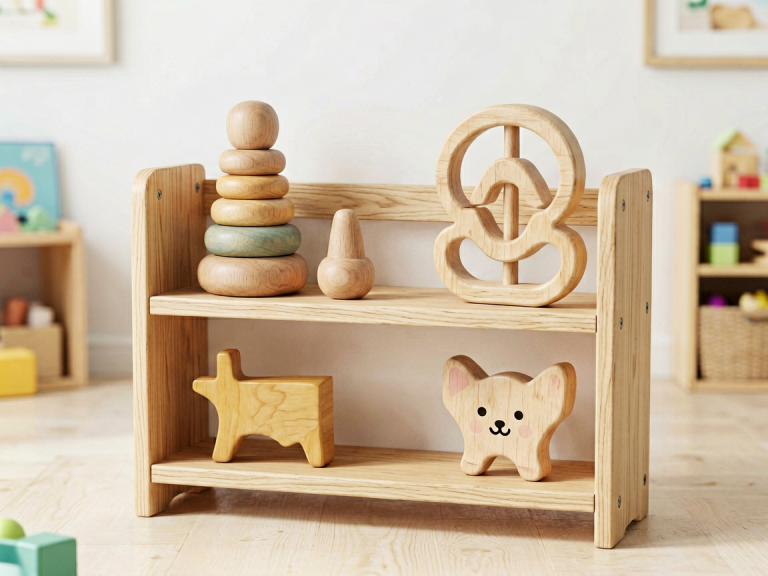
- Wooden blocks of various shapes, plus scarves, cups, and toy animals.
- Magnetic tiles that click together.
- A “loose parts” bin with bottle caps, large buttons, corks, and popsicle sticks.
The open‑ended nature of these materials encourages creativity, problem‑solving, and spatial reasoning. A 5‑year‑old boy might build a tower, then pretend it is a rocket ship, then knock it down and start over — all while learning about balance, gravity, and geometry.
C. Water and Sand Play
Water and sand are timeless sensory staples. Add tools like funnels, tubes, sieves, measuring cups, and small plastic animals. A boy can experiment with sinking and floating, building sand castles, or creating channels for water to flow. This type of play often involves cooperative social interaction if other children are present, teaching turn‑taking and negotiation.
D. Scent and Taste: Edible Sensory Play
While safety is paramount (always supervise and avoid choking hazards), edible sensory play can be wonderful. For example:
- Jell‑O play with different colors and scents.
- Yogurt painting on a tray.
- Spice sniffing — letting him smell cinnamon, vanilla, and cocoa powder while you name each scent.
This engages the olfactory and gustatory senses, which are strongly linked to memory and emotion. It also provides a safe way for oral‑exploring children to engage without ingesting harmful substances.
—
4. Overcoming Common Challenges
“But It’s So Messy!”
Yes, sensory play can be messy. But the mess is manageable. Use a large plastic tablecloth or a splash mat under the activity. Keep a change of clothes handy. Set up outside when weather permits. And remember: the mess washes away, but the learning lasts a lifetime. A 5‑year‑old boy who is allowed to explore without constant “Don’t touch that!” messages grows up with a healthier relationship with risk, creativity, and discovery.
“He Won’t Stay Engaged for Long.”
That is okay! At this age, attention spans are naturally short. Offer a choice of two or three sensory bins and let him move between them. Keep activities simple — sometimes just a bowl of water and a spoon is enough. Follow his lead. If he wants to dump out all the beans, let him. That is a form of exploration, too.
“He Only Wants to Throw or Smash Things.”
Redirect, don’t punish. If a boy is throwing kinetic sand, he may be seeking vestibular or proprioceptive input (the sense of where his body is in space). Offer a suitable alternative: throw soft balls into a laundry basket, or punch a pillow. Then, gently invite him back to the sensory table with a new material, like slime or foam, that requires a different kind of touch.
—
5. Practical Ideas for Home and Classroom
Sensory Bins on a Budget
You do not need expensive kits. Here are low‑cost bases:
- Dry rice or pasta (colored with a drop of food coloring and rubbing alcohol).
- Dried lentils or chickpeas.
- Birdseed or cornmeal.
- Water beads (soak tiny dehydrated beads — they expand into squishy spheres).
- Cooked spaghetti (cooled, with a drizzle of oil to prevent sticking).
Add scoops, cups, toy cars, plastic letters, or small dinosaurs. Rotate themes to keep interest: “ocean” (blue water beads, shells, plastic fish), “construction” (sand, pebbles, toy trucks), “winter” (cotton balls, white felt, ice cubes).
Sensory Walks
Take learning outdoors. Walk barefoot on grass, sand, pavement, and a cool puddle. Listen for birds, traffic, rustling leaves. Smell flowers, cut grass, rain. A 5‑year‑old boy who can name the feeling of “bumpy bark” and “smooth stone” is building a richer vocabulary and a deeper connection to the natural world.
Music and Rhythm
Provide simple instruments — drums, shakers, a wooden xylophone. Ask him to play “loud” and then “soft,” “fast” and “slow.” This auditory sensory play supports pattern recognition, a key early math skill. It also gives an outlet for the booming energy that many 5‑year‑old boys possess.
Sensory Writing
To make pre‑writing fun, never use a worksheet. Instead:
- Write letters in a tray of salt or sand.
- Form letters with play‑dough snakes.
- Trace letters with a finger on a piece of velvet or sandpaper.
The tactile feedback reinforces the shape of the letter far more effectively than a pencil and paper drill.
—
Conclusion: Let Them Play, Let Them Learn
A 5‑year‑old boy does not need a tablet, a workbook, or a structured curriculum to learn the most important lessons of early childhood. He needs hands, mud, water, sand, noise, quiet, smooth, rough, and every texture in between. Sensory play is not a distraction from “real learning” — it *is* real learning. Through it, he builds the neural architecture for future reading, writing, math, and social success. He learns to regulate his emotions, to persist through a frustrating task, to describe his world, and to share it with others.
So the next time you see a 5‑year‑old boy covered in shaving cream, happily squishing it through his fingers, do not rush to clean him up. Smile, and know that in that messy moment, he is busy constructing a brilliant mind — one sensory experience at a time.
—
Word count: Approximately 1,190 words (excluding title and headings).