The Complete Parent Guide to Choosing Age-Appropriate Toys for 7-Year-Old Girls
Introduction
Selecting the perfect toy for a 7-year-old girl can feel like navigating a maze of colorful packaging, endless options, and conflicting advice. At this age, children are no longer toddlers but not yet tweens; they are in a unique developmental sweet spot where imagination, social skills, and cognitive abilities are blossoming rapidly. A well-chosen toy does more than just entertain—it nurtures problem-solving, creativity, emotional intelligence, and physical coordination. Yet the wrong toy can lead to boredom, frustration, or even safety hazards. This guide is designed to help parents make informed, thoughtful decisions by focusing on what truly matters: the child’s current developmental stage, interests, and growing independence. Whether you are shopping for a birthday, holiday, or simply a surprise, understanding the principles of age-appropriate play will ensure that your gift brings joy, learning, and lasting value.
—
Understanding the Developmental Milestones of a 7-Year-Old Girl
Before diving into specific toy categories, it is essential to recognize where a typical 7-year-old girl stands developmentally. At this age, children are transitioning from early childhood into middle childhood, and their play becomes more sophisticated.
Cognitive Growth: Seven-year-olds have significantly improved attention spans. They can follow multi-step instructions, enjoy board games with simple rules, and begin to grasp cause-and-effect relationships. Their reading skills are advancing, and many start to enjoy chapter books or puzzles that require logic. They also develop a stronger sense of time and sequence, making them capable of planning and executing complex pretend scenarios.
Social and Emotional Development: Friendships become central. A 7-year-old girl often wants to play cooperatively, negotiate roles, and share ideas. She may show empathy and understand others’ feelings, yet she can still be sensitive to criticism or failure. Toys that encourage group play, storytelling, or collaborative projects help her practice social skills in a safe context. Additionally, she is forming a stronger sense of identity and may express preferences for specific themes like animals, fairies, science, or art.
Physical Skills: Fine motor skills are more refined. She can handle small beads, write letters, and manipulate tools like scissors or tweezers with greater precision. Gross motor skills continue to improve, allowing for more complex physical activities such as jumping rope, riding a bike without training wheels, or participating in organized sports. Toys that challenge both fine and gross motor coordination are highly beneficial.
Imagination and Creativity: Imaginative play remains vibrant but becomes more structured. She may create elaborate stories, design costumes, or build detailed worlds with building sets. The line between reality and fantasy is clearer, yet she still enjoys magical or adventurous themes. Open-ended toys that allow for multiple uses—such as art supplies, construction kits, or dress-up costumes—support this creativity wonderfully.
Because every child develops at her own pace, use these milestones as a general guide rather than rigid rules. Observing your daughter’s specific interests and abilities will always yield the best toy choices.
—
Criteria for Age-Appropriate Toys
When evaluating any toy for a 7-year-old girl, keep these five key criteria in mind. They ensure the toy is safe, engaging, and developmentally aligned.
1. Safety First: Always check for small parts that could pose a choking hazard, especially if younger siblings are present. The toy should be made of non-toxic materials, have no sharp edges, and meet safety standards (e.g., ASTM or CE marks). For electronic toys, ensure batteries are securely enclosed and cords are short or retractable.
2. Challenge Without Frustration: The best toys offer a “Goldilocks” level of difficulty—not too easy to cause boredom, not too hard to cause tears. A 7-year-old can handle slightly complex instructions, but if the toy requires reading beyond her level or too many fine-motor steps, she may lose interest. Look for adjustable difficulty settings or multi-level play options.
3. Open-Ended vs. Closed-Ended: Open-ended toys (like LEGO bricks, clay, or blank notebooks) allow for infinite creativity and evolve with the child. Closed-ended toys (like puzzles or memory games) have a clear finish but teach specific skills like pattern recognition and patience. A balanced mix of both is ideal.
4. Social and Solo Play: At age 7, children enjoy both independent and group play. Some toys, such as craft kits or science experiments, can be done alone or with a friend. Others, like board games or outdoor team games, are inherently social. Consider your child’s current social circle—if she has close friends nearby, cooperative games are great. If she spends more time alone, choose toys that foster self-directed exploration.
5. Alignment with Interests: Pay attention to her passions. Does she love animals, art, music, building, or pretend cooking? A toy that connects to a current hobby will ignite immediate engagement. Conversely, forcing a toy that aligns with gender stereotypes (e.g., only dolls for girls, only trucks for boys) can limit her potential. Instead, expose her to a wide range of themes—science, engineering, nature, fantasy, sports, and more.
—
Top Toy Categories for 7-Year-Old Girls
Based on developmental needs and common interests, here are the most recommended toy categories. Each section explains why the category works and gives concrete examples.
Creative and Artistic Toys
Seven-year-olds love to create, and art provides an excellent outlet for emotional expression and fine-motor practice. High-quality art supplies such as watercolor paint sets, pastels, modeling clay, or embroidery kits allow her to experiment with different mediums. Consider a beginner’s sewing machine (supervised), a potter’s wheel for air-dry clay, or a set of polymer clay with tools. For less mess, try scratch art boards, diamond painting kits, or friendship bracelet looms. These toys build patience, hand-eye coordination, and a sense of accomplishment.
Educational and STEM Toys
STEM (Science, Technology, Engineering, Math) toys for girls are no longer niche—they are essential for fostering critical thinking and confidence. Look for build-your-own circuits kits, simple coding robots (like Sphero or Botley), or magnetic building tiles (e.g., Magna-Tiles). Science experiment kits targeting chemistry, crystal growing, or volcanoes are perfect for hands-on learning. A microscope or a telescope can spark a lifelong interest in biology or astronomy. Even a high-quality jigsaw puzzle with 200–300 pieces strengthens spatial reasoning and perseverance. The key is to choose kits with clear, illustrated instructions that she can follow independently or with minimal adult help.
Active and Outdoor Toys
Physical play remains vital at this age. Bicycles (with proper safety gear), scooters, roller skates, or a jump rope encourage cardiovascular health and coordination. Consider a sturdy trampoline (with safety net, and always supervised), a badminton set, or a simple kite. For group play, a classic game of tag with accessories like glow-in-the-dark sticks or a parachute can be adapted. Nature exploration kits—with a bug catcher, magnifying glass, compass, and field guide—turn outdoor walks into exciting adventures. These toys combat screen time and build a lifelong love of movement.
Social and Imaginative Play Toys
While 7-year-olds still enjoy dress-up and pretend play, their scenarios become more detailed. Costume sets for professions (doctor, veterinarian, astronaut) or fantasy (princess, superhero, fairy) encourage role-playing. A portable puppet theater or a dollhouse with realistic furniture and figures can inspire hours of storytelling. Board games are also excellent: cooperative games like “Outfoxed!” or “Race to the Treasure” teach teamwork, while strategy games like “Blokus” or “Qwirkle” develop logical thinking. Card games like “Uno” or “Spot It!” are quick, fun, and travel-friendly.
Building and Construction Toys
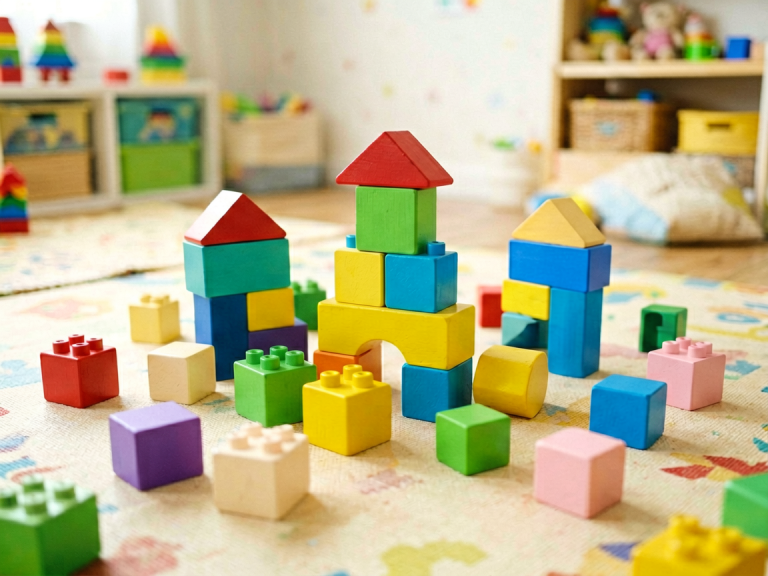
Contrary to outdated stereotypes, many 7-year-old girls adore construction toys. LEGO sets with themes like “Friends,” “Harry Potter,” or “Creator 3-in-1” allow her to follow instructions or free-build. Wooden block sets, marble runs, or magnetic building rods (e.g., Brain Flakes) also offer open-ended construction. These toys strengthen spatial awareness, planning, and problem-solving. For a twist, try a cardboard engineering kit like “Makedo” that lets her build actual 3D structures using recycled materials.
Music and Performance Toys
If she shows interest in music, consider a beginner’s instrument like a ukulele, a keyboard with built-in lessons, or a quality recorder. Rhythm toys like a djembe drum or a xylophone can be used solo or in a group. Also, a karaoke machine with a microphone (with volume control for your sanity) allows her to sing along to favorite songs. These toys build auditory discrimination, memory, and confidence in public performance.
—
Toys to Avoid
Knowing what *not* to buy is equally important. Avoid toys that are too complex or too simple for her age. For example, toys aimed at toddlers (like large plastic keys or simple shape sorters) will bore her, while advanced electronics meant for teenagers may frustrate her or require constant parental help.
Also, be cautious with toys that promote negative stereotypes or overly commercialized themes. A doll that emphasizes unrealistic body images or a video game with violent content can send the wrong messages. Instead, choose toys that align with positive values—kindness, curiosity, teamwork.
Finally, avoid toys with excessive small parts that can be easily lost (and cause choking) unless you are sure your child is responsible. Also, steer clear of loud electronic toys that produce constant noise; they can overwhelm the home environment and hinder creative, quiet play.
—
Practical Tips for Parents
Making the final selection can still feel overwhelming. Here are actionable tips:
- Observe her play: Spend time watching what she naturally gravitates toward. Does she like building, drawing, reading, or running? Use these clues.
- Involve her in the process: Without giving away the surprise, ask about her favorite activities or what her friends play with. This can reveal hidden interests.
- Check age labels and reviews: Many toys have a recommended age range printed on the box. Read online reviews from parents of similar-aged children to see if the toy truly holds attention.
- Think long-term: A toy that can be used in multiple ways or has add-on sets (like LEGO or magnetic tiles) grows with the child. Avoid one-use items like pre-colored coloring books.
- Balance toy types: Ensure she has a mix of active, creative, cognitive, and social toys. A child who only has art supplies may lack physical exercise, while one with only sports gear might miss out on fine-motor challenges.
- Remember the value of simplicity: Sometimes the best “toy” is a cardboard box, a set of markers, and some tape. Do not underestimate the power of open-ended, low-tech play.
Conclusion
Choosing age-appropriate toys for a 7-year-old girl is an opportunity to delight, educate, and empower. By understanding her developmental stage—from blossoming social skills to refined motor abilities—you can select gifts that resonate with her unique spirit. Whether you opt for a chemistry set that sparks curiosity, a jump rope that encourages active play, or a building set that fuels creativity, the right toy will be a catalyst for growth and happiness. Remember: the best toy is not the most expensive or the trendiest, but one that invites her to explore, imagine, and connect with the world around her. Happy parenting, and happy playing!