The Minimalist Parent’s Guide to Avoiding Toy Clutter for Your 9‑Month-Old
Introduction
When your baby reaches nine months, the world suddenly becomes a treasure chest of possibilities. She sits independently, reaches with intention, and explores everything—her toes, your hair, the remote control, and, of course, the growing pile of toys that seems to multiply overnight. Well‑meaning relatives, hand‑me‑downs from friends, and your own impulse purchases can quickly turn a nursery into a chaotic sea of plastic, fabric, and sound‑making objects.
Toy clutter is not just an aesthetic nuisance; it has real consequences for both you and your baby. For a nine‑month‑old, an overwhelming number of choices can lead to sensory overload, shorter attention spans, and less meaningful play. For parents, clutter adds daily stress, cleaning fatigue, and a constant feeling of disorganization. The good news is that you can take control—without becoming a toy‑scrooge. This guide will help you adopt a mindful, practical approach to toys for your nine‑month‑old, ensuring that every item in your home serves a purpose and that your play space remains calm, safe, and developmentally rich.
—
Understanding the Problem: Why Toy Clutter Harms a Nine‑Month‑Old
Cognitive Overload and Diminished Focus
At nine months, babies are in the midst of a cognitive explosion. They are beginning to understand object permanence, cause and effect, and simple problem‑solving. However, their executive function—the ability to filter out distractions and sustain attention—is still extremely immature. When a baby is surrounded by dozens of toys, each vying for her attention, her brain struggles to focus on any single object. Instead of engaging deeply with a rattle, she flits from one item to the next, never truly exploring or learning. Research in developmental psychology suggests that a limited number of well‑chosen toys actually supports deeper concentration, which is the foundation of later learning.
Safety Hazards Hidden in the Heap
Safety is a paramount concern for nine‑month‑olds. At this age, babies are becoming mobile: they scoot, crawl, pull up on furniture, and put everything in their mouths. A cluttered play area increases the risk of tripping, falling on hard toys, or accessing small parts that pose choking hazards. Moreover, scattered toys can hide dangerous items that have fallen off the floor—like a button, a coin, or a broken piece of plastic. Keeping toys to a manageable number makes it far easier to inspect each one for integrity and cleanliness.
Parental Stress and the Mental Load
Let’s be honest: you are tired. Caring for a nine‑month‑old involves endless rounds of feeding, diaper changes, naps, and soothing teething pain. The last thing you need is to step on a squeaky giraffe at 6 a.m. or spend twenty minutes every evening stuffing toys back into an overflowing bin. Clutter creates a constant low‑level anxiety that drains your energy. By reducing the volume of toys, you reclaim time, mental space, and the capacity to enjoy play rather than dread clean‑up.
—
The Art of Choosing Fewer but Better Toys
Prioritize Open‑Ended and Developmentally Aligned Toys
When selecting toys for a nine‑month‑old, quality always beats quantity. Look for open‑ended toys—items that can be used in multiple ways and grow with your baby. A set of wooden stacking cups, for example, can be banged together, stacked, nested, filled with small objects, and later used for pretend play. Compare that to a single‑purpose electronic toy that only lights up and plays a melody when a button is pressed. The electronic toy loses its novelty after a few days; the stacking cups remain engaging for months.
Other excellent open‑ended choices for this age include:
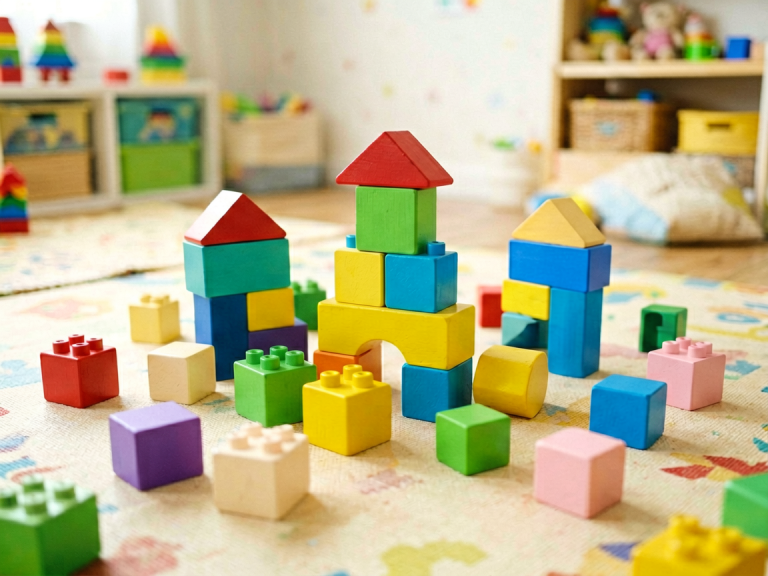
- Soft building blocks (fabric or lightweight foam) for grasping, knocking down, and early stacking
- Rattles and graspable toys with different textures, weights, and sounds
- Simple wooden or silicone teethers that can also be used for chewing and exploring
- Large, soft balls for rolling, chasing, and patting
- Board books with high‑contrast pictures, mirrors, and touch‑and‑feel elements
Avoid “Over‑Stimulating” Electronic Gadgets
Many modern toys marketed for nine‑month‑olds are battery‑operated, with flashing lights, loud music, and multiple buttons. These toys tend to capture a baby’s attention passively—the child watches and listens, but does not actively create or problem‑solve. Excessive exposure to such stimulation can lead to shorter attention spans and reduced motivation to explore the real, tactile world. While one or two electronic toys may be fine as occasional novelties, they should not dominate your toy collection.
The “One In, One Out” Mindset
To prevent accumulation, adopt a strict “one in, one out” rule. When you receive a gift or decide to buy a new toy, donate or pass along an old one that your baby has outgrown or lost interest in. This forces you to evaluate each item’s real value. It also teaches you—long before your child can understand—that toys are not permanent possessions but tools for learning that can be cycled through.
Beware of “Developmental” Marketing Hype
Manufacturers love to slap words like “Montessori,” “STEM,” or “brain‑building” on every brightly colored piece of plastic. Remember that a nine‑month‑old’s most powerful learning tools are not toys at all—they are you, your voice, your face, and the everyday objects in your home. A wooden spoon and a metal bowl are more educational than half the toys on the shelf. Before buying anything, ask yourself: *Does this toy truly offer something that a simple household object or a piece of nature (like a pinecone or a smooth stone, under supervision) cannot?* If the answer is no, skip it.
—
Implementing a Toy Rotation System
Why Rotation Works
Toy rotation is a game‑changer for families with infants and toddlers. The principle is simple: instead of having all toys available all the time, you rotate a small selection—say, five to eight items—every week or every few weeks. The rest are stored out of sight (in a closet, a bin, or under the crib). This system has multiple benefits:
- It resets your baby’s novelty receptors. Toys that seemed boring become fascinating again after a break.
- It keeps your living space decluttered and easy to clean.
- It allows you to curate toys that match your baby’s current developmental stage.
- It reduces decision fatigue for your baby, which in turn reduces fussiness and overstimulation.
How to Set Up a Simple Rotation
- Audit your collection. Gather every toy your baby owns. Remove any that are broken, missing parts, or no longer age‑appropriate (e.g., infant rattles with very small pieces that your nine‑month‑old can now choke on).
- Categorize. Group toys by type: sensory toys, fine‑motor toys, gross‑motor toys (e.g., things to push or crawl after), cause‑and‑effect toys, and books.
- Choose your “active” set. Select two to three toys from each category, making sure there is variety in texture, sound, and function. Aim for a total of five to eight items plus two or three board books. Place them in an accessible basket or on a low shelf.
- Store the rest. Put leftover toys in a closed bin or a drawer in another room. Label the bins by developmental stage or by rotation number.
- Rotate regularly. Every 4–7 days (or when you notice your baby losing interest), swap out the active set for a new combination. You can do a big swap once a week or simply replace two items every few days.
Tips for Successful Rotation
- Watch your baby’s cues. If she is obsessed with a particular toy, leave it in the rotation for another week. If she ignores everything, try a different mix.
- Include new challenges. As your baby approaches ten months, you can add simple shape sorters (with a large knob), push‑and‑pull toys, or activity cubes.
- Don’t over‑rotate. It’s tempting to constantly change toys, but too much novelty can also be overwhelming. Trust your baby’s rhythm.
—
Organizing the Play Space for Maximum Calm
Zone the Room Without Shelves or Bins
At nine months, your baby cannot yet put toys away herself, but the way you organize the space influences her behavior and your ease. Avoid large, deep toy boxes where everything gets jumbled. Instead, use low, open shelving (mounted safely to the wall) or shallow baskets on the floor. Display only the current rotation of toys in a visually simple way—one or two items per basket, so each toy is clearly visible. This encourages your baby to choose one toy at a time rather than dump an entire bin.
Create Defined Play and Non‑Play Areas
If possible, designate a specific corner of the living room or the nursery as the play zone. Use a soft mat or rug. Keep this zone free of non‑toy clutter (like diaper bags, adult books, or remote controls). The rest of the room should remain “quiet” visually. When your baby leaves the play zone, toys stay behind. This teaches an early spatial boundary and makes clean‑up a simple matter of returning few items to the shelf.
Invest in a Good Storage System
You don’t need expensive furniture. Clear, stackable bins with lids work perfectly. Label them by category or sensory type (e.g., “texture toys,” “sound toys,” “stacking toys”). When you rotate, you can easily grab the bin you need. For the active set, use a single low basket or a shallow tray that fits on a shelf.
Keep a Diaper Bag of “Out and About” Toys
To avoid clutter in your car or stroller, maintain a small separate bag of two or three ultra‑portable toys (a crinkle book, a small graspable teether, a soft doll). These are for travel only and should be cleaned and rotated independently from the home set. When you return home, the travel toys go back into their bag, not into the play zone.
—
Involving Your Baby in Tidy Play (Yes, Even at Nine Months)
Start the Clean‑Up Habit Early
While a nine‑month‑old cannot “clean up” in any conventional sense, you can begin modeling the behavior. After playtime, narrate what you are doing with a cheerful voice: “Let’s put the blocks back in the basket! Blocks go in. Yay!” Do this slowly and with exaggerated gestures. Your baby will watch, and eventually she will try to imitate your hand movements. Don’t expect her to succeed—just enjoy the bonding. This early exposure builds a positive association with order.
Offer Simple “Helper” Tasks
Babies at this age love to put objects into containers (that’s the beginning of object permanence and hand‑eye coordination). Use this natural instinct to your advantage. Hand your baby a toy and say, “Can you put it in the basket?” while guiding her hand. Even if she drops it five times, you are teaching that toys have a home. Choose containers with wide openings (like a shallow bin or a bucket) to make success easy.
Maintain a Toy “Bedtime” Ritual
End each day with a short, predictable routine. After the bath and before the final feeding, take two minutes to put away all toys together. Dim the lights, sing a simple song, and place each toy in its spot. This signals that playtime is over and sleep mode is beginning. Your baby will not understand the words, but she will absorb the calm rhythm—and you will appreciate starting the next day with a clean slate.
—
Conclusion: Less Clutter, More Connection
Preventing toy clutter for your nine‑month‑old is not about being a minimalist purist or denying your child fun. It is about making intentional choices that free up your family’s energy for what truly matters: face‑to‑face interaction, discovery, and the simple joy of being together. By curating a small, thoughtful toy collection, implementing a rotation system, and organizing your space with simplicity, you create an environment where your baby can focus, explore, and develop at her own pace.
And you—the tired, wonderful parent—get to spend less time picking up and more time playing, laughing, and watching your little one’s eyes light up over a block that she just discovered she can stack. That is the real gift of decluttering. Start today. Your baby, your home, and your sanity will thank you.
*(Word count: approximately 1,350 words)*