The Ultimate Parent Guide to Choosing Age-Appropriate Toys for 6-Year-Olds
Introduction: Why the Right Toy Matters at Age Six
At six years old, a child stands at a remarkable crossroads of development. Kindergarten is behind them, and first grade beckons with its structured learning, social expectations, and growing independence. The six-year-old brain is a whirlwind of curiosity, logical thinking, emotional awareness, and physical energy. Toys are not merely distractions—they are the tools through which children explore their world, practice new skills, and process complex emotions. Choosing age-appropriate toys for a six-year-old requires an understanding of their developmental milestones and a willingness to look beyond flashy packaging or trending characters. This guide will walk you through the cognitive, social, emotional, physical, and creative needs of a six-year-old, offering practical advice on what to look for—and what to avoid—when selecting toys that will truly benefit your child.
Understanding Developmental Milestones of a 6-Year-Old
Before diving into specific toy categories, it is essential to grasp what a typical six-year-old is capable of and what they are striving to master. Cognitively, they are entering what Jean Piaget called the "concrete operational stage." They can think logically about concrete events, understand cause and effect, and begin to grasp concepts like time, numbers, and sequences. Their attention span has lengthened to about 15 to 20 minutes for focused tasks, though they still need breaks and variety. Socially, friendships become more important, and they start to understand rules, fairness, and cooperation—though conflicts over sharing and winning still arise. Emotionally, they experience a wider range of feelings and can articulate them better, but they may still struggle with frustration, jealousy, or disappointment. Physically, their fine motor skills have improved significantly: they can tie shoelaces, write letters, cut with scissors, and manipulate small objects with precision. Gross motor skills are also advancing—they can hop, skip, jump rope, and ride a bicycle with confidence.
Cognitive Toys: Building Thinking and Problem-Solving Skills
Six-year-olds thrive on challenges that require strategic thinking, memory, and deduction. Unlike toddlers who need simple cause-and-effect toys, this age group enjoys games that reward planning and logical reasoning. Board games such as *Catan: Junior*, *Sequence for Kids*, or *Blokus* are excellent choices because they teach turn-taking, spatial reasoning, and basic strategy without overwhelming complexity. Puzzles with 100 to 200 pieces are also ideal: they encourage patience, visual pattern recognition, and shape manipulation. Science kits designed for early elementary students—like crystal growing sets, simple volcano eruption kits, or magnet exploration boxes—tap into their natural curiosity about how the world works. Likewise, coding toys such as *Code-a-Pillar* or *Osmo Coding Starter Kit* introduce computational thinking in a hands-on, screen-limited way. When selecting cognitive toys, avoid those that require reading fluency (unless your child is an advanced reader) because frustration can undermine the learning experience. Instead, look for toys that use pictures, colors, or simple symbols.
Social and Cooperative Toys: Fostering Friendships and Emotional Growth
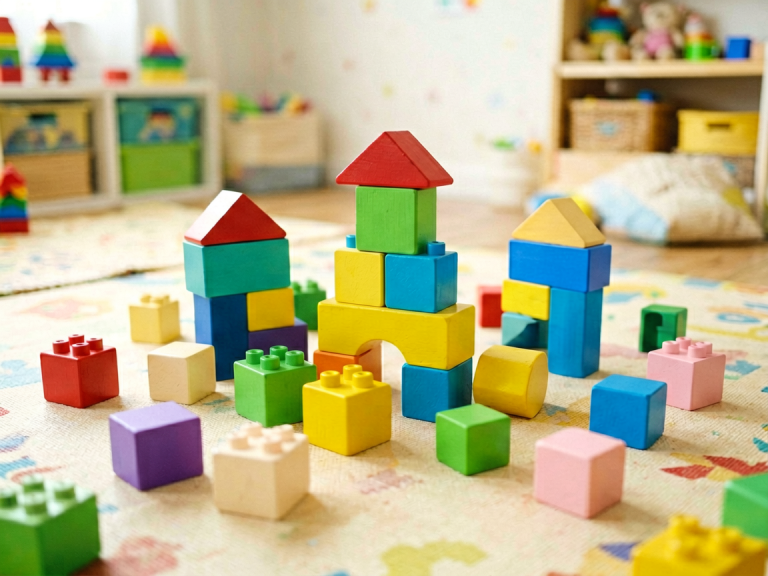
At six, children are learning to navigate complex social dynamics. Toys that encourage cooperative play rather than competition can help them practice sharing, negotiation, and empathy. Classic options like *The Sneaky Snacky Squirrel Game* or *Hoot Owl Hoot!* require players to work together toward a common goal. Dramatic play sets—such as a play grocery store, doctor’s kit, or puppet theater—allow children to take on roles, practice language, and explore different perspectives. Construction toys like LEGO Classic bricks or magnetic tiles (e.g., Magna-Tiles) often become collaborative projects when two or more children build together. Card games like *Uno* or *Go Fish* also reinforce social rules, but be prepared for occasional tears when someone loses; use these moments to talk about sportsmanship. Avoid overly competitive games where one child “wins” and others “lose” in a harsh way; instead, emphasize fun and participation.
Physical and Gross Motor Toys: Channeling Energy and Building Strength
Six-year-olds have seemingly endless energy, and their bodies need vigorous activity to develop muscle strength, coordination, and balance. Outdoor toys are indispensable. A good-quality bicycle with training wheels (or a balance bike if they haven’t learned yet) is a long-term investment. Jump ropes, Hula-Hoops, and playground balls (soccer, basketball, or four-square balls) provide endless opportunities for active play. Climbing structures, such as a small jungle gym or a treehouse, challenge their gross motor skills and risk assessment. For indoor active play, consider a mini trampoline with a safety net, a balance board, or a set of foam building blocks that can be stacked and knocked down. Fine motor development also matters: art supplies like Play-Doh, clay, or kinetic sand strengthen hand muscles needed for writing. Avoid overly complex sports equipment that requires advanced skills; instead, choose toys that allow free, unstructured movement.
Creative and Imaginative Toys: Nurturing Self-Expression and Originality
Imagination remains a powerful force at age six, but it becomes more structured and narrative-driven. Children love inventing stories, creating art, and building worlds. Art supplies are a must: washable markers, watercolor paints, colored pencils, safety scissors, glue sticks, and a roll of butcher paper can keep a six-year-old engaged for hours. Craft kits—such as bead jewelry, friendship bracelet looms, or wooden model kits—teach following instructions while leaving room for personal flair. Dress-up clothes and accessories (hats, capes, toy tools) allow them to become astronauts, firefighters, or fairy-tale characters. Musical instruments like a xylophone, recorder, or simple drum set encourage rhythmic experimentation. For building creativity, *K’NEX* or *Straws and Connectors* sets offer more open-ended construction than LEGO sets that come with strict instructions. Remember that the goal is not a perfect product but the process of creation; resist the urge to “fix” their artwork or guide their play too much.
Emotional and Self-Regulation Toys: Supporting Coping and Calm
Six-year-olds are not yet masters of their emotions. They can feel overwhelmed by school, friends, or even just a long day. Toys that promote mindfulness, self-soothing, and emotional literacy are surprisingly valuable. Weighted stuffed animals or soft lap pads can provide calming sensory input. A “calm-down jar” (a sealed bottle filled with glitter and water) can be a visual tool for deep breathing. Emotion flashcards or games like *The Feelings Game* help children label and discuss their feelings. Simple yoga cards for kids, or a children’s book about emotions paired with a plush toy, can normalize emotional expression. Avoid toys that overstimulate—such as those with flashing lights, loud sounds, or frantic action—especially for children who are prone to anxiety. Instead, look for open-ended, quiet toys that encourage reflection, like a sand timer, a set of smooth stones, or a small journal with kid-safe pens.
Safety and Practical Considerations for Toy Selection
Even as children grow more capable, safety remains paramount. Always check age recommendations on packaging, but also use your judgment. For six-year-olds, avoid toys with small parts that could be choking hazards for younger siblings, as well as any toys with sharp edges, toxic paints, or long cords that could pose strangulation risks. Battery-operated toys should have secure compartments that require a screwdriver to open. Also consider durability: six-year-olds can be rough on toys, so look for solid construction and washable materials if possible. Storage is another practical concern; toys with many pieces (like LEGO, craft beads, or board game components) should come with or be paired with a storage solution to prevent chaos. Rotating toys every few weeks can also keep a child engaged without overwhelming them with choices.
What to Avoid: Common Pitfalls in Toy Shopping for 6-Year-Olds
The toy market is flooded with products that claim to be educational but are actually passive or overstimulating. Avoid electronic toys that do the "thinking" for the child—for example, toys that beep when a correct answer is pressed, rather than requiring the child to solve a problem. Avoid toys that are tied to a movie or show unless your child has a genuine interest; often these toys are low-quality and encourage repetitive, scripted play. Also avoid toys that are too advanced: a complex robotics kit may be beyond a six-year-old’s patience and fine motor skills, leading to frustration. Conversely, avoid toys that are too babyish; six-year-olds can feel insulted by toddler-level toys and will quickly lose interest. Finally, be wary of gender-stereotyped marketing that limits a child’s exploration—a boy might love a kitchen set, and a girl might adore a construction truck.
Conclusion: Trusting Your Child’s Cues
The best toy for a six-year-old is one that matches their interests, challenges their abilities, and invites them to play again and again. This guide provides a framework, but you know your child best. Observe what they naturally gravitate toward at a park, in a friend’s house, or during free time at home. Do they love building? Get them construction toys. Do they prefer drawing? Stock up on art supplies. Do they crave social interaction? Buy cooperative games or dress-up costumes. The key is to prioritize open-ended, imaginative, and skill-building toys over passive, restrictive ones. Every toy is a lesson in waiting, problem-solving, sharing, and creating. By choosing wisely, you are not just giving a gift—you are nurturing a mind, a heart, and a body that will grow into its fullest potential. And remember, the most valuable “toy” you can offer at this age is your presence: join them in a game of catch, build a fort together, or listen to their elaborate story. That time together is the ultimate age-appropriate gift.