Playful Pathways: Building Social Skills in Babies Through Purposeful Play Activities
Introduction: The Foundation of Social Connections
Social skills are not innate; they are cultivated through repeated, meaningful interactions from the very first months of life. For babies, whose brains are developing at an astonishing rate, every coo, every smile, and every shared gaze is a building block for future relationships. Play, in its purest form, is the natural language of infancy. Through carefully chosen play activities, parents and caregivers can nurture essential social competencies such as eye contact, turn-taking, joint attention, empathy, and cooperation. This article explores a range of developmentally appropriate play activities designed specifically to enhance social skills in babies from birth to 18 months, offering practical guidance rooted in child development research. By integrating these playful interactions into daily routines, adults can lay a robust foundation for a child’s lifelong capacity to connect, communicate, and collaborate with others.
The Critical Role of Social Development in Infancy
Why focus on social skills so early? The first two years of life are a sensitive period for social-emotional growth. During this time, babies form attachment bonds that shape their sense of security and trust. Social play helps babies learn to interpret facial expressions, vocal tones, and gestures—the very building blocks of emotional intelligence. When a baby laughs at a peek-a-boo game or reaches out to touch a caregiver’s nose, they are not just amusing themselves; they are practicing the art of reciprocity. Studies show that infants who engage in frequent, responsive social play demonstrate better self-regulation, language development, and peer interaction later in preschool. Therefore, investing in play activities that foster social skills is one of the most impactful things a parent can do.
Play Activities for Newborns to 3 Months: The Art of Responsive Connection
Newborns are not yet capable of purposeful play, but they are exquisitely attuned to human faces and voices. Social skill building at this stage centers on responsive interaction. The core activity is simple but profound: face-to-face time. Hold your baby about 8–12 inches from your face, maintain gentle eye contact, and talk or sing in a soft, animated voice. When your baby coos or makes a sound, pause and mimic that sound. This back-and-forth, known as “serve and return,” teaches the infant that their communication matters. Another activity is mirroring expressions. While holding your baby, exaggerate your facial expressions—wide eyes, a big smile, a surprised “ooh.” Watch as your baby begins to imitate these expressions, often around 6–8 weeks. This mirroring is the earliest form of social imitation, a precursor to empathy. Finally, skin-to-skin contact during calm moments, such as after a bath, promotes a sense of safety and bonding, which is the emotional soil in which social skills grow.
Activities for 3 to 6 Months: Introducing Turn-Taking and Joint Attention
Around three months, babies begin to engage more actively with their environment. Social play enters a new phase: turn-taking games. The classic game of peek-a-boo is ideal. Cover your face with your hands or a soft cloth, then reveal yourself with a cheerful “peek-a-boo!” At first, your baby may simply watch. Over time, they will anticipate the reveal, perhaps kicking their legs or smiling. This teaches the concept of predictability and reciprocity. Another powerful activity is pat-a-cake or simple clapping rhymes. Sit facing your baby, gently clap their hands together while singing “Pat-a-cake, pat-a-cake, baker’s man.” The rhythmic interaction encourages joint attention—the shared focus on an activity—which is a cornerstone of social cognition. Rattle sharing is also effective. Hold a colorful rattle and shake it to attract your baby’s attention. Then offer it to them. When they grasp it, let them explore, then gently extend your hand and ask for it back. Even if they cannot yet release it, the act of looking at your hand and the rattle helps them understand the flow of giving and receiving.
Activities for 6 to 12 Months: Fostering Imitation, Gestures, and Early Cooperation
Between six and twelve months, babies become mobile—crawling, scooting, or pulling up. Their social world expands as they begin to understand intentionality. Imitative play is now crucial. Sit on the floor with your baby and perform simple actions like tapping a drum, stacking two blocks, or blowing a feather. Encourage your baby to copy you. Then, let them lead: if they bang a spoon on the floor, you do the same. This mutual imitation reinforces social bonding and teaches the joy of shared experience. Gesture games are equally important. Teach your baby to wave “bye-bye” by demonstrating it while saying the word. At around 9–10 months, many babies will wave back. Similarly, practice pointing—point to a toy or a picture in a book, then guide your baby’s finger to point too. Pointing is a key social skill because it communicates shared interest. Rolling a ball back and forth on the floor (a large, soft ball) is a delightful cooperative activity. Sit facing your baby with legs apart, roll the ball gently toward them, and encourage them to push it back. Even if it wobbles off course, the effort teaches the rudiments of turn-taking and cooperative play. Reading interactive board books with flaps or textures also builds social skills—look at the book together, point at pictures, and let your baby turn the pages. The shared attention to a visual story creates a joint experience that deepens social connection.
Activities for 12 to 18 Months: Encouraging Parallel Play, Sharing, and Simple Pretend
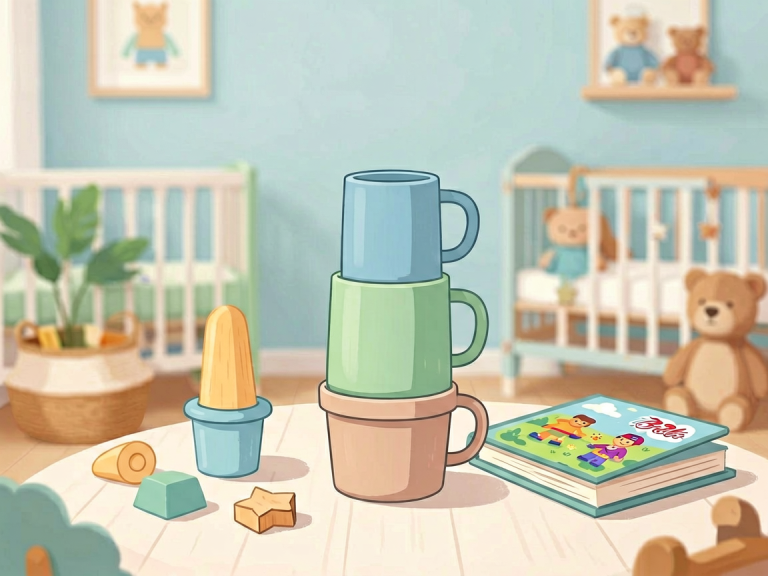
As babies become toddlers, their play becomes more complex. They begin to engage in parallel play—playing near another child or adult but not yet directly interacting. Social skill activities at this stage should gently nudge them toward brief, positive peer-like interactions. Toy duplicates are a practical strategy: provide two identical toys (e.g., two stacking cups) so that your baby and a playmate or caregiver can play side by side. This reduces conflict and allows them to observe each other’s actions. Simple pretend play emerges now. Offer a baby doll, a small blanket, and a toy bottle. Show your baby how to “feed” the doll or put it to bed. This role-playing builds empathy and perspective-taking. Parallel sorting games with a caregiver: sit with two bowls and a pile of large blocks. Take turns placing blocks into the bowls. The act of waiting, watching, and then taking a turn reinforces patience and social awareness. Mirror play is also powerful at this age. Stand in front of a child-safe mirror with your baby. Make funny faces, stick out your tongue, and encourage your baby to imitate. When your baby sees their own reflection and yours together, they begin to understand self-identity and the concept of a social partner outside themselves.
The Role of the Parent: Modeling, Narrating, and Pacing
While activities are essential, the adult’s approach determines their effectiveness. Modeling is foremost: babies learn social skills by watching your interactions. When you greet a neighbor warmly, say “please” and “thank you,” or comfort a crying friend, your baby absorbs these patterns. Narrate your play in simple language: “You gave me the ball. Now I roll it back to you. Your turn!” This verbal scaffolding helps babies link actions to social meaning. Pacing is critical—watch for signs of overstimulation such as turning away, fussing, or crying. Forced play is counterproductive. Follow your baby’s lead; if they are tired, stop and cuddle. The goal is positive, pleasurable interaction, not busywork. Repetition is your ally. Babies learn through repeated routines. Playing the same game many times allows them to anticipate, predict, and eventually initiate the social exchange.
Overcoming Challenges: Shyness, Distraction, and Developmental Variations
Every baby is unique. Some babies are naturally more social, while others are cautious or easily overwhelmed. If your baby avoids eye contact or resists a game, do not pressure them. Instead, slow down. Try a quieter activity, such as blowing gentle bubbles and watching them pop together. Sensory play in a calm environment—like finger painting with yogurt—can be a low-pressure social activity if you sit beside your baby and model the action. For babies who seem distracted, shorten play sessions to two minutes and gradually increase. Always prioritize a secure attachment: a baby who feels safe is more likely to venture into social play. Additionally, if you have concerns about your baby’s social development (e.g., lack of smiling by 3 months, no response to name by 9 months, no pointing by 12 months), consult your pediatrician. Delays can be early signs of conditions such as autism spectrum disorder, and early intervention is highly effective.
Real-Life Integration: Weaving Social Play into Daily Routines
You do not need a special playroom or expensive toys. Social play can happen during everyday moments. During diaper changes, make silly faces, sing a song, and pause to let your baby “respond” with a sound. During mealtime, sit facing your baby and take turns offering a spoon—let them feed you a bite of puree (and enjoy the mess!). During bath time, splash water gently and say “splash!” then wait for your baby to splash back. During walks, point to a dog or a bird and say “Look! Do you see it?” then look at your baby to check for shared attention. These micro-moments of connection accumulate into a rich tapestry of social learning.
Conclusion: The Lifelong Gift of Playful Connection
Building social skills in babies is not about achieving milestones; it is about cultivating a warm, responsive relationship through play. Each game of peek-a-boo, each shared laugh over a wobbly tower of blocks, each gentle wave of goodbye—these are the threads that weave a baby’s social fabric. As you engage in these play activities, remember that your presence, your patience, and your joy are the most powerful tools. The baby who learns early that play is a joyful exchange with another person will carry that lesson into every friendship, every classroom, and every future relationship. So sit down on the floor, look into those curious eyes, and begin. The journey of a thousand social smiles starts with a single game.
(Word count: approximately 1,480 words)