The Power of Make-Believe: Engaging Pretend Play Activities for Toddlers
Introduction: The Magic of Pretend Play
From the moment a toddler picks up a wooden spoon and starts stirring an empty pot, or drapes a blanket over their shoulders and declares, “I’m a superhero!” something extraordinary unfolds. Pretend play—also known as imaginative or symbolic play—is far more than a delightful way to pass the time. For toddlers, it is a profound developmental tool through which they make sense of the world, practice social roles, experiment with language, and build cognitive flexibility. During the second and third years of life, children’s brains are developing at a staggering pace, forming neural connections that will underpin lifelong learning. Pretend play activities harness this natural curiosity and channel it into meaningful, joyful exploration.
Understanding the value of these activities is essential for parents, caregivers, and educators. When a toddler pretends to feed a teddy bear or drives a cardboard box like a car, they are not merely playing—they are rehearsing narratives, solving problems, managing emotions, and constructing their own miniature universe. This article will delve into the developmental benefits of pretend play, offer a curated list of engaging activities specifically suited for toddlers, provide guidance on creating a supportive environment, and discuss the caregiver’s role in nurturing this vital form of play.
The Developmental Benefits of Pretend Play
Before exploring specific activities, it is important to appreciate why pretend play matters so much for toddlers. Research in early childhood development consistently highlights several key domains that are strengthened through make-believe:
Cognitive Growth and Executive Function
Pretend play requires a child to hold multiple ideas in mind simultaneously. For example, when a toddler pretends to be a doctor, they must remember that a toy stethoscope represents a real instrument, that the doll is the patient, and that certain actions (listening to the chest, giving a “shot”) follow a sequence. This exercise in symbolic thinking lays the groundwork for abstract reasoning. Moreover, it boosts executive function skills such as working memory, inhibitory control (e.g., resisting the urge to actually bite the toy food), and cognitive flexibility (switching roles from doctor to patient). These skills correlate strongly with later academic success and self-regulation.
Language and Communication Skills
Pretend play is a natural language laboratory. Toddlers often narrate their actions (“Baby is sleeping… shh… I cover you”), engage in dialogues with imaginary companions or adults, and experiment with new vocabulary encountered in stories or daily life. When a child plays “grocery store,” they may say “apple,” “shopping list,” or “pay please,” thus practicing nouns, verbs, and social phrases. The back-and-forth of role-play also teaches turn-taking in conversation, listening, and responding appropriately—all foundational for effective communication.
Social and Emotional Development
Through pretend play, toddlers learn to navigate social roles and relationships. They try on different identities—mother, father, firefighter, animal—which helps them understand perspectives beyond their own. This perspective-taking is a precursor to empathy. Additionally, pretend scenarios allow children to process emotions in a safe context. A toddler who has recently visited the doctor may reenact the experience, playing the role of both the nervous child and the reassuring doctor, thereby mastering feelings of anxiety. Collaborative pretend play with peers or adults teaches sharing, negotiation, and conflict resolution: “You be the train driver; I’ll be the passenger!”
Motor Skills and Creativity
Many pretend play activities involve fine and gross motor movements. Dressing a doll requires pincer grasp and hand-eye coordination; building a fort involves balancing pillows and throwing a blanket; stirring a pretend soup works on wrist rotation. At the same time, imagination is unconstrained. A box becomes a rocket ship, a stick becomes a magic wand. This open-ended nature nurtures divergent thinking—the ability to generate multiple solutions to a problem—which is a hallmark of creativity.
Top Pretend Play Activities for Toddlers
Given that toddlers have short attention spans and are still developing their ability to follow complex narratives, the best pretend play activities are simple, hands-on, and rooted in familiar routines. Below are several categories with specific, easy-to-implement ideas.
Kitchen and Cooking Adventures
The kitchen is a central hub in most toddlers’ lives, making cooking-themed pretend play incredibly appealing. Provide a play kitchen set or simply use real (clean) pots, plastic bowls, and wooden spoons. What you can do:
- *Toy Food Feast:* Give your toddler empty food containers (cereal boxes, yogurt cups) and let them “cook” a meal. Encourage them to name the dishes: “I’m making spaghetti!”
- *Tea Party:* Set up a low table with plastic cups and a teapot. Invite stuffed animals to join. Practice pouring imaginary tea, saying “please” and “thank you,” and taking polite sips.
- *Grocery Shopping:* Use a small shopping bag or basket and a few toy fruits. Take turns being the shopper and the cashier. Say “How much is the banana?” and let your toddler respond with a number or just “one, two!”
Doctor and Patient
After a well-child visit or a minor cold, toddlers often find comfort in playing doctor. This activity helps demystify medical experiences and builds empathy.
- *Check-Up Station:* Use a toy doctor’s kit (stethoscope, syringe, bandage) or improvise with household items like a paper towel tube for a stethoscope. Your toddler can give a teddy bear a check-up, listening to its heartbeat and applying a bandage to a “boo-boo.”
- *Sick Doll:* Ask your toddler, “What’s wrong with baby? Is she hot?” Hand them a toy thermometer (a clean stick or chopstick works). Encourage them to give medicine (using a dropper with water) and tuck the doll into bed. This activity also helps children feel in control of frightening situations.
Animal Adventures and Farm Life
Toddlers are naturally fascinated by animals, and pretending to be them offers a fantastic outlet for physical movement and vocal expression.
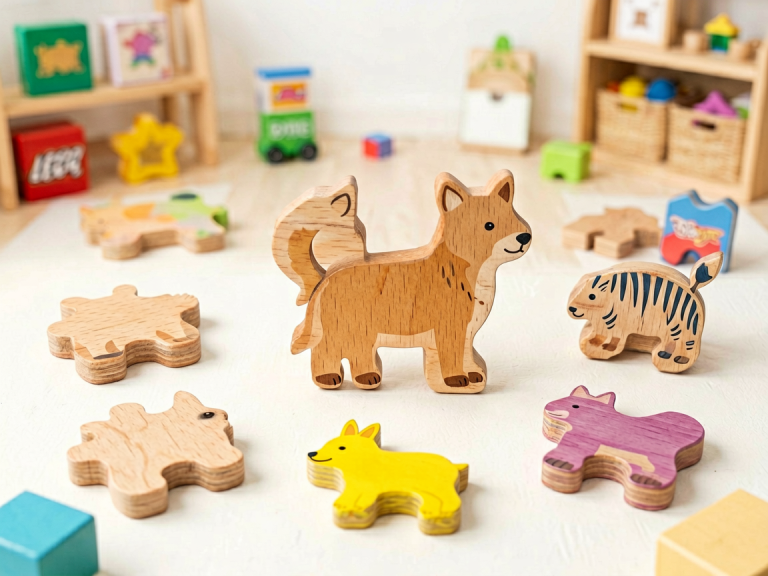
- *Zoo or Farm:* Gather a collection of plastic animal figures. Create a “barn” from a shoebox and have your toddler feed hay (shredded paper) to the cows and horses. Or pretend you are both animals: “Let’s hop like bunnies! Now roar like a lion!”
- *Veterinary Clinic:* Extend the animal theme into a vet role-play. Use a hairbrush as a tool, wrap a toy animal in a blanket, and say, “Your puppy is sick. Can you make him feel better?” This merges nurturing with creative problem-solving.
Superhero and Fantasy Play
Even very young children enjoy the idea of having special powers. This type of play builds confidence and allows them to explore themes of good versus bad in a safe way.
- *Cape and Mask:* Give your toddler a piece of fabric (a towel or scarf) for a cape and let them choose a superhero name (even “Super Baby” works). Pretend to fly around the room, rescue a stuffed animal from a “danger” (a pillow pile), and shout “I saved you!”
- *Magic Wand:* A stick or cardboard tube becomes a magic wand. Your toddler can wave it to “turn” you into a frog (you can hop and croak) or to make a tower appear (stack blocks). This play encourages cause-and-effect thinking and imagination.
Transportation and Travel
Toddlers love movement and wheels. Pretending to be a driver, pilot, or train conductor is a classic favorite.
- *Cardboard Box Car:* Cut a large box to resemble a car, add a paper plate steering wheel, and let your toddler “drive” to the store or the park. Make engine noises together. You can set up a simple “road” with masking tape on the floor.
- *Train Ride:* Arrange chairs in a row, give your toddler a paper ticket, and play the conductor. Chant “All aboard!” as you choo-choo around the living room. This activity reinforces sequencing and social routines.
How to Set Up a Pretend Play Environment at Home
Creating an inviting space for pretend play does not require elaborate toys or a dedicated playroom. What matters most is accessibility and variety. Here are practical tips for setting the stage:
Keep Prop Boxes Simple and Rotated
Assemble a few “prop boxes” that you can rotate every week or two. For example, a doctor box might contain a toy stethoscope, bandages, a small flashlight, and a baby doll. A kitchen box could have play food, pots, and a strainer. Rotating keeps the material novel without overwhelming the toddler with too many choices at once.
Encourage Open-Ended Materials
The best props are those that can be used in multiple ways. Old sheets and blankets become tents, capes, or picnic blankets. Cardboard boxes transform into spaceships, buses, or houses. Scarves, hats, and plastic bowls are infinitely reimaginable. Avoid toys that sing or flash preprogrammed phrases, as they steer the play in a fixed direction. Instead, let your toddler decide what a block “is.”
Designate a Low-Stress Play Area
A corner of the living room or a child-safe section of the bedroom works perfectly. Place a small rug, a low shelf with bins, and perhaps a child-sized table and chairs. Ensure that breakable objects are out of reach but that safe items like wooden spoons, fabric scraps, and soft dolls are easily accessible. The goal is to allow spontaneous play without constant “no” interruptions.
The Role of Parents and Caregivers in Facilitating Pretend Play
While toddlers can and do engage in solitary pretend play, the involvement of a caring adult enriches the experience enormously. However, the caregiver’s role is not to direct the play but to support and extend it.
Follow the Child’s Lead
Observe what your toddler is doing. If they are currently interested in pouring water into cups, join them but do not impose a different storyline. You can simply say, “Oh, you’re making me a cup of juice? Thank you!” Then take a pretend sip. By mirroring their actions and adding simple commentary, you validate their ideas and expand the narrative slightly.
Use Open-Ended Questions
Rather than giving instructions, ask questions that prompt deeper thinking: “What does the baby need now?” “Where is your car going?” “What will we cook next?” This encourages your toddler to articulate their plans and strengthens their narrative skills.
Model and Then Step Back
Sometimes toddlers need a demonstration. If you want to play “grocery store,” you might start by pushing an empty basket and saying, “I need to buy apples. Where are the apples?” After a minute, hand the basket to your toddler. Let them take over. The goal is to be a playful partner, not a director.
Safety Considerations and Age-Appropriate Props
Toddlers explore with their mouths as much as their hands, so safety is paramount. Always check that any objects used in pretend play are too large to swallow (no small parts that could choke), made of non-toxic materials, and free of sharp edges or strings longer than 12 inches that pose strangulation hazards. Avoid real kitchen knives, glass, or anything that could break. When using household items like empty bottles, ensure caps are removed or glued on securely. For food-related play, use only clean, empty containers—never let a toddler play with real detergent or cleaning product bottles, even if emptied. Supervise all play, especially when using scarves or fabric capes, to prevent tripping or entanglement.
Conclusion: Encouraging Imagination for Lifelong Learning
Pretend play is not a luxury or a mere pastime for toddlers; it is an essential component of healthy development. Through simple activities like cooking a pretend soup, bandaging a stuffed animal, or zooming a cardboard car across the floor, young children build the neural architecture for complex thinking, emotional resilience, and social understanding. They learn that the world is a place they can reshape with their ideas, that problems have solutions, and that relationships are built through shared stories.
As caregivers, our most powerful contribution is not the newest toy from the store but the gift of our attention, our willingness to enter their imaginary world, and our respect for their creative authority. So the next time your toddler hands you an invisible cup of tea, accept it with gratitude. When they ask you to be the patient under a doctoring teddy, lie down and cooperate. In those moments, you are not just playing—you are building the foundation for a curious, compassionate, and capable human being. By nurturing pretend play today, we are investing in a lifetime of imagination and wonder.