The Ultimate STEM Toys Buying Guide: How to Choose Educational Play That Builds Future Innovators
Introduction: Why STEM Toys Matter More Than Ever
In a world increasingly shaped by technology, engineering, and scientific discovery, the toys children play with are no longer just for fun—they are foundational tools for cognitive development. STEM toys—those focused on Science, Technology, Engineering, and Mathematics—have surged in popularity among parents, educators, and child development experts. But with thousands of options on the market, from coding robots to chemistry kits, choosing the right STEM toy can feel overwhelming. This comprehensive buying guide will walk you through every critical factor: age appropriateness, learning goals, safety, budget, and long-term value. Whether you are buying for a curious toddler or a pre-teen aspiring engineer, this guide will help you make an informed, impactful purchase.
What Exactly Are STEM Toys?
STEM toys are playthings designed to introduce and reinforce concepts from science, technology, engineering, and mathematics in a hands-on, engaging way. Unlike traditional toys that may focus solely on entertainment, STEM toys encourage problem-solving, critical thinking, creativity, and perseverance. They often involve building, experimenting, coding, or exploring natural phenomena. Examples range from simple magnetic building blocks for preschoolers to advanced robotics kits for teenagers. The best STEM toys seamlessly blend education with enjoyment, allowing children to learn through trial and error without feeling like they are in a classroom.
Why a Buying Guide Is Essential
Not all toys labeled "STEM" deliver genuine educational value. Some are gimmicky, overpriced, or too complex for the intended age. A thoughtful buying guide helps you avoid common pitfalls: purchasing a toy that your child finds boring, one that is too difficult and causes frustration, or one that lacks meaningful learning outcomes. Additionally, STEM toys vary enormously in quality, durability, and safety standards. This guide will equip you with the criteria to evaluate any STEM toy, ensuring your investment supports your child's development and sparks lasting curiosity.
Key Factors to Consider When Buying STEM Toys
1. Age Appropriateness: The Single Most Important Factor
Age recommendations on toy packaging are not arbitrary. They reflect cognitive abilities, fine motor skills, and safety considerations. A toy that is too advanced can lead to frustration and loss of interest; one that is too simple will bore a child and fail to challenge them.
- Toddlers (Ages 2–4): Look for large, chunky pieces that are safe to mouth. Toys like stacking blocks, simple shape sorters, and basic magnetic tiles introduce early concepts of geometry, balance, and cause-and-effect. Avoid small parts that pose choking hazards.
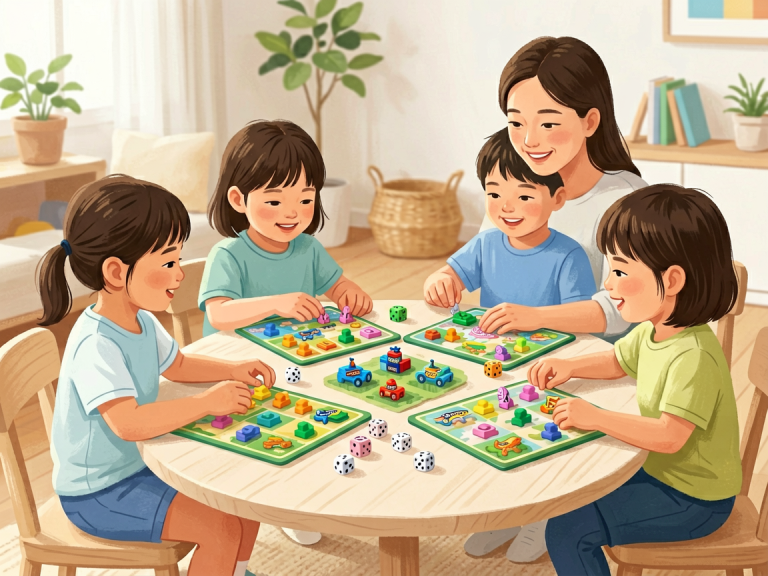
- Preschoolers (Ages 4–6): At this stage, children can handle more complex building sets, simple coding games (e.g., board games with directional arrows), and beginner science kits (e.g., grow-your-own crystals). Toys that require following step-by-step instructions help develop sequencing and patience.
- Early Elementary (Ages 6–9): Children can manage more intricate construction sets (LEGO Technic, K’Nex), basic robotics (e.g., Sphero, Osmo), and introductory coding toys (e.g., Scratch-based robots). They also enjoy chemistry sets with safe, non-toxic materials.
- Pre-teens and Teens (Ages 9+): This age group thrives on advanced robotics, programmable drones, electronics kits (e.g., Arduino, Raspberry Pi), and sophisticated engineering challenges. Look for toys that allow open-ended creativity and can be expanded with additional components.
Always check the manufacturer’s age rating and read reviews from other parents about actual usability. A toy labeled "ages 8+" might still be too complex for a typical 8-year-old if it requires advanced reading or fine motor dexterity.
2. Educational Value: Aligning Toys with Learning Goals
STEM toys should teach something meaningful, but “educational value” can mean many things. Ask yourself: What do I want my child to gain? Possibilities include:
- Problem-solving skills: Puzzles, logic games, and engineering challenges that require multiple attempts to succeed.
- Creativity and design thinking: Open-ended building sets (e.g., magnetic tiles, wooden blocks, LEGO Classic) that let children imagine and build their own creations.
- Computational thinking: Toys that introduce coding concepts—sequencing, loops, conditionals—even without a screen (e.g., Code-a-Pillar, Botley).
- Scientific inquiry: Kits that involve experiments, observation, and recording results (e.g., microscope sets, weather stations).
- Mathematical reasoning: Toys that teach geometry, measurement, patterns, and basic arithmetic through play (e.g., geometric puzzles, balance scales, number games).
No single toy can cover all areas. Choose based on your child’s current interests and areas where you want to encourage growth. The best toys offer multiple difficulty levels or expandable challenges so the child can grow with the toy.
3. Safety: Non-Negotiable Standards
Safety is paramount, especially for younger children. When evaluating a STEM toy, consider:
- Materials: Are plastics BPA-free? Are paints and coatings non-toxic? For science kits, check that chemicals are safe and clearly labeled.
- Small parts: Avoid any toy with small detachable parts for children under 3. Even for older kids, ensure that batteries are securely enclosed.
- Sharp edges and pinch points: Moving parts in robotics kits should be smooth and well-designed.
- Electrical safety: Battery compartments should require a screwdriver to open. Avoid toys that plug into wall outlets for young children.
- Age-specific warnings: Read all warnings carefully. Some chemistry sets contain substances that should only be used with adult supervision.
Look for certifications such as ASTM (American Society for Testing and Materials) or CE (Conformité Européenne) marks, which indicate that the toy meets recognized safety standards.
4. Durability and Longevity
STEM toys often take a beating—dropped, stepped on, and used repeatedly. A flimsy toy that breaks after a few uses is not only frustrating but also fails to deliver sustained learning.
- Choose reputable brands: LEGO, Snap Circuits, Thames & Kosmos, and Magna-Tiles are known for robust construction.
- Check materials: Solid wood, thick plastic, and metal components generally last longer.
- Consider modularity: Toys that allow you to buy expansion packs (e.g., additional sensors, building pieces) extend playability.
- Read reviews specifically about durability. Look for complaints about parts breaking, pieces not fitting properly, or screen-based toys that crash or lose connectivity.
5. Open-Ended vs. Closed-Ended Play
- Closed-ended toys have a specific goal (e.g., building a model car from a set of instructions). They teach following directions and achieving a defined outcome.
- Open-ended toys have no fixed end point (e.g., a box of wooden blocks, a pile of magnetic tiles). They encourage creativity, experimentation, and divergent thinking.
Both types have value, but research suggests that open-ended play fosters deeper problem-solving and innovation. For a well-rounded STEM experience, include at least one open-ended toy in your child’s collection. Many advanced STEM kits combine both: you can follow instructions to build a specific robot, then modify it for new challenges.
6. Screen Time and Digital Integration
In today’s world, many STEM toys involve apps, tablets, or computers. While digital elements can enhance learning (e.g., coding games that show real-time feedback), excessive screen time can be a concern.
- Screen-free STEM toys are ideal for younger children who benefit from tactile, hands-on learning. Examples include building sets, marble runs, and physics balance toys.
- Screen-based STEM toys can be effective for older children learning coding, robotics, or complex simulations. Look for toys that use screens as a tool rather than the main source of entertainment.
- Balance is key: The American Academy of Pediatrics recommends limiting recreational screen time. Choose toys that offer offline play options or that require active, not passive, engagement.
7. Budget and Cost-Effectiveness
STEM toys range from under $20 to several hundred dollars. A higher price does not automatically mean better educational value.
- Entry-level options: Small chemistry kits, simple coding board games, and basic building blocks can be very effective and affordable.
- Mid-range ($20–$60): This is the sweet spot for many quality STEM toys, such as Snap Circuits Jr., LEGO Boost, or a good microscope.
- Premium ($60+): Advanced robotics kits, drones with programmable features, and large engineering sets. Consider whether these toys will grow with your child or become obsolete quickly.
- Bundles and subscriptions: Some companies offer monthly STEM kits (e.g., KiwiCo, LittlePassports). These can be cost-effective if your child enjoys variety and you are willing to commit.
Always check return policies and warranty information. Many reputable brands offer replacement parts for broken pieces.
8. Interest and Personality Match
A STEM toy that does not align with your child’s natural interests will likely end up neglected. Observe what your child is already curious about:
- Do they love building? Look for construction sets, marble runs, or 3D puzzles.
- Are they fascinated by animals or nature? Gardening kits, bug viewers, or anatomy models might be better than a coding robot.
- Do they enjoy puzzles and logic? Board games like Gravity Maze or coding games like Robot Turtles are perfect.
- Are they artistic? Toys that combine STEM with art (STEAM) are abundant: circuitry that lights up drawings, 3D pens, or programmable light displays.
Let your child’s current passions guide your choice. Forcing a specific type of STEM toy can backfire and create resistance to science and math.
Top STEM Toy Categories and What to Look For
Science Kits: Hands-On Exploration
Science kits cover chemistry, biology, physics, and earth science. Look for kits that include clear instructions, real materials (not just plastic models), and activities that can be repeated. Avoid kits with messy, hard-to-clean substances unless you have a designated workspace. Popular brands: Thames & Kosmos, National Geographic, Learning Resources.
Engineering and Building Sets: Structural Thinking
From wooden blocks to sophisticated metal construction sets, these toys teach principles of structural integrity, balance, and mechanics. Look for sets that include gears, pulleys, or motors for older kids. Brands like LEGO Technic, K’Nex, and Meccano are excellent. Consider whether the pieces are compatible with other sets you already own to expand possibilities.
Coding and Robotics: Digital Logic
Coding toys range from completely screen-free (e.g., Botley, Code-a-Pillar) to app-controlled (Sphero, Ozobot, LEGO Spike). For older kids, programmable drone kits (e.g., DJI Tello) and microcontroller kits (Arduino, micro:bit) offer deep learning. Key considerations: ease of setup, quality of educational materials/app, and ability to progress from block coding to text-based languages.
Math and Logic Games: Numerical Reasoning
Board games, puzzles, and digital apps that focus on arithmetic, geometry, patterns, and strategic thinking. Examples include Sum Swamp, Prime Climb, and Rush Hour. Look for games that adjust difficulty levels or offer multiple challenges.
Common Mistakes to Avoid When Buying STEM Toys
- Ignoring the age recommendation – Buying a toy that is too advanced leads to frustration and may even pose a safety risk.
- Focusing only on gender stereotypes – STEM is for everyone. Avoid pinkified or “for girls” versions that often have lower educational content.
- Choosing flashy marketing over substance – A toy that talks, lights up, and has a TV show tie-in may have very little real STEM learning.
- Overlooking the need for parental involvement – Many STEM toys require adult guidance, especially for younger children. Be prepared to play along.
- Buying too many toys at once – Children learn best through deep engagement with a few high-quality toys rather than a pile of distractions.
- Neglecting storage and organization – Small pieces get lost easily. Invest in containers and label them to encourage cleanup and future use.
Final Thoughts: Making STEM Play a Lifelong Habit
The right STEM toy can spark a passion that lasts a lifetime. But remember: no toy can replace the role of a supportive adult who asks questions, encourages experimentation, and celebrates failures as learning opportunities. When you buy a STEM toy, you are not just buying a product—you are investing in a mindset. Look for toys that foster curiosity, resilience, and joy in discovery. Read reviews, compare options, and involve your child in the selection process when possible. With this guide in hand, you are now equipped to navigate the vast world of STEM toys with confidence. Happy building, coding, and exploring!