The Power of Play: A Guide to Early Learning Toys for Elementary Kids
Introduction
The elementary school years mark a critical period in a child’s cognitive, social, and emotional development. Between the ages of six and twelve, children transition from concrete, sensorimotor exploration to more abstract thinking, problem-solving, and collaborative play. During this time, the toys they interact with are not mere distractions—they are powerful tools that shape learning habits, spark curiosity, and build foundational skills. Early learning toys for elementary kids go far beyond simple alphabet blocks or counting beads; they are carefully designed to challenge growing minds while keeping the joy of discovery alive. As parents and educators seek to balance screen time with hands-on engagement, understanding what makes a toy truly educational—and age-appropriate—becomes essential. In this article, we will explore why early learning toys remain vital for elementary-aged children, categorize the most effective types, and offer practical guidance for selecting toys that foster lifelong learning.
The Importance of Play-Based Learning in Elementary Years
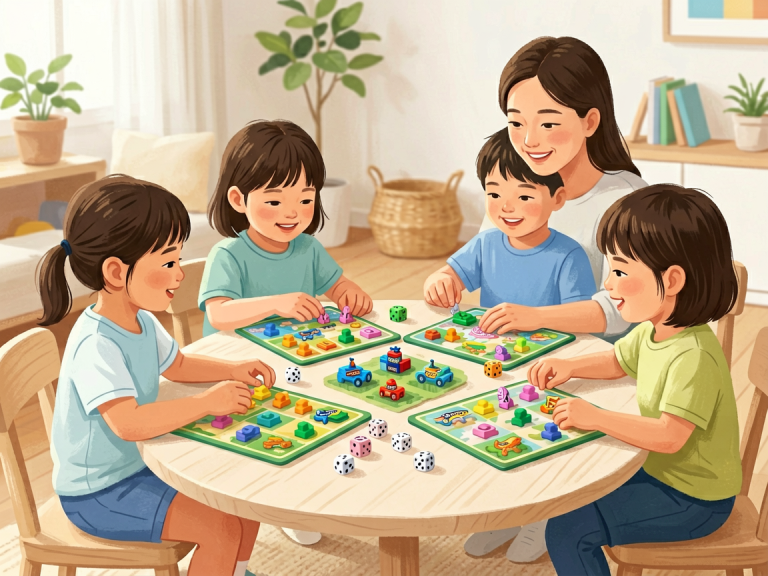
It is a common misconception that after preschool, the “play” phase ends and “real learning” begins. In reality, research in developmental psychology and neuroscience consistently shows that play remains a primary vehicle for learning throughout elementary school. When children engage in self-directed or guided play with thoughtfully chosen toys, they develop executive functions such as working memory, cognitive flexibility, and self-control. For example, a child building a complex structure with magnetic tiles is not just stacking shapes; they are experimenting with balance, symmetry, and spatial reasoning. Similarly, a group of children playing a cooperative board game practices turn-taking, emotional regulation, and strategic planning.
Early learning toys for elementary kids bridge the gap between abstract concepts taught in classrooms and concrete, tangible experiences. A child who struggles to understand fractions in a textbook may suddenly grasp the idea when using fraction circles or a wooden pie puzzle. The physical manipulation of objects activates multiple sensory pathways, reinforcing neural connections in ways that passive instruction cannot. Moreover, play reduces the stress associated with academic pressure. When learning feels like a game, children are more willing to take risks, make mistakes, and persist through challenges—all essential habits for academic success.
Categories of Effective Early Learning Toys for Elementary Children
Toys for this age group should evolve with the child’s growing abilities. Below are key categories, each targeting different developmental domains.
*STEM and Construction Toys*
Science, technology, engineering, and mathematics (STEM) toys are perhaps the most popular category for elementary kids. Construction sets such as LEGO, K’NEX, or magnetic building tiles allow children to follow instructions or invent their own designs. Advanced sets may include gears, motors, or simple circuits that introduce basic engineering principles. For example, a snap-circuit kit enables a child to build a working flashlight or alarm system, teaching them about electricity and cause-and-effect in a hands-on way. Robotics kits, like those from Sphero or LEGO Mindstorms, go a step further by incorporating coding, which develops logical sequencing and debugging skills. These toys are especially valuable because they promote the “maker mindset”—the idea that one can create, test, and improve solutions rather than simply consume information.
*Language and Literacy Toys*
Even as children become independent readers, toys that reinforce literacy remain important. Word-building games, magnetic poetry sets, and crossword puzzles expand vocabulary and spelling in a playful context. Board games like Scrabble Junior or Boggle are excellent for family time while subtly teaching word recognition. For younger elementary kids (ages 6–8), story cubes or picture cards that prompt oral storytelling can boost narrative skills and sequencing. Older elementary students (ages 9–12) may enjoy trivia games that cover history, science, or geography, which encourage reading comprehension and recall. Another underrated category is journaling or creative writing kits with prompts, stickers, and decorative supplies—these transform writing from a chore into an expressive hobby.
*Math and Logic Games*
Mathematics can be intimidating for many children, but games that disguise computation as play can change their attitude. Dominoes, dice games, and card games like “War with multiplication” make arithmetic fast and fun. Logic puzzles—such as Sudoku, tangrams, or Rush Hour—teach pattern recognition, deductive reasoning, and patience. Many Montessori-inspired materials, like the golden bead system or number rods, are still effective for elementary-aged children who benefit from visual and tactile representations of place value, addition, subtraction, and multiplication. For a more modern twist, there are programmable math robots that require children to solve problems to move a character forward, blending technology with mathematical thinking.
*Creative and Imaginative Play Toys*
While some may think imaginative play fades in elementary school, it actually becomes more sophisticated. Dollhouses, action figures, and playsets that represent real-world scenarios—a veterinarian clinic, a space station, or a medieval castle—allow children to act out complex narratives, negotiate roles, and explore social dynamics. These toys support emotional intelligence by giving children safe spaces to process experiences (e.g., visiting a doctor, resolving a conflict between characters). Art supplies, modeling clay, and craft kits also fall into this category. They encourage fine motor development and self-expression, and they can be linked to academic subjects: for instance, creating a diorama of a rainforest for a science project or designing a historical costume for a social studies unit.
*Outdoor and Gross Motor Toys*
Physical activity is crucial for elementary kids, but many toys double as learning tools. Sports equipment, balance boards, and obstacle course kits teach physics concepts like force, trajectory, and stability. Nature exploration kits—including binoculars, magnifying glasses, insect catchers, and field guides—turn a backyard or park into a living laboratory. Gardening sets can introduce biology, ecology, and even patience as children track plant growth. Even simple jump ropes or hula hoops involve coordination and rhythm, which are linked to brain development.
How to Choose the Right Early Learning Toys for Your Elementary Child
With an overwhelming array of options, selecting the best toys can feel daunting. Here are evidence-based criteria to guide your choices.
First, consider your child’s current developmental stage and interests. A toy that is too simple will bore a child; one that is too advanced may frustrate them. Look for “just right” challenges that encourage flow—the state of being fully engaged. For example, if a child loves dinosaurs, a paleontology dig kit with fossil replicas will capture their attention while teaching scientific method. If they are fascinated by building, upgrade from basic blocks to a set that includes gears or pulleys.
Second, prioritize open-ended toys over single-purpose ones. Open-ended toys—blocks, loose parts, art supplies, dolls, or playdough—can be used in countless ways, adapting to a child’s growing creativity. They do not come with a single right answer, which encourages divergent thinking. In contrast, a toy that only does one thing (like a plastic phone that plays pre-recorded sounds) has limited play value.
Third, look for toys that encourage collaboration. Many early learning toys are designed for solo play, but social interaction is critical for elementary kids. Board games, cooperative building challenges (like creating a marble run together), and team sports toys teach communication, compromise, and empathy. When children play together, they also naturally engage in negotiation and leadership—skills that cannot be learned from a screen.
Fourth, check for quality and safety. Elementary kids can be rough on toys, so choose durable materials (wood, sturdy plastic, metal) that can withstand years of use. Avoid toys with small parts if there are younger siblings around, and ensure that electronic toys have appropriate volume controls and parental settings. Also, consider the toy’s potential for mess or noise—some families may prefer quiet options like puzzle books, while others embrace messy science experiments.
Conclusion
Early learning toys for elementary kids are not a luxury; they are a vital component of a well-rounded childhood. They transform abstract academic concepts into tangible experiences, nurture creativity, build social skills, and instill a lifelong love of learning. The most effective toys are those that respect a child’s autonomy, offer the right amount of challenge, and invite play that is both joyful and meaningful. As you navigate the endless aisles of toys and apps, remember the simple truth: the best toy is one that a child returns to again and again, not because it is flashy, but because it invites them to wonder, to build, to fail, to try again, and to discover that learning is the most exciting adventure of all. By investing in thoughtful early learning toys, you are not just filling a toy box—you are building a foundation for a curious, resilient, and capable mind.