Rediscovering Childhood: How Parents Can Harness the Power of Screen-Free Play
Introduction
In an era where digital devices dominate our daily routines, the concept of “screen-free play” may sound almost archaic—yet its value has never been more urgent. Children today spend an average of over seven hours a day in front of screens, according to recent studies, and this excessive exposure has been linked to attention deficits, language delays, and reduced physical activity. Meanwhile, parents often feel trapped between the convenience of digital babysitters and the guilt of knowing that real, unstructured play is irreplaceable. But what exactly is screen-free play, and how can busy parents integrate it into modern family life? Screen-free play is not about banning technology entirely; it is about intentionally carving out time for hands-on, imaginative, and sensory-rich experiences that nurture a child’s cognitive, emotional, and social development. This article offers a comprehensive guide—grounded in research and practical wisdom—on how parents can use screen-free play as a powerful tool to strengthen family bonds, foster creativity, and build essential life skills.
—
The Importance of Unstructured Play
Before diving into specific strategies, it is crucial to understand why unstructured, child-led play matters so much. In screen-based activities, the narrative, rules, and pace are often predetermined by the game or program. Screen-free play, by contrast, places the child in the driver’s seat. They decide what to build, whom to include, and how to solve problems as they arise. This self-direction fosters executive functions such as planning, impulse control, and flexible thinking. A child who spontaneously decides to create a spaceship out of cardboard boxes must not only visualize the final product but also negotiate with siblings about roles, adjust the design when a piece falls off, and persist through frustration—all without a pause button.
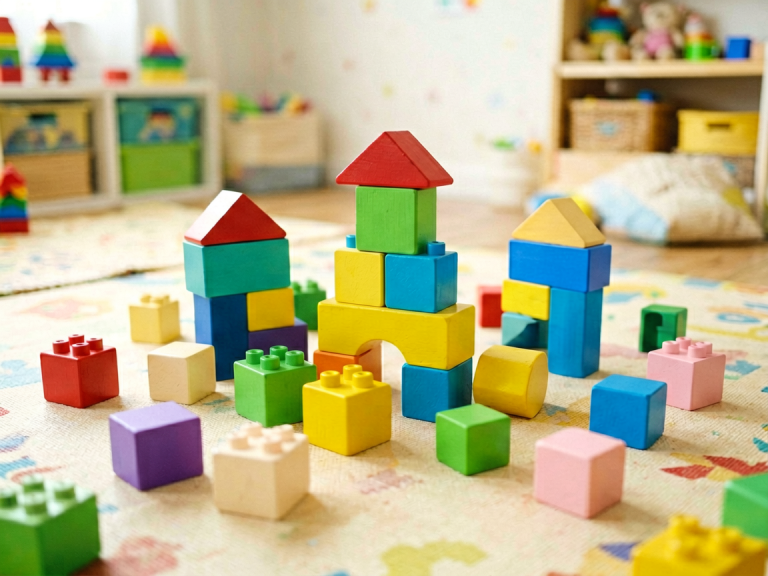
Moreover, unstructured play is a natural stress reliever. When children engage in free play, their cortisol levels drop, and they produce more endorphins. In our hyper-scheduled lives, this kind of downtime is essential for mental health. Screen-free play also encourages deep focus: a child engrossed in building a LEGO castle or drawing a fantasy map can concentrate for extended periods without the constant interruptions of notifications or algorithm-driven content. This state of “flow” builds resilience and a love for learning that no educational app can replicate.
Finally, unstructured play is the cornerstone of social development. Without a screen mediating their interactions, children learn to read facial expressions, negotiate rules, and resolve conflicts. They experience the messy, unpredictable beauty of human connection. For parents, understanding this profound value is the first step in committing to a screen-free play philosophy.
—
Creating a Screen-Free Environment at Home
A successful screen-free play habit begins with the physical and emotional environment. Parents often underestimate how much the mere presence of a tablet or television can pull a child’s attention away from a creative activity. The first practical step is to designate “no-screen zones” and “no-screen times” in the home. For instance, the dining table, the living room floor, and the backyard can be sacred spaces where devices are never allowed. A simple basket or drawer for collecting phones and remotes during playtime can reduce temptation.
Equally important is the curation of toys and materials. It is a common misconception that screen-free play requires expensive equipment. In reality, the most engaging toys are often the simplest: building blocks, art supplies, dress-up costumes, magnifying glasses, and empty cardboard boxes. Parents should rotate a limited selection of open-ended toys rather than overwhelming children with dozens of choices. A “toy library” system—keeping only a few sets out at a time and swapping them weekly—keeps the materials fresh without creating clutter.
The emotional environment matters just as much. When parents set up screen-free play, they must model the same behavior. If you are scrolling your phone while your child builds with blocks, you send a subtle message that screens are more interesting. Instead, sit on the floor beside them, ask open-ended questions (“What will happen next in your story?”), and show genuine curiosity. This shared attention not only deepens the play experience but also strengthens the parent-child bond. Remember, the goal is not perfection—some days you will be tired—but consistency over time builds a family culture where play is valued.
—
Engaging in Imaginative and Creative Activities
One of the richest veins of screen-free play is imaginative role-playing. Children naturally gravitate toward pretending to be doctors, astronauts, chefs, or superheroes. Parents can fuel this by providing simple props: a white shirt becomes a doctor’s coat, a cardboard tube becomes a telescope, and old hats become pirate gear. The beauty of imaginative play is that it requires almost no monetary investment—just a willingness to embrace silliness. When a child hands you a invisible cup of tea, accept it with gratitude. When they declare that the sofa is a boat in a storm, help them tie imaginary ropes.
Art and craft activities offer another avenue. Instead of buying pre-packaged kits, set up a “creation station” with recycled materials: bottle caps, fabric scraps, egg cartons, and glue. Challenge children to invent a new creature or build a miniature city. The process—mixing colors, cutting, gluing, and redesigning—develops fine motor skills and spatial reasoning. Unlike screen-based drawing apps, physical art provides tactile feedback: the smell of paint, the texture of clay, the satisfaction of tearing paper.
Storytelling is another powerful tool. Encourage children to create their own stories and act them out. You can start a “story bag” with random objects (a key, a feather, a stone) and ask them to weave a tale that includes each item. Or create a family “story chain” where each person adds a sentence. This not only builds language and narrative skills but also teaches children that their imagination is the ultimate source of entertainment—no electricity required.
—
Outdoor Adventures and Nature Play
Moving screen-free play outdoors amplifies its benefits. Nature is the ultimate open-ended play environment: sticks become wands, puddles become oceans, and fallen leaves become treasure. Research consistently shows that time in nature reduces symptoms of ADHD, improves mood, and enhances creativity. Parents can initiate simple outdoor challenges like a “nature scavenger hunt” (find something green, something smooth, something that makes a sound) or a “fort-building” project using branches and blankets.
Even a small backyard or balcony can be transformed. Plant a few herbs in pots and let children water them daily. Set up a bird feeder and keep a journal of the birds that visit. On rainy days, put on rain boots and jump in puddles. The goal is to help children develop a sensory connection to the natural world—feeling the sun, wind, and mud—that no screen can replicate.
Outdoor play also naturally encourages physical activity, which counteracts the sedentary habits of screen time. Running, climbing, balancing, and digging build gross motor skills and body awareness. Moreover, outdoor play often involves risk assessment: deciding how high to climb, whether a branch is strong enough, how far to jump. These small risks teach children to evaluate danger and build confidence. As a parent, resist the urge to shout “Be careful!” too often; instead, let them test their limits in a safe environment. The occasional scraped knee is a small price for the resilience gained.
—
Incorporating Educational Elements Without Screens
Many parents worry that cutting screen time will mean sacrificing educational opportunities. In reality, screen-free play can be deeply educational. Board games and puzzles are classic tools that teach counting, strategy, patience, and turn-taking. Choose games that are cooperative rather than competitive to reduce stress. For example, “Hoot Owl Hoot!” requires players to work together to get owls home before sunrise. Card games like “Go Fish” or “Uno” build number recognition and social skills.
Reading is another obvious yet powerful activity. But beyond simply reading books, parents can make reading interactive: act out scenes, use different voices, pause to ask questions (“What do you think will happen next?”), and connect the story to your child’s experiences. Create a cozy reading nook with pillows and a flashlight to make it feel special.
Cooking and baking together offer math and science lessons in disguise. Measuring ingredients teaches fractions, following a recipe builds sequencing skills, and observing dough rise or butter melt introduces basic chemistry. Plus, the reward of eating something you made yourself is deeply satisfying. For younger children, sorting beans or counting berries can be a playful math activity. The key is to frame these activities as fun, not as lessons. When learning feels like play, children absorb knowledge effortlessly.
—
Building Social Skills Through Cooperative Play
Screen-free play is particularly powerful for teaching social-emotional skills. In multiplayer scenarios—whether with siblings, friends, or parents—children practice empathy, negotiation, and conflict resolution. Encourage games that require cooperation rather than individual competition. For example, build a large fort together, create a group mural, or put on a play where each person has a role. If disagreements arise, resist jumping in immediately. Instead, let children try to solve the problem themselves, only stepping in if the conflict escalates.
Role-playing social situations can also be beneficial. Use dolls or action figures to act out social dilemmas: “This bear is sad because the other bear didn’t share the toy. What should she do?” This kind of play helps children develop emotional vocabulary and problem-solving strategies. Parents can model empathy by narrating their own feelings: “I feel frustrated when the blocks keep falling. Let’s try a different base.” By doing so, you teach children that emotions are normal and can be managed.
For only children or those who lack regular playmates, parents can become intentional play partners. Schedule regular “play dates” with cousins or neighbors, or join local playgroups that emphasize unstructured outdoor play. In these settings, children learn to navigate friendships without the filter of a screen. They learn that a friend’s smile is more rewarding than a digital “like.”
—
Parental Involvement: Being a Play Partner
Perhaps the most important role a parent can play in screen-free play is simply showing up. Many adults have forgotten how to play—we are self-conscious, worried about mess, or convinced we have better things to do. But when you get down on the floor and become a partner in your child’s imaginary world, you give them the greatest gift: your undivided attention. Put away your phone, turn off notifications, and commit to at least 15–20 minutes of pure, focused play each day. It doesn’t have to be elaborate. Even lying on the grass and watching clouds together counts.
Let your child lead. Ask them, “What do you want to play? What is the story?” Follow their rules, even if they seem illogical. If your child says, “Now you are a dragon who only speaks in rhymes,” do it. By surrendering control, you empower your child and communicate that their ideas matter. This boosts their self-esteem and creativity.
At the same time, don’t be afraid to introduce new ideas. If your child seems stuck, offer a suggestion: “What if we built a spaceship out of pillows?” Or “I wonder what would happen if we mixed blue and yellow paint.” The key is to offer without taking over. Your enthusiasm is contagious. When you show genuine joy in playing, children will internalize that play is valuable—and that you value them.
—
Conclusion
In a world saturated with screens, the choice to prioritize screen-free play is a deliberate act of resistance against the forces of passive consumption. It is not about rejecting technology—many educational apps and digital tools have their place—but about restoring balance. The benefits are profound: children who engage in regular, unstructured play develop stronger problem-solving skills, richer imaginations, deeper social connections, and healthier bodies. For parents, screen-free play offers a chance to reconnect with their children on a human level, free from the distractions of notifications and schedules.
Start small. Choose one hour a week where all screens are off and the family engages in a simple activity: a board game, a walk in the park, or a blanket fort. Gradually increase that time. You will likely discover that once children taste the freedom of screen-free play, they will beg for more. The laughter, the mess, the arguments, the shared stories—these are the memories that build a childhood worth remembering. As a parent, you have the power to give that gift. Put down the phone, pick up a crayon, and join the adventure.