Rediscovering Wonder: How Screen-Free Play Can Replace Tablet Time for Elementary School Kids
In the quiet corner of a bustling home, a six-year-old sits cross-legged on the living room floor, her tablet glowing softly. Her thumb swipes rapidly, her eyes glued to the cartoon animation on the screen. This scene has become the new normal for millions of families across the globe. Tablets, once heralded as educational miracles, have quietly taken over childhood. Yet a growing body of research and the lived experience of many parents suggest a different path: replacing tablet time with screen-free play. For elementary school kids—those precious years between kindergarten and fifth grade—the choice is not merely about limiting screen time; it is about restoring the very essence of childhood. This essay explores why screen-free play must become the cornerstone of a child’s daily routine, how it nurtures development in ways tablets cannot, and what practical steps families can take to make this transition successful.
The Hidden Costs of Tablet Dependency
Before we can advocate for screen-free play, we must first understand what is lost when a tablet becomes a child’s primary source of entertainment. Elementary school children are at a critical stage of cognitive, social, and physical development. Tablets, with their instant gratification and passive consumption, short-circuit these processes in subtle but profound ways. Neuroscientific studies have shown that excessive screen time in early childhood can alter the brain’s reward system, making children less tolerant of boredom and less motivated to engage in activities that require sustained effort. The colorful, fast-paced stimuli of apps and videos condition the young mind to expect constant novelty, leaving little room for the slow, meandering exploration that fuels creativity.
Moreover, the tablet’s solitary nature erodes social skills. When children play together with physical objects—building blocks, dress-up costumes, or board games—they negotiate, share, take turns, and read facial expressions. These are the building blocks of empathy. A tablet, on the other hand, often isolates the child in a private world. Even “multiplayer” apps lack the nuance of live interaction. The result? A generation of children who may be digitally savvy but socially awkward.
Physical health is another casualty. The American Academy of Pediatrics has linked excessive screen time to increased rates of childhood obesity, poor posture, and sleep disruption. When a child spends hours hunched over a tablet, their eyes strain, their neck muscles tighten, and their bodies remain sedentary. Screen-free play, by its very nature, encourages movement—running, jumping, climbing, balancing—all essential for developing gross motor skills and a healthy relationship with one’s own body.
The Unrivaled Benefits of Unstructured Play
What exactly do we mean by “screen-free play”? It is not simply the absence of screens. It is the presence of open-ended, child-directed activity that engages the senses, the imagination, and the whole body. When a child builds a fort from blankets and chairs, she is not just playing; she is an engineer solving spatial problems, a storyteller crafting a narrative, and a collaborator negotiating with siblings. When a group of kids invents a game with a ball and a tree, they are learning physics, fairness, and resilience all at once.
One of the greatest gifts of screen-free play is its capacity to foster deep focus. Unlike tablets, which fragment attention with constant notifications and advertisements, physical play demands sustained involvement. A child who is deeply absorbed in building a LEGO castle or drawing a detailed map of a fantasy world enters a state that psychologists call “flow.” In this state, time disappears, and the child experiences pure, joyful concentration. This ability to focus is a skill that will serve them for a lifetime—in school, in work, and in relationships.
Creativity also blossoms in the absence of screens. A tablet presents a child with pre-designed characters, predetermined storylines, and limited choices. Screen-free play, by contrast, offers infinite possibility. A cardboard box can become a spaceship, a time machine, or a pirate ship. A handful of pebbles can be currency in a market, ingredients in a soup, or pieces in a game. This kind of imaginative play exercises the prefrontal cortex, the part of the brain responsible for planning, decision-making, and flexible thinking.
Emotionally, screen-free play provides a safe space for children to process their world. Through pretend play, they act out scenarios they have observed—a doctor’s visit, a conflict with a friend, a happy family dinner. This act of re-creation helps them make sense of complex emotions and develop coping strategies. A tablet, with its passive consumption, offers no such opportunity. It delivers a story to the child; screen-free play lets the child become the author of the story.
Practical Strategies for a Smooth Transition
Replacing tablet time with screen-free play does not mean banning screens entirely. That would be both unrealistic and potentially counterproductive, as some educational apps can have value in moderation. Instead, the goal is to create a balanced media diet in which physical, imaginative, and social play occupies the majority of a child’s free time. Here are several evidence-based strategies that families can implement.
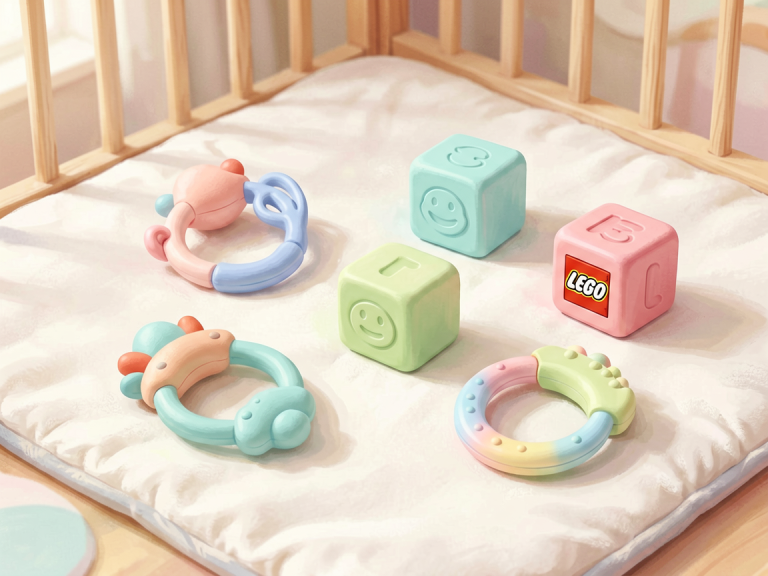
First, redesign the physical environment. The child’s room and living areas should be rich with low-tech play materials. Keep a variety of open-ended toys within easy reach: wooden blocks, art supplies, dress-up clothes, puzzles, board games, and science kits. Rotate these materials every few weeks to maintain novelty. A child who sees a basket of colorful scarves and a set of plastic animals is far more likely to invent a safari adventure than a child whose only accessible toy is a tablet.
Second, establish clear screen-time boundaries. The World Health Organization recommends no more than one hour of sedentary screen time per day for children aged 2 to 5, and limited screen time for older children. For elementary school kids, parents can use a timer or a visual schedule. For example, tablets are allowed only after homework and 30 minutes of outdoor play. Consistency is key. When children know the rules, they stop negotiating and start finding alternatives.
Third, model screen-free behavior. Children learn more from what we do than from what we say. If parents are constantly checking their phones, children will see screens as the default entertainment. Designate device-free zones—the dinner table, the bedroom, the backyard—and device-free times, such as the first hour after school. During these periods, engage in your own screen-free activities: reading a book, gardening, cooking, or simply sitting and talking. Your presence and attention are the most powerful motivators for your child to put down the tablet.
Fourth, leverage the power of outdoor play. Nature is a natural antidote to screens. Take children to parks, forests, beaches, or even just your own backyard. Provide simple tools: a magnifying glass, a bucket, a ball, a kite. Studies show that time in green spaces reduces stress, improves mood, and boosts creativity. The sensory richness of the natural world—the texture of bark, the sound of birds, the smell of rain—cannot be replicated by any app.
Fifth, embrace boredom. This may sound counterintuitive, but boredom is actually a gift. When children complain, “I’m bored,” resist the urge to hand them an iPad. Instead, say, “That’s okay. Boredom is the beginning of creativity.” Wait. Eventually, a child will pick up a crayon, build a fort, or start a conversation. Boredom forces the brain to generate its own stimulation, which is the foundation of self-directed learning.
Sixth, invite peer play. Arrange playdates with neighbors or classmates. When two or three children get together without screens, the social dynamics naturally produce rich play. They may argue, compromise, laugh, and invent. The parent’s role here is minimal—just provide the space and the snack. Resist the urge to structure the activity. Let the children lead.
Finally, celebrate the process, not the product. One reason children gravitate toward tablets is the clear feedback: you earn a star, you level up, you see a score. Screen-free play is messier and less quantifiable. Praise your child’s effort, their persistence, their imagination. Say, “I love how you figured out how to balance those blocks!” or “That story you acted out was so creative—tell me more.” When children feel recognized for their process, they become more motivated to engage in open-ended play.
Conclusion: A Gift for a Lifetime
Replacing tablet time with screen-free play is not a nostalgic return to a mythical golden age. It is a forward-looking investment in the skills that children will need in an increasingly complex world: creativity, empathy, focus, resilience, and the ability to connect with others face-to-face. Screens are here to stay, and digital literacy is important. But the foundation must be built on real experience—the feel of mud between fingers, the joy of building a shaky tower, the laughter of a shared joke.
For elementary school kids, the choice is urgent. Their brains are still growing, their habits are still forming, and their capacity for wonder is still wide open. By giving them the time, space, and tools for screen-free play, we are not just taking something away. We are giving them back something far more precious: the chance to discover the world—and themselves—without a glass screen between them and reality. Let us turn off the tablet, step outside, and let childhood begin.