Screen-Free Play Guide for Parents: Rediscovering the Joy of Unplugged Childhood
In an era where digital devices are woven into the fabric of daily life, many parents find themselves wrestling with an uncomfortable paradox: screens offer convenience, education, and entertainment, yet they also threaten to erode the very foundations of childhood—imagination, physical activity, and genuine human connection. The mounting evidence linking excessive screen time to sleep disruption, attention difficulties, delayed social skills, and even myopia has prompted a growing movement toward intentional, screen-free play. But how do we, as busy, tech-dependent parents, actually implement a screen-free lifestyle without turning our homes into battlegrounds? This guide offers practical, research-backed strategies to help you replace passive scrolling with active, enriching play that nourishes your child’s development and strengthens your family bond.
The Why: Understanding the Science Behind Screen-Free Play
Before diving into the “how,” it is crucial to appreciate the profound developmental benefits of unplugged play. When children engage with the physical world—building with blocks, digging in the sand, pretending to be astronauts, or simply staring at clouds—they are not merely passing time. They are constructing neural pathways that underlie creativity, problem-solving, and emotional regulation.
Research from the American Academy of Pediatrics emphasizes that unstructured, self-directed play is essential for developing executive function skills, which include impulse control, working memory, and cognitive flexibility. Unlike screen-based activities, which often provide rapid rewards and fixed outcomes, physical play requires children to negotiate, invent, fail, and try again. A child stacking wooden blocks that keep toppling learns persistence and spatial reasoning far more deeply than any app can teach. Furthermore, screen-free play encourages fine and gross motor development—catching a ball, threading beads, climbing a tree—that screens simply cannot replicate.
Equally important is the social-emotional dimension. When children play together without a digital intermediary, they learn to read facial expressions, interpret tone of voice, resolve conflicts, and practice empathy. A 2018 study published in the journal *Pediatrics* found that even brief reductions in screen time led to significant improvements in children’s social competence and emotional intelligence. In short, choosing screen-free play is not about deprivation; it is about giving your child the richest possible soil for growth.
Setting the Stage: Creating a Home That Invites Unplugged Play
One of the most effective ways to encourage screen-free play is to design your physical environment to make it the easiest and most appealing option. This means being intentional about what you bring into your home and how you arrange your spaces.
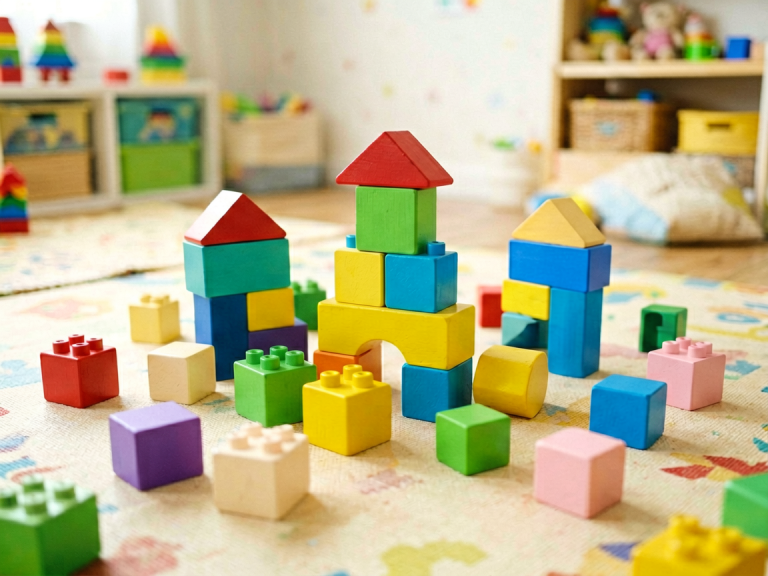
Start with a “play invitation” approach. Instead of stuffing toys into a bin where they become a chaotic blur, display a few carefully chosen items on low shelves or in clear containers. For example, a tray with colorful stones, a set of magnifying glasses, and a small plant can invite scientific exploration. A basket of fabric scraps, ribbons, and clothespins can spark costume design and imaginative storytelling. Rotate these materials every week or two to maintain novelty. The key is to reduce the visual clutter that overwhelms children and instead provide open-ended materials that can be used in many ways—LEGO bricks, wooden blocks, art supplies, dress-up clothes, and nature treasures like pinecones and shells.
Equally critical is the removal of digital temptations. Store tablets, phones, and handheld gaming devices out of sight, ideally in a locked drawer or a high shelf. Keep the television off unless it is being actively watched. When screens are not visible, children’s brains are far more likely to gravitate toward creative or active play. Consider creating a “charging station” in a common area where all family devices are docked by a certain hour each evening—this not only limits screen time but also models healthy habits.
The Daily Rhythm: Structuring Screen-Free Time Into Your Schedule
Many parents struggle with screen-free play because they feel they lack the time to supervise or initiate activities. The solution is to embed play into your existing daily rhythms rather than treating it as a separate “activity.”
Morning routines, for instance, can be transformed. Instead of handing your child a tablet while you prepare breakfast, place a basket of magnetic tiles or a simple puzzle on the kitchen table. You might be surprised how quickly their fingers begin to work while they sip their milk. Similarly, after-school hours are prime time for outdoor play. Commit to at least 30 minutes of unstructured time outside every day, rain or shine (within reason). A backyard, a local park, or even a balcony with potted plants can become a sanctuary for digging, climbing, or simply observing insects.
One of the most powerful strategies is to establish “screen-free zones” and “screen-free hours.” For example, keep all screens out of bedrooms entirely—this improves sleep quality dramatically. Designate the dinner table as a screen-free zone, where family members share stories and laugh together. Implement a daily “tech sunset” perhaps 60 to 90 minutes before bedtime, during which the entire household engages in quiet, screen-free activities like reading, drawing, playing board games, or doing puzzles. Over time, these rituals become cherished traditions rather than restrictions.
A Treasury of Screen-Free Play Ideas by Age and Interest
To help you get started, here is a categorized collection of engaging screen-free activities that require minimal prep and no special equipment.
For Toddlers and Preschoolers (Ages 1–4)
Young children thrive on sensory experiences and simple cause-and-effect play. Try “sensory bins” filled with dry rice, beans, or oats, along with scoops, funnels, and small toys. Playdough with cookie cutters and plastic knives builds fine motor strength. “Obstacle courses” using pillows, cardboard boxes, and tunnels encourage gross motor development. And never underestimate the power of a cardboard box—it can become a car, a castle, or a spaceship with just a little imagination.
For School-Age Children (Ages 5–10)
At this stage, children are ready for more complex, cooperative play. Board games like “Catan Junior,” “Ticket to Ride,” and “Blokus” teach strategy, patience, and fair play. Building projects with LEGO, K’Nex, or simple woodworking kits offer engineering challenges. Outdoor scavenger hunts—looking for specific leaves, rocks, or insects—combine physical activity with learning. Encourage “fort building” using blankets, chairs, and string; this classic activity fosters teamwork and spatial reasoning.
For Tweens and Teens (Ages 11+)
Older children may resist screen-free play if it feels childish, so the key is to offer sophisticated alternatives. Introduce strategy board games like “Settlers of Catan,” “Chess,” or “Pandemic.” Encourage creative writing or comic book creation, perhaps with a shared family story where each person adds a chapter. Model building—3D puzzles, model airplanes, or even knitting—provides a meditative outlet. Cooking and baking together not only teaches life skills but also involves math, reading, and chemistry. And do not forget the timeless allure of a campfire or a backyard bonfire with storytelling, s’mores, and stargazing.
Navigating Resistance: What to Do When Your Child Complains
It is almost certain that your child will initially resist screen-free initiatives. After all, digital entertainment is engineered to be addictive. The first few days or even weeks may involve whining, bargaining, or outright tantrums. Do not be discouraged—this is a normal part of the transition.
Your most powerful tool is your own modeling. If you are constantly checking your phone, your child will see the double standard. Put your own device away during playtime, and genuinely engage with whatever your child chooses to do. When you show that you value unplugged time, your child will eventually follow your lead.
Second, use empathy and validation. Instead of saying, “No screens, period,” try: “I know you really wanted to play that game, and it’s okay to be disappointed. But I notice that after we play outside together, you feel calmer and happier. Let’s try that for 20 minutes, and then we can talk about a good time to use your tablet later.” This approach acknowledges their feelings while maintaining boundaries.
Finally, celebrate small victories. Keep a simple screen-free play “brag board” where you and your child can write or draw the fun things you did together. Over time, the intrinsic rewards of genuine play—laughter, mastery, connection—will outweigh the fleeting dopamine hits of screens.
The Long View: Cultivating a Family Culture of Unplugged Living
A screen-free play guide is not about rigid rules or guilt-driven deprivation; it is about reclaiming childhood as a time of exploration, wonder, and deep engagement with the real world. By deliberately choosing to reduce screens, you are giving your child the gift of boredom—the very crucible in which creativity is forged. You are also gifting yourself the chance to watch your child’s mind unfold, to hear the wild stories they invent, and to share moments of pure, unfiltered joy.
Start small. Choose one hour of the day to be screen-free, or one room of the house. Observe what happens. You may find that your child rediscovers a forgotten toy, or starts drawing, or asks you to go for a walk. And in those moments, you will understand that the best technology of all is the one that runs on imagination, powered by love, and requires no charging at all.