The Best Toys for Screen-Free Learning: Unlocking Creativity, Curiosity, and Cognitive Development
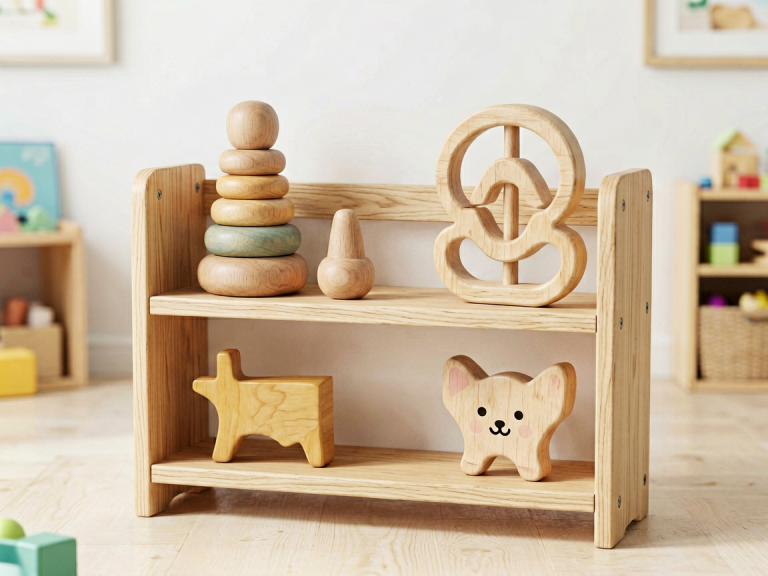
In an age where digital devices dominate children’s attention, the value of screen-free learning has never been more critical. Research consistently shows that excessive screen time can impair language development, reduce attention spans, and limit opportunities for hands-on exploration. Yet the antidote is not deprivation—it is choosing the right tools. The best toys for screen-free learning do not simply entertain; they engage a child’s entire being: their hands, their senses, their imagination, and their problem-solving abilities. These toys turn play into a powerful educational experience, nurturing skills that will serve children for a lifetime. From wooden blocks to chemistry sets, the following categories represent the gold standard in screen-free cognitive and creative development.
The Power of Hands-On Play: Why Screen-Free Matters
Before diving into specific toys, it is essential to understand the science behind hands-on learning. Neuroscientists have found that when children manipulate physical objects, their brains form stronger neural connections. Touching, stacking, sorting, and constructing activate multiple sensory pathways simultaneously, which deepens memory retention and understanding. Unlike passive screen consumption, where information is delivered in a pre-packaged format, physical toys require active problem-solving, trial and error, and sustained focus. A study published in *Pediatrics* noted that children who engage in unstructured, object-based play develop better executive function skills—including self-regulation, planning, and flexibility—than those who spend similar time on digital devices. Screen-free learning toys also protect against the overstimulation of fast-paced animations, allowing children to learn at their own rhythm. In short, the right toy is not a substitute for a screen; it is a superior alternative.
Building Blocks and Construction Sets: Engineering the Mind
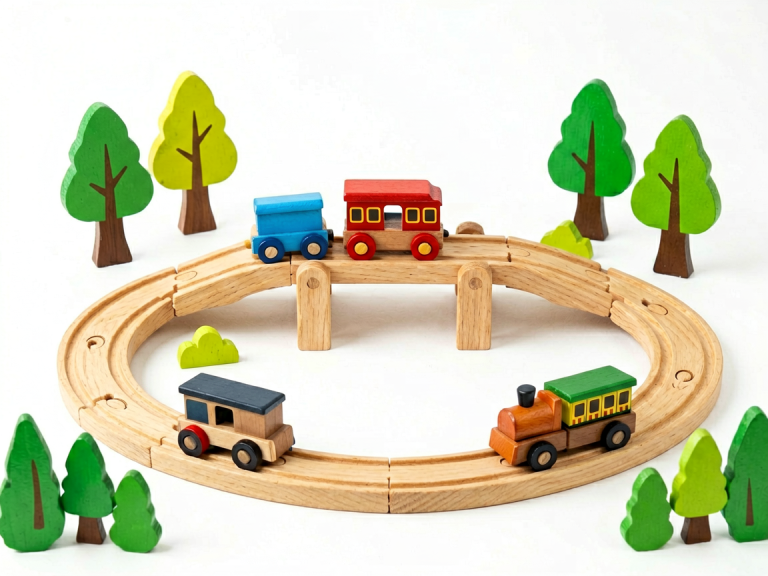
Perhaps no category epitomizes screen-free learning better than building blocks and construction sets. Classic wooden unit blocks—simple, unpainted, and uniform in size—offer infinite possibilities. A toddler stacking two blocks learns about gravity and balance; a preschooler building a bridge discovers principles of structural integrity. As children progress, more sophisticated kits like magnetic tiles (e.g., Magna-Tiles) or interlocking plastic bricks (e.g., LEGO) introduce geometry, symmetry, and spatial reasoning. The open-ended nature of construction toys means that no two play sessions are alike. A child designing a castle one day might engineer a crane the next, each time learning through failure and iteration. These toys also foster perseverance: when a tower collapses, the child must diagnose why—was the base too narrow? Were the blocks misaligned?—and try again. This process mirrors the scientific method. Moreover, construction toys encourage collaboration. Building a complex structure with a sibling or friend requires communication, negotiation, and shared decision-making—all critical social-emotional skills. For older children, advanced sets with gears, pulleys, and motors (like K’NEX or LEGO Technic) introduce basic physics and mechanical engineering concepts, making abstract ideas tangible. The best part? No batteries, no screens, no updates—just pure, constructive challenge.
Puzzles and Logic Games: Sharpening Critical Thinking
Puzzles are the quiet champions of screen-free cognitive development. From simple peg puzzles for toddlers to 1,000-piece jigsaw puzzles for older kids, they train the brain to recognize patterns, manipulate shapes, and hold multiple visual details in working memory. When a child searches for the correct puzzle piece, they engage in shape discrimination, color matching, and spatial orientation—skills that underpin mathematical and reading readiness. Beyond jigsaw puzzles, logic-based games like Rush Hour, Tangrams, or Sudoku (for older children) teach deduction and sequential reasoning. For example, Rush Hour, a sliding block puzzle where players must move cars to free a target vehicle, requires forward planning and the ability to visualize multiple moves ahead. Such games strengthen the prefrontal cortex, the brain region responsible for higher-order thinking. Even classic board games like Chess and Checkers are exceptional screen-free learning tools. They teach strategy, cause-and-effect, and the value of patience. Unlike a video game that offers hints or autosaves, a physical board game forces children to own their decisions and live with the consequences—a powerful lesson in accountability. For younger children, simple matching games (e.g., Memory) boost concentration and memory recall. The tactile experience of handling real pieces—wooden, cardboard, or plastic—also helps ground the child in the present moment, reducing the hyperarousal common after screen time.
Science and Exploration Kits: Fostering Curiosity
Nothing sparks a lifelong love of learning like the thrill of discovery, and science kits deliver that thrill without a single pixel. The best toys for screen-free learning in this category include magnifying glasses and bug catchers for the backyard, which turn a walk into an expedition. A child examining an ant’s legs under a magnifying lens practices careful observation, categorization, and wonder—all foundational to scientific inquiry. For more structured experiences, consider chemistry sets designed for children (non-toxic, safe), such as Thames & Kosmos’s “Chem C1000.” These kits allow kids to mix baking soda and vinegar, grow crystals, or create simple chemical reactions, all while learning about acids, bases, and states of matter. The physical act of measuring, pouring, and waiting for a reaction teaches patience and precision. Similarly, microscope kits introduce the hidden world of cells and microorganisms. When a child sees a drop of pond water teeming with life, they gain a visceral understanding of biology that no textbook can replicate. Even simpler tools like a prism to split light into a rainbow or a compass to detect magnetic fields turn abstract concepts into concrete experiences. These toys don’t just teach facts; they cultivate a mindset of exploration. When something unexpected happens—a crystal that doesn’t form, a reaction that fizzes too much—the child is prompted to ask “why?” and “what if?”—the very questions that drive science forward.
Art and Craft Supplies: Unleashing Imagination
Screen-free learning is incomplete without art. While digital drawing apps exist, they cannot replicate the sensory feedback of a crayon on paper, the smell of clay, or the texture of yarn. Art supplies—crayons, watercolor paints, modeling clay, scissors, glue, beads, and fabric scraps—are among the most versatile learning tools. When a child draws a picture, they practice fine motor control, hand-eye coordination, and spatial planning. When they sculpt a figure from clay, they engage in three-dimensional thinking and learn about volume and proportion. Craft projects that require following instructions (e.g., building a cardboard birdhouse) teach sequencing and reading comprehension. But art is also about open-ended expression. The process of mixing colors to create a new shade teaches basic color theory; cutting shapes teaches geometry; weaving string teaches patterning and symmetry. Moreover, art provides an outlet for emotional regulation. Children often process complex feelings—fear, excitement, sadness—through drawings or collages, developing emotional intelligence in a safe, non-judgmental space. The beauty of art supplies is their accessibility: a box of crayons and a roll of paper can occupy a child for hours, nurturing creativity without any programmed outcomes. For older children, kits like friendship bracelet looms or paint-by-number sets also teach focus and patience. The key is to provide quality materials and then step back, allowing the child’s imagination to lead the way.
Musical Instruments: Harmonizing Brain Development
Music is one of the most powerful catalysts for brain development, and simple, screen-free instruments offer rich learning experiences. A toddler banging on a drum learns cause and effect (hit harder, get louder sound) and rhythm. A preschooler plucking a xylophone explores pitch, sequence, and melody. For older children, learning a real instrument—a recorder, ukulele, or small keyboard—develops memory, concentration, and mathematical thinking. Studies have shown that children who learn to play an instrument exhibit stronger neural processing of sound and language, leading to improved reading skills. But you don’t need expensive lessons to reap benefits. Simple percussion instruments—shakers, tambourines, handbells—allow children to experiment with tempo and dynamics. Even a set of metal spoons on different-sized glasses filled with water creates a homemade xylophone that teaches about sound waves and water volume. Musical toys also encourage social bonding: playing a rhythm game with a parent or sibling fosters turn-taking, listening, and synchronization. Unlike screen-based music games that highlight points and scores, real instruments focus on the sensory joy of creating sound, building an intrinsic appreciation for art and expression.
Outdoor and Active Play: Learning Through Movement
Screen-free learning extends beyond the playroom; the outdoors is a vast, open-ended classroom. The best toys for this domain are those that encourage movement, exploration, and interaction with nature. A simple ball teaches physics (trajectory, gravity, spin) and social skills (taking turns, sharing). A tricycle or balance bike develops gross motor control, spatial awareness, and confidence. Sand and water tables offer endless sensory play: pouring, sifting, measuring, and building, which introduce concepts of volume, weight, and cause-effect. For nature exploration, consider a child-sized shovel, a bucket, and a bug observation jar. These tools turn a backyard into a laboratory where children can dig for worms, collect leaves, and watch ants build tunnels. Such experiences cultivate environmental awareness and scientific curiosity. Active play also supports cognitive development: running, jumping, and climbing require constant calibration of distance, speed, and body position, sharpening proprioception and executive function. Moreover, physical activity releases endorphins and reduces stress, making children more receptive to learning afterward. Unlike screen-based “active” games that simulate movement, real outdoor play integrates physical and mental challenges seamlessly.
Role-Playing and Pretend Play: Building Social Skills
Finally, the most timeless category of screen-free learning toys is probably the simplest: props for imaginative play. A wooden kitchen set, doctor kit, tool bench, or dollhouse allows children to reenact real-life scenarios, developing language, empathy, and problem-solving. When a child pretends to cook a meal, they practice sequencing (first stir, then bake), vocabulary (names of ingredients, utensils), and social roles (taking orders, serving). When they dress up as a firefighter or veterinarian, they explore career concepts and learn to negotiate roles with peers. Pretend play is also a safe space to process emotions: a child who is nervous about a doctor’s visit can act out the experience with a toy stethoscope, gaining mastery over their fears. Unlike screen-based “virtual worlds,” physical role-play is fully controlled by the child. They decide the story, the rules, and the outcomes, fostering creativity and agency. Simple props—a cardboard box turned into a spaceship, a sheet turned into a cape—are often more valuable than expensive, branded toys. The best screen-free learning toys in this category are those that allow for open-ended transformation: blocks become food, cushions become mountains, and a child’s imagination becomes the engine of education.
Conclusion: Choosing the Right Path
The market is flooded with brightly colored plastic toys that promise learning but often deliver only noise and distraction. True screen-free learning toys share common traits: they are open-ended, durable, and invite the child to be an active participant, not a passive consumer. They do not talk, flash, or guide; they wait patiently for the child to discover their possibilities. Whether it is a set of wooden blocks, a jigsaw puzzle, a chemistry kit, or a simple drum, these tools respect the child’s innate desire to explore and create. In a world that increasingly demands our attention be mediated by screens, the best gift we can give our children is the freedom to learn with their hands, their bodies, and their imaginations. By investing in these toys, we invest not just in skills, but in a lifelong love of learning—a love that no app can ever replace.