Taming the Toy Tornado: A Practical Guide to Managing Toy Clutter
—
Introduction: The Quiet Storm of Toy Clutter
Every parent knows the scene: a living room floor buried under a rainbow of plastic bricks, half-assembled puzzles, and squeaky dinosaurs that seem to multiply overnight. Toy clutter is not just an aesthetic nuisance—it is a psychological weight that drains energy, fuels arguments, and stifles creativity. Studies in developmental psychology suggest that an overwhelming number of toys can actually hinder a child’s ability to focus and engage in deep play. Yet the solution is not to toss everything into a bin and call it a day. Managing toy clutter requires a thoughtful, systematic approach that respects both the child’s need for exploration and the parent’s need for sanity. This article outlines a comprehensive, step‑by‑step strategy to transform the chaos into an organized, evolving play environment that benefits the whole family.
—
The Philosophy of “Less Is More”
Before diving into sorting bins and shelving units, it is crucial to establish a mindset shift. The modern consumer culture bombards families with cheap, disposable toys, often given as gifts or impulse purchases. Yet research from the University of Toledo found that toddlers with fewer toys engage in longer, more creative play sessions. When a child has too many options, they often flit from one toy to another without ever truly immersing themselves. The goal of managing toy clutter, therefore, is not to deprive the child but to curate a collection that encourages focus, imagination, and joy.
Begin by acknowledging that minimalism is not about emptiness, but about intentionality. Each toy in the home should earn its keep—it should either stimulate development, spark genuine delight, or serve a unique purpose. This principle becomes the foundation for every subsequent step. Whenever you feel overwhelmed by a new pile of stuffed animals or action figures, ask yourself: *Does this toy add value, or does it just add noise?*
—
Step 1: The Great Sort – Categorize Before You Organize
The first concrete action is a full‑scale audit of the toy inventory. Set aside a weekend morning when the child is occupied elsewhere. Pour every toy onto a large clean surface (a rug or a dining table) and sort them into three distinct groups:
- Keepers: Toys that are actively played with, in good condition, and aligned with the child’s current developmental stage.
- Reserve: Toys that hold sentimental value or might be suitable for a younger sibling, but are not in current rotation.
- Release: Broken, missing parts, outgrown, or duplicate toys. These should be donated, recycled, or responsibly discarded.
Be ruthless yet compassionate. If a toy has not been touched in three months, it is likely just taking up real estate. For children old enough to understand, involve them in the sorting process—but not in the initial cull. Instead, let the child have a final say over a small selection of “maybe” items. This teaches decision‑making without overwhelming them.
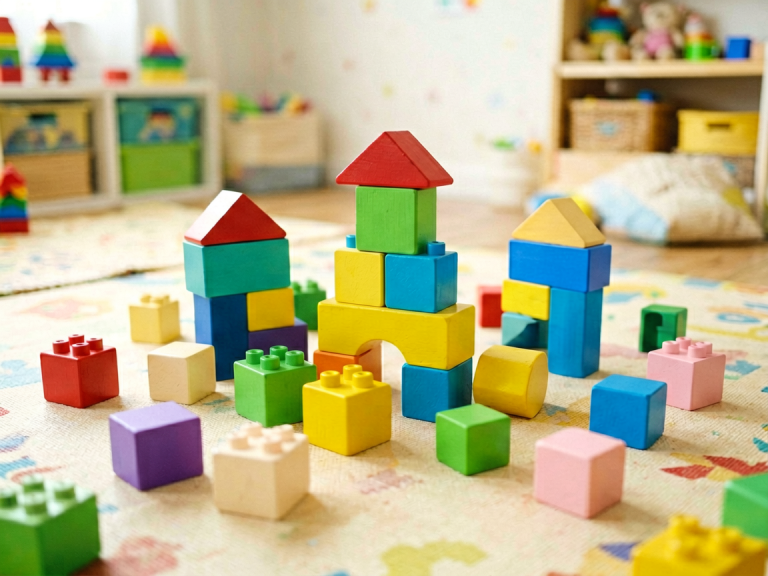
Once sorted, categorize the Keepers by type: building toys (blocks, LEGO), pretend play (dolls, kitchen sets), arts and crafts, puzzles and games, vehicles, and sensory/educational items. Label each category clearly. This step reveals just how many duplicates exist (four sets of wooden train tracks? Really?) and helps you set a maximum number per category—a concept we will revisit.
—
Step 2: The Rotation System – The Secret to Sustainable Order
One of the most powerful tools in managing toy clutter is the toy rotation. Simply put, you do not need to display every toy at once. Instead, divide the Keepers into three to five “baskets” or “sets,” each containing a mix of categories. Store the off‑rotation sets in a closed closet, under‑bed bin, or high shelf that is out of sight. Every two to four weeks (or when the child begins to lose interest), swap one set for another.
Why does this work? First, it reduces visual clutter dramatically—a child’s bedroom with only twenty toys looks serene compared to one with eighty. Second, rotation rekindles novelty. A toy that was forgotten for a month becomes fresh and exciting again, reducing the urge to buy new ones. Third, it makes cleanup manageable because the total number of items is limited.
To implement a rotation effectively, use clear bins or labelled bags for each set. Keep a simple log (or a note on your phone) of what is currently out and what is waiting. Rotate on a predictable schedule, perhaps on the first of the month. For very young children, a shorter cycle (one to two weeks) works better; for older kids, three to four weeks allows deeper engagement.
—
Step 3: Involving Children – Teaching Ownership and Responsibility
No system survives long if the child feels no ownership. From age two onward, children can participate in managing their own toys. This does not mean they will do it perfectly, but it builds lifelong habits. Start with simple expectations: every toy must have a designated home. Use low, open shelves and clear bins with pictures for pre‑readers. Label shelves with words or images so the child knows exactly where the dinosaurs go and where the crayons live.
Make cleanup a game: set a timer for five minutes, play a cleanup song, or turn it into a race. Praise the effort, not the perfection. For older children (ages six and up), introduce a “one in, one out” rule: if they want a new toy, they must choose an old one to donate. This teaches delayed gratification, gratitude, and environmental consciousness.
Additionally, hold a quarterly “toy review” together. Sit on the floor and ask: “Which toys are still fun? Which ones are boring?” Let the child decide which toys to pass along to a younger cousin or a charity. This process gives them a sense of control and reduces the emotional attachment to every single possession.
—
Step 4: Creative Storage Solutions – Design for Function and Beauty
Storage does not have to be ugly plastic bins stacked in a corner. Invest in a few smart pieces that blend with your home decor while serving the purpose. Consider the following ideas:
- Open bookcases at child height. Display toys like a storefront. Limit the display to what fits comfortably—if it overflows, it is time to rotate or purge.
- Cubby systems with fabric bins. These hide smaller items while keeping categories separate. Use a different color bin for each category (e.g., blue for vehicles, green for blocks).
- Wall‑mounted shelves for small collectibles or art supplies, freeing floor space.
- Under‑couch storage drawers for bulky items like train sets or large dollhouses.
- Clear shoe pockets on the back of a closet door for tiny pieces (puzzle pieces, craft beads, action figure accessories). This prevents the dreaded “piece‑gone” frustration.
The key is accessibility and visibility. If a child cannot see or reach a toy, they will not play with it. Keep the most‑loved toys at eye level; store out‑of‑rotation items in a closed cabinet or high shelf. Also, designate a small “trap” or “holding zone” for toys that migrate to the living room—a basket by the stairs can collect them, and once a day, the child or parent returns them to the bedroom.
—
Step 5: Maintenance and Ongoing Habits
Organizing is not a one‑time event; it is a cycle. Establish micro‑habits that prevent clutter from snowballing again:
- Daily 5‑minute pickup at a set time (e.g., before dinner or before bath).
- Weekly “zone reset” where you quickly go through the toy area, refold bins, and check for broken items.
- Monthly declutter where you remove one or two items that are no longer loved.
- Gift management – communicate with relatives that your child needs experiences (museum passes, art class) or consumables (play‑dough, craft kits) rather than more toys. When gifts do arrive, rotate them in immediately and send an equivalent number of old toys into the reserve pile.
Another powerful habit is the “toy hostage” technique: if the child refuses to clean up, the toys left on the floor go into a “time‑out bin” for 24 hours. This is not punishment; it is a natural consequence that teaches responsibility without a power struggle.
—
Step 6: Digital Alternatives and Experience‑Based Play
In an age of digital distractions, consider reducing physical toys altogether by substituting with experiences and digital creativity. A tablet can hold hundreds of drawing apps, interactive storybooks, and puzzle games that take zero physical space. However, screen time must be balanced with active play. The goal is not to replace toys with screens, but to be intentional about what counts as a “toy.” A subscription to a craft kit (like KiwiCo or Lovevery) that arrives monthly creates anticipation and avoids accumulation. Similarly, library visits for new picture books, outdoor nature scavenger hunts, and homemade playdough sessions provide novelty without clutter.
—
Conclusion: The Joy of a Curated Play Space
Managing toy clutter is ultimately about reclaiming peace—peace in your home, peace in your child’s mind, and peace in your own daily routine. By embracing a philosophy of intentional ownership, implementing a rotation system, involving children in decision‑making, and designing functional storage, you can transform a chaotic toy tornado into a calm, inviting play environment. Remember: the goal is not to have a showroom‑perfect house but to create a space where play flourishes and clutter retreats. The effort is well worth it—you will notice deeper concentration, fewer meltdowns, and more time for what truly matters: connecting with your child in play.
Start small. Pick one category of toys today. Sort, purge, and rotate. Then watch as the toy clutter loses its power—and your family gains room to breathe.
—
*(Word count: approximately 1,080 words)*