The Power of Play: How Learning Toys Shape Toddler Development
Introduction: Why Learning Toys Matter More Than You Think
The toddler years—roughly from 12 to 36 months—are a period of explosive growth. During this window, a child’s brain forms more than a million new neural connections every second. Every touch, sound, smell, and movement is a lesson waiting to be absorbed. While the world itself is a classroom, intentional tools—specifically, learning toys for toddlers—can channel this natural curiosity into structured, skill-building experiences. These toys are not mere distractions; they are carefully designed catalysts that support cognitive, motor, social, and emotional development. Understanding what makes a toy truly educational, and how to integrate it into a toddler’s daily routine, empowers parents and caregivers to turn playtime into a foundation for lifelong learning.
The Science Behind Learning Through Play
Before diving into specific toy categories, it is essential to grasp why play is the toddler’s “work.” Developmental psychologists, from Jean Piaget to Lev Vygotsky, have long emphasized that young children construct knowledge through hands-on interaction with their environment. When a toddler stacks blocks, she is not merely amusing herself—she is experimenting with gravity, balance, spatial relationships, and cause and effect. Learning toys amplify this process by introducing challenges that are just beyond the child’s current ability, a concept known as the “zone of proximal development.”
Moreover, neuroscientific research shows that active, multisensory play strengthens the prefrontal cortex, which governs executive functions such as attention, impulse control, and problem-solving. Toys that require a toddler to match shapes, sort colors, or press buttons that produce sounds activate multiple brain regions simultaneously, reinforcing neural pathways. Passive entertainment—like watching a screen—cannot replicate this active engagement. Therefore, investing in high-quality learning toys is not a luxury; it is a developmental necessity.
Cognitive Benefits: Building Brains One Puzzle at a Time
One of the most immediate benefits of learning toys is the enhancement of cognitive abilities. Puzzles, for instance, are a classic example. A simple wooden puzzle with four chunky pieces teaches a toddler to recognize shapes, understand that a piece must be rotated to fit, and persist through trial and error. More advanced puzzles introduce numbers, letters, or animal names, expanding vocabulary while sharpening visual-spatial reasoning.
Stacking rings and nesting cups are equally powerful. When a toddler attempts to place the largest ring on the bottom, or the smallest cup inside the biggest one, she is learning about size seriation—a precursor to mathematical thinking. Similarly, shape sorters with geometric cutouts require her to match three-dimensional shapes to two-dimensional holes, honing her ability to classify and compare. These toys also foster memory; a child who repeatedly plays with the same sorter begins to recall which shape goes where, exercising recall and pattern recognition.
Memory games, such as simple matching cards with pictures of animals or everyday objects, further stretch cognitive muscles. By flipping over cards and trying to remember their locations, toddlers develop working memory and attention span. Even toys that produce cause-and-effect responses—like a pop-up box where pressing a button makes a clown jump—teach logical sequencing: “If I press this, then that happens.” Over time, this understanding becomes the foundation for more complex reasoning.
Motor Skill Development: From Grasping to Mastering
Learning toys are indispensable for refining both gross and fine motor skills. Gross motor toys—such as push-and-pull toys, ride-on cars, or soft balls—encourage toddlers to walk, run, bend, and balance. A simple wooden pull train, for example, requires a child to coordinate her footsteps with the movement of the toy, strengthening her core and legs while practicing directional control. Similarly, a small foam ball that can be rolled, thrown, and caught helps develop hand-eye coordination and arm strength.
Fine motor toys are even more critical because they lay the groundwork for future tasks like writing, buttoning, and using utensils. Bead mazes, in which a toddler slides colorful beads along curved wires, demand precise finger movements and bilateral coordination (using both hands together). Lacing cards, where a child threads a shoelace through holes, require pincer grip and patience. Play dough is another superb tool: squeezing, rolling, and poking strengthens the small muscles in the hands and fingers. Even the act of turning the pages of a sturdy board book—a “toy” in its own right—builds dexterity.
Stacking blocks of different sizes and weights also challenges a child’s motor planning. She must gauge how much force to use, where to place the block, and how to adjust if the tower wobbles. These micro-adjustments refine proprioception (the sense of body position) and fine-tune muscle control. Over months of practice, a toddler who started by simply knocking down towers will learn to build a six-block structure. That progress is a direct result of repeated engagement with well-designed learning toys.
Language and Social-Emotional Growth
Learning toys are not just about individual achievement; they also foster communication and emotional regulation. Interactive toys that name animals, colors, or letters when pressed introduce new vocabulary in a playful, low-pressure context. An electronic “talking” farm, for instance, might say “The cow says moo” when a child presses the cow button. Hearing the word paired with the sound and image reinforces auditory learning and word-object association.
Yet the most profound language development happens during social play. When a toddler and an adult or peer play with a toy kitchen, for example, they engage in pretend play. The child might “cook” a meal and offer it to her parent, saying “Eat, please!” This spontaneous dialogue teaches turn-taking, polite language, and narrative skills. Similarly, playing with a toy tool bench encourages a child to mimic actions she has observed, using words like “fix,” “hammer,” or “screw.” These role-playing scenarios are rehearsals for real-world communication.
Emotionally, learning toys teach patience and frustration tolerance. A toddler who struggles to fit a puzzle piece may become upset, but with gentle guidance, she learns to calm down and try again. Toys that offer repeated success (like a simple shape sorter) boost confidence, while those that present just enough challenge help children develop a “growth mindset.” Cooperative toys, such as a large floor puzzle that requires two people to complete, also teach sharing and compromise. By navigating these small social challenges, toddlers build the emotional resilience that will serve them in preschool and beyond.
Choosing the Right Learning Toys by Age and Stage
Not all learning toys are suitable for every toddler. A toy that fascinates a two-year-old may frustrate a one-year-old, or bore a three-year-old. Understanding developmental milestones helps caregivers select age-appropriate options.
For 12–18 months (new walkers and explorers): At this stage, toddlers are learning to stand, cruise, and take first steps. They also use their mouths to explore. Ideal toys include large, soft stacking blocks (no small parts), chunky wooden puzzles with peg handles, push-along toys with wheels, and simple cause-and-effect toys that react to a single action (like a pop-up toy). Look for high-contrast colors and varied textures. Avoid anything with small pieces that could be a choking hazard.
For 18–24 months (busy movers and chatterers): Toddlers now walk confidently and begin to speak short phrases. They love imitation. Good choices include toy telephones, plastic dishes and play food, basic musical instruments (shakers, drums, xylophones), shape sorters with more pieces, and large beads for threading (with a safe, blunt needle). Books with flaps or touch-and-feel elements also count as learning toys. At this age, toddlers enjoy simple matching games with only two or three pairs.
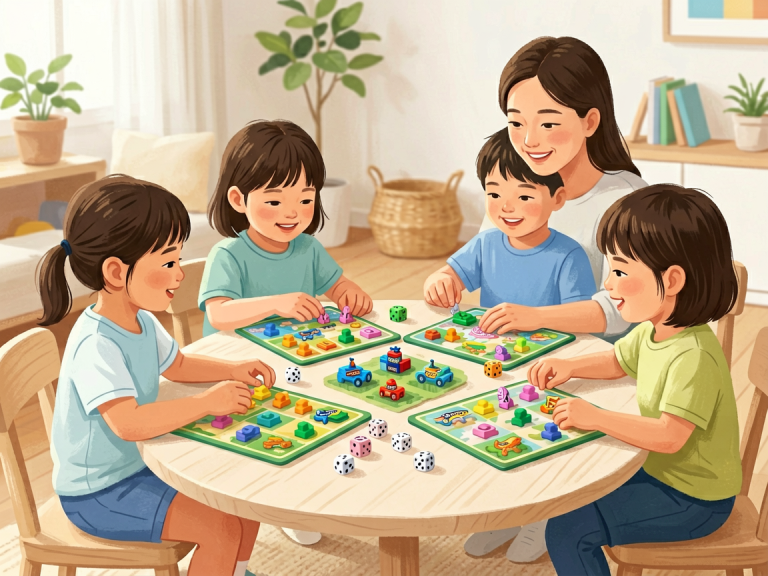
For 2–3 years (imaginative problem-solvers): Vocabulary explodes, and pretend play becomes elaborate. Complex puzzles with 4–12 pieces, interlocking building bricks (like Duplo), pattern blocks, magnetic drawing boards, and pegboards with hammer and pegs are excellent. This is also the time to introduce board games that require simple turn-taking, like “memory” or “color matching” games. Art supplies—washable markers, crayons, play dough, and scissors with safety blades—support fine motor skills and creativity. Electronic toys should remain limited; simple, open-ended toys generally offer richer learning.
Safety Considerations and Quality Indicators
While educational value is paramount, safety must never be compromised. Toddlers explore with their mouths, so all toys should be free of small detachable parts that could be swallowed. Look for the ASTM (American Society for Testing and Materials) or CE (Conformité Européenne) safety marks. Avoid toys with sharp edges, long cords that could cause strangulation, or toxic paints. Organic, untreated wood and BPA-free plastics are preferable. Furthermore, check that batteries are securely housed in a compartment that requires a screwdriver to open.
Quality is equally important. A well-made learning toy can be passed down through siblings or donated; cheap, flimsy toys may break quickly and frustrate the child. Look for toys that are “open-ended”—meaning they can be used in multiple ways. A set of wooden blocks, for example, can be used for stacking, sorting, counting, or even as pretend food. In contrast, a toy that only does one thing (like a single-button electronic flashing star) will quickly lose its appeal. The best learning toys grow with the child, offering new challenges as abilities advance.
The Role of Parents and Caregivers in Maximizing Toy Benefits
Even the most thoughtfully designed learning toy cannot replace the human element. A toy sitting on a shelf will teach nothing; it is the interaction between child and caregiver that unlocks its potential. When a parent sits on the floor and plays alongside her toddler, she can model language: “You found the red circle! Can you put it in the round hole?” She can scaffold the child’s efforts, offering a finger to guide the puzzle piece, then gradually withdrawing support as the child gains competence. This “serve and return” interaction is crucial for social and cognitive development.
Moreover, parents can rotate toys to maintain novelty and prevent overstimulation. Keeping only five or six toys available at a time encourages deeper focus. Observing which toys capture the child’s interest can also reveal developmental strengths and areas that need support. A toddler who loves building blocks may have strong spatial intelligence; one who prefers pretend play may be developing social-emotional skills. By tuning into these cues, caregivers can introduce complementary toys that round out the child’s experiences.
Finally, it is important to remember that learning toys are not a substitute for free play with everyday objects. A cardboard box, a wooden spoon, and a pile of leaves can be just as educational as any store-bought toy. The goal is not to fill a playroom with plastic gadgets, but to curate a small collection of purposeful, safe, and engaging tools that inspire curiosity. In the end, the best learning toy for any toddler is a loving, patient adult who is present, playful, and ready to discover the world together.
Conclusion: Play as the Foundation for Lifelong Learning
Learning toys for toddlers are far more than commercial products—they are instruments of discovery. From the first tentative stack of blocks to the triumphant completion of a 12-piece puzzle, each small victory builds a child’s confidence, intelligence, and character. By choosing toys that align with developmental stages, prioritizing safety, and embracing the role of active playmate, parents and caregivers can transform everyday play into a powerful classroom. The investment is not in plastic or wood; it is in the limitless potential of a young mind. So the next time you see a toddler happily engrossed in a shape sorter or a set of linking animals, know that you are witnessing the architecture of a brain, built one joyful moment at a time.