The Art of Letting Go: How Parents Can Harness the Power of Independent Play
Introduction
In the modern landscape of parenting, the pressure to be constantly engaged with our children is immense. We schedule playdates, enroll them in structured activities, and hover at the edge of the sandbox, ready to intervene at the first sign of frustration. Yet, paradoxically, one of the most valuable gifts a parent can give a child is the freedom to play alone. Independent play—the unstructured, self-directed activity that a child engages in without adult guidance—is not merely a convenience for busy parents; it is a cornerstone of healthy development. This article explores how parents can intentionally cultivate independent play, why it matters so deeply, and practical strategies to make it a joyful part of family life.
Understanding Independent Play: More Than Just "Keeping Busy"
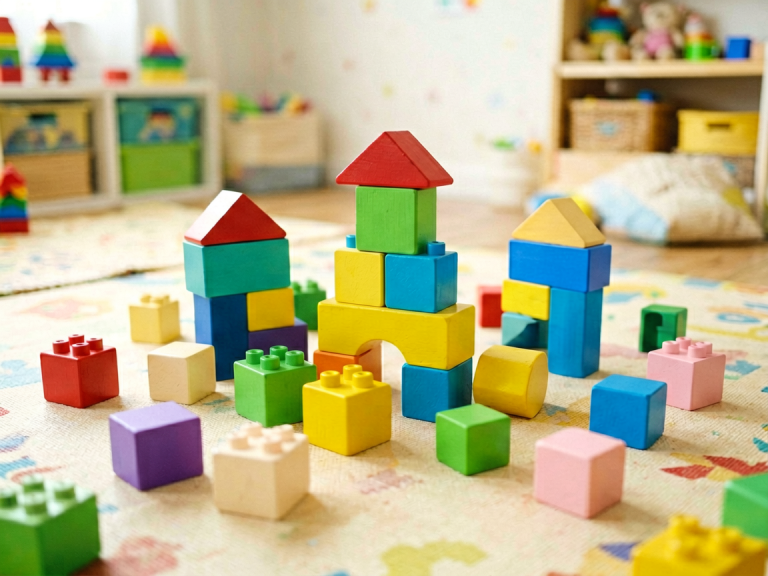
Independent play is often misunderstood as a babysitting strategy or a sign that a child is "easy." In reality, it is a complex cognitive and emotional exercise. When a child builds a tower of blocks alone, they are not simply stacking; they are experimenting with balance, learning cause and effect, and practicing persistence. When they talk to imaginary friends, they are developing narrative skills and emotional regulation. Independent play is the child’s laboratory for the real world. For parents, the goal is not to force solitude but to create a supportive environment where self-directed play can flourish naturally. This requires a shift in mindset: from seeing our role as the director of play to becoming the architect of the play environment.
The Multidimensional Benefits of Independent Play
Cognitive Development and Problem-Solving
One of the most profound benefits of independent play is its impact on executive function. Without an adult providing step-by-step instructions, a child must make decisions, plan, and troubleshoot on their own. For example, a toddler figuring out how to fit a shape into a sorter learns to adjust their approach—a tiny but powerful lesson in flexibility. Research in developmental psychology shows that children who engage in frequent independent play tend to demonstrate stronger focus, creativity, and self-regulation later in life. The absence of external direction forces the brain to form its own neural pathways, strengthening the prefrontal cortex, which governs impulse control and complex thought.
Emotional Resilience and Self-Soothing
Independent play also serves as an emotional training ground. When a child becomes frustrated because a tower collapses, they have the opportunity to manage that disappointment without an adult instantly fixing the problem. Over time, they learn to tolerate mild frustration, try alternative solutions, and experience the satisfaction of overcoming a challenge alone. This builds what psychologist Carol Dweck calls a "growth mindset." Furthermore, independent play can be a form of self-soothing. A child who retreats to a corner with a favorite doll or car is learning to regulate their own emotions—a skill that will serve them well in school, friendships, and adulthood.
Social Skills and Imagination
Counterintuitively, independent play does not make children antisocial. On the contrary, it often enhances their social competence. When children invent scenarios alone—a tea party for stuffed animals, a rescue mission for action figures—they practice turn-taking, dialogue, and empathy. They learn to negotiate with imaginary characters, which translates to real-life peer interactions. Moreover, the ability to entertain oneself makes a child a more interesting playmate; they bring ideas to the group rather than waiting to be told what to do.
Practical Strategies for Parents to Encourage Independent Play
1. Start Small and Build Tolerance Gradually
For a child accustomed to constant adult attention, sudden demands to "go play by yourself" can feel like abandonment. Begin with very short periods—perhaps three to five minutes—and gradually extend the time as the child becomes comfortable. Sit nearby but remain uninvolved; read a book or fold laundry. Your quiet presence provides a security blanket while signaling that you trust them to explore. Over weeks, increase the distance and duration. The key is consistency: a daily "independent play time" at the same hour (e.g., after snack or before bath) creates a predictable rhythm.
2. Curate the Play Environment Thoughtfully
The physical space matters immensely. A cluttered playroom with overwhelming choices can paralyze a child, while too few options can bore them. Aim for a "less is more" approach. Rotate toys weekly to maintain novelty: put away half the toys and cycle them out. Offer open-ended materials that invite creativity—wooden blocks, art supplies, dress-up clothes, play dough—rather than single-purpose electronic toys. A "yes space" where the child can access everything safely (no dangerous objects, no forbidden cupboards) allows them to feel in control. Place a small rug or a basket to define the play zone, and ensure the environment is cozy, with soft lighting and a clear view of the adult.
3. Use Rituals to Transition into Independent Play
Transitions are often the hardest part. A child deeply engaged in a game with a parent will resist moving to solitary play. Create a simple ritual that signals the shift: "Let's do one puzzle together, and then you can build your castle while Mommy has her tea." Or sing a special "play song" before you step away. The ritual should be short and upbeat, not a negotiation. Once the ritual is complete, stick to your boundary. If the child calls for you after two minutes, respond calmly but briefly: "I see you're working hard. I'll be right here when you're done." Avoid jumping in to solve the problem.
4. Model Independent Activity Yourself
Children learn through observation. If you consistently grab your phone or turn on the TV when you have a free moment, your child will absorb the message that solitude is boring. Instead, model independent play by reading a book, knitting, gardening, or sketching—while your child plays nearby. Sit in the same room but engage in your own activity. This parallel play normalizes the idea that everyone needs time for themselves. Over dinner, you might say, "I had such a nice time reading my book today. What did you build with your blocks?" This validates their independent efforts.
5. Embrace Boredom as a Productive State
One of the greatest obstacles to independent play is the parent’s own anxiety about boredom. When a child says, "I’m bored," our instinct is to offer a new toy or turn on a screen. But boredom is a gift: it is the gateway to creativity. When children sit with the discomfort of having nothing to do, their brains begin to generate ideas. They might draw, invent a game, or simply daydream. Resist the urge to rescue. Instead, say, "Boredom is a good thing! It means your brain is about to get creative. I can't wait to see what you come up with." Then step back and wait. The first few times may be challenging, but with repetition, the child will learn to self-generate entertainment.
Overcoming Common Challenges
The Clingy Child
Some children are naturally more dependent, and independent play may feel like a battle. If your child becomes distressed, do not force solitary play to the point of tears. Instead, offer a compromise: "You can sit on my lap while I read my book for five minutes, and then you can play with your cars next to me." Gradually transition from physical contact to proximity. Use a timer so the child can visualize the end point. Celebrate small victories: "You played alone for three whole minutes! Let's try for four tomorrow."
Screen Time Competition
In an age of screens, independent play often loses the battle to glowing devices. Screens provide instant gratification and passive entertainment, making self-directed play feel like work. To counter this, establish clear screen-time boundaries—for example, no screens before independent play time. Keep the tablet or TV out of sight during play hours. When the child is deeply engaged in play, avoid interrupting to check your phone; your attention models your values.
Sibling Dynamics
In multi-child households, independent play can be harder because siblings naturally want to interact. However, it is still possible. Schedule separate "independent play slots" for each child, even if only for 15 minutes. Use a visual schedule with pictures: "Red circle means Luca plays alone, blue square means Ava plays alone." During these times, the other sibling might engage in a quiet activity in a different room or with a parent. This also teaches respect for each person's need for space.
The Parent’s Inner Conflict
Many parents feel guilty when they are not actively playing with their children. We worry that independent play means we are neglecting them. This guilt is counterproductive. In truth, your child does not need you to be their constant playmate; they need you to be a secure base from which they can explore. When you step back, you are not abandoning—you are empowering. Remind yourself: every time you allow independent play, you are giving your child the gift of self-trust. You are also modeling healthy boundaries, which is a lesson in itself.
The Parent's Role: Being an Observer, Not a Director
Once independent play is underway, your role shifts from participant to observer. This observation is valuable. Resist the temptation to interrupt with praise ("Good job!") or instruction ("Try adding a roof!"). Such comments pull the child out of their flow state and redirect their attention to external validation. Instead, use non-intrusive acknowledgment: a nod, a smile, or a simple "I see you're working really hard." After the play session, you can ask open-ended questions: "Tell me about your castle." This shows interest without directing. The goal is for the child to own their play entirely.
Conclusion
Independent play is not a luxury or a parenting hack; it is a fundamental part of childhood that builds the architecture of a capable, resilient, and creative adult. By intentionally creating the space—both physical and emotional—for children to play alone, parents give them the tools to solve problems, manage emotions, and discover their own passions. It requires patience, trust, and a willingness to let go of the idea that we must be the center of our children's entertainment. The reward is a child who can sit with their own thoughts, who is comfortable with solitude, and who grows into a self-reliant individual ready to face a complex world. So put down the phone, step back from the block tower, and watch. The magic is already happening.