The Power of Play: Designing Effective Play-Based Learning Activities at Home
Introduction
In the modern era of education, the line between formal schooling and informal learning is increasingly blurred. Parents, caregivers, and educators alike have come to recognize that children do not learn only when sitting at a desk with a textbook. Instead, some of the most profound cognitive, social, and emotional development occurs through active, joyful, and self-directed exploration. This realization has given rise to the widespread adoption of play-based learning—an approach that leverages children’s natural curiosity, imagination, and desire to interact with the world. When implemented thoughtfully at home, play-based learning activities can become powerful tools for fostering literacy, numeracy, problem-solving skills, creativity, and emotional resilience. This article explores the theoretical foundations of play-based learning, presents a diverse array of practical activities tailored to different age groups and skill domains, and offers guidance on how to create a home environment that encourages meaningful, child-led discovery.
Theoretical Underpinnings: Why Play Matters
Child development theorists from Jean Piaget to Lev Vygotsky have long emphasized that play is not a trivial pastime but rather the primary vehicle through which young children construct knowledge. Piaget viewed play as a manifestation of assimilation—the process by which children incorporate new experiences into existing mental frameworks. For example, a toddler stacking blocks is not merely entertaining herself; she is testing concepts of balance, gravity, and spatial relationships. Vygotsky, on the other hand, highlighted the social dimension of play, arguing that through pretend scenarios and guided interactions with more competent peers or adults, children operate within their “zone of proximal development,” achieving skills they could not yet master alone.
Neuroscientific research further supports these insights. Play activates multiple brain regions simultaneously, strengthening neural connections and enhancing executive functions such as attention, memory, and self-regulation. When children engage in unstructured, voluntary play, their brains produce higher levels of dopamine, a neurotransmitter associated with motivation and pleasure. This neurochemical reward system not only makes learning enjoyable but also increases the likelihood that information will be retained. For parents, understanding these mechanisms reinforces the value of prioritizing play—not as a break from learning, but as learning itself.
Designing the Home Environment for Play-Based Learning
Before delving into specific activities, it is essential to consider the physical and psychological space in which play occurs. A home that supports play-based learning does not require an expensive toy collection or a dedicated classroom. Rather, it requires intentional arrangement and a philosophy of openness.
Creating a Low-Pressure, Rich Environment
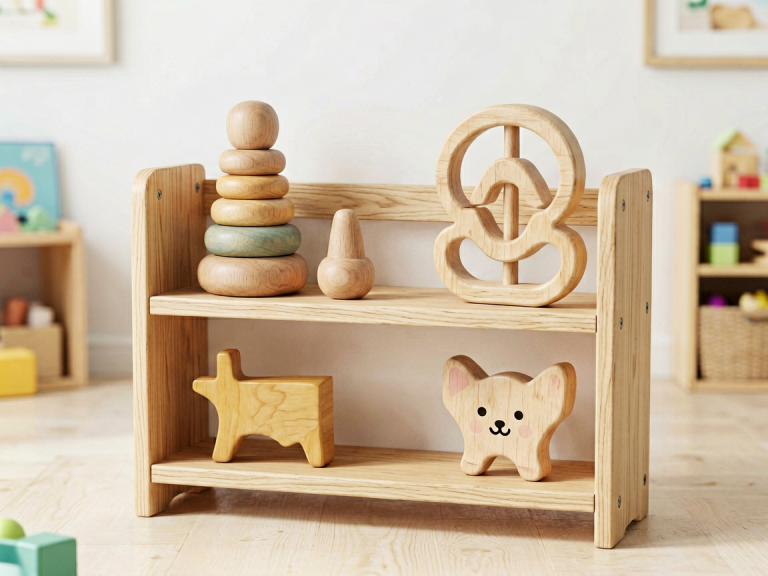
The ideal setting offers a variety of open-ended materials—blocks, fabric scraps, art supplies, containers, natural objects like pinecones and leaves—that can be used in multiple ways. Unlike single-purpose toys, these materials invite creativity and problem-solving. A cardboard box, for instance, can become a spaceship, a castle, a car, or a time machine, depending on the child’s imagination. Additionally, the environment should be safe and accessible, allowing children to independently reach and return materials. A low shelf with labeled bins encourages autonomy and cleanup skills.
Equally important is the emotional atmosphere. Play-based learning thrives when children feel free to make mistakes, experiment, and follow their own interests without fear of criticism or excessive adult direction. Parents can adopt a “guide on the side” rather than “sage on the stage” approach, offering gentle prompts or questions—“What do you think will happen if you add more water?”—rather than prescribing outcomes. This balance between support and freedom is the cornerstone of effective home-based play learning.
Play-Based Learning Activities for Infants and Toddlers (Ages 0–3)
For the youngest learners, play is about sensory exploration and cause-and-effect relationships.
Sensory Bins and Treasure Baskets
Fill a shallow plastic bin with safe, textured items such as cooked spaghetti, dry rice, sand, or water. Add scoops, cups, and small floating toys. As the baby or toddler touches, pours, and splashes, they are developing fine motor skills, tactile discrimination, and early scientific reasoning. For younger infants, a treasure basket containing objects of varying shapes, weights, and materials—a wooden spoon, a silk scarf, a metal whisk—stimulates curiosity and concentration without overwhelming them.
Peek-a-Boo and Object Permanence Games
Simple games like hiding a toy under a blanket or repeating “peek-a-boo” help infants understand that objects and people exist even when not visible. This foundational concept, known as object permanence, is critical for cognitive development. Parents can introduce variations by partially hiding a favorite stuffed animal and encouraging the child to retrieve it, thereby integrating gross motor movement with cognitive challenge.
Play-Based Learning Activities for Preschoolers (Ages 3–5)
Preschoolers are renowned for their imaginative capacities and burgeoning language skills. Activities at this stage should harness symbolic thinking and social interaction.
Pretend Play Scenarios
Set up a “grocery store” using empty food boxes, a play cash register, and paper money. Children can take on the roles of shopper and cashier, practicing counting, sorting, and basic addition while also engaging in negotiation and turn-taking. Similarly, a “doctor’s office” with stuffed animal patients and toy medical tools encourages empathy, vocabulary development (“stethoscope,” “bandage”), and narrative storytelling. The parent can participate by asking open-ended questions: “What seems to be the problem with Mr. Bunny today?” Such interactions expand the child’s language and reasoning.
Building and Construction Challenges
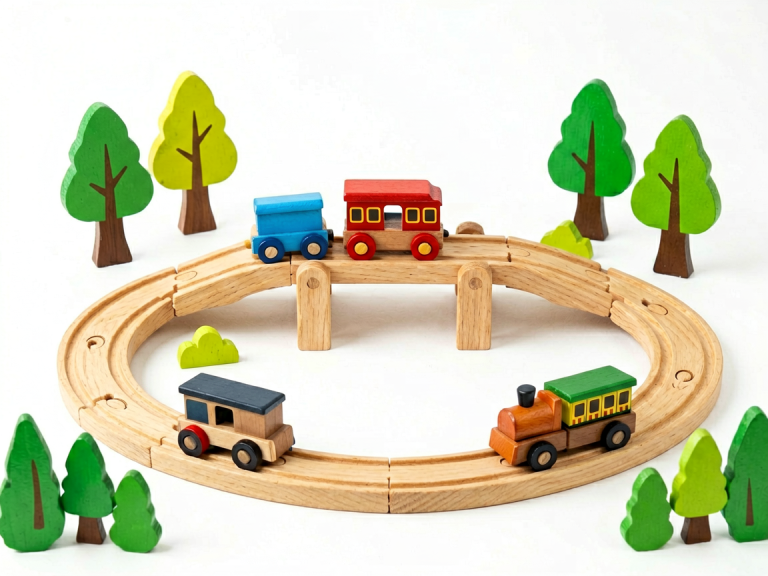
Beyond simple block stacking, challenge preschoolers with specific tasks. For example, “Can you build a tower that is as tall as your arm?” or “Let’s make a bridge that can hold this toy car.” These activities integrate measurement, physics, and perseverance. When the tower falls, the child learns about structural weaknesses and gains resilience—a key social-emotional outcome of play.
Play-Based Learning Activities for Early Elementary (Ages 5–8)
As children enter formal schooling, play-based learning at home can complement academic skills without the pressure of worksheets.
Board Games and Card Games
Classic games like “Chutes and Ladders” teach counting and number recognition; “Memory” sharpens visual recall and concentration; “Uno” reinforces color and number matching as well as strategy. More complex games like “Blokus” or “Qwirkle” introduce geometry and pattern recognition. Importantly, these games also foster social skills—taking turns, handling winning and losing gracefully, and following rules. Parents can choose games that align with current school topics or simply rotate options to maintain novelty.
Science Exploration Through Play
A simple sink-or-float experiment using a tub of water and household objects (cork, coin, plastic toy, fruit) is pure play but also introduces hypotheses and data collection. Ask the child to predict whether each item will sink or float, test it, and then classify objects into groups. This activity builds scientific thinking without a formal lesson. Another favorite is making “slime” or “oobleck” (cornstarch and water), which demonstrates non-Newtonian fluid properties. The tactile, messy nature of these activities keeps children engaged for extended periods.
Integrating Literacy into Play
Reading aloud remains a cornerstone, but play-based literacy goes further. Create a “story basket” with props related to a favorite book—for example, a wolf mask, a basket, and a red cape for “Little Red Riding Hood.” Let the child retell or reinvent the story using these props. This deepens comprehension and narrative skills. Another activity is “alphabet scavenger hunt” where children find objects around the house that begin with each letter of the alphabet, combining movement with phonics.
Play-Based Learning for Older Children (Ages 8–12)
Even as children’s interests become more sophisticated, play remains a potent learning tool. The key is to align activities with their budding passions for complexity, strategy, and real-world relevance.
Coding and Logic Games
Unplugged coding activities—such as writing instructions for a “human robot” (the parent) to navigate a maze made of pillows—teach sequencing and debugging. For those with access to devices, visual programming languages like Scratch allow children to create their own animations and games. This is play that also builds computational thinking.
Role-Playing as Historians or Scientists
Encourage a child to create a “museum” in the living room based on a historical period or scientific concept they are interested in. They can design posters, build models (e.g., a volcano or a medieval castle), and then give a tour to family members. This project-based play integrates research, writing, art, and public speaking—all while feeling like a game.
Benefits for Parents: Why You Should Invest in Play-Based Learning
Beyond the obvious advantages for children, adopting a play-based learning approach at home offers significant benefits for parents as well. First, it reduces the pressure to “teach” formally, which can be stressful for caregivers who lack pedagogical training. When play is the medium, parents can relax and enjoy time with their children, knowing that learning is happening naturally. Second, play-based activities often require inexpensive or recycled materials, making them budget-friendly. Third, observing children during play provides invaluable insight into their interests, strengths, and areas where they may need support. A child who consistently builds symmetrical towers may have a strong spatial sense; one who creates elaborate social stories may be developing advanced language and empathy.
Overcoming Common Challenges
Some parents worry that play-based learning is too unstructured or that it will not adequately prepare children for the demands of school. However, research consistently shows that children who engage in rich, varied play develop stronger executive functions, self-regulation, and intrinsic motivation—skills that predict academic success far better than rote knowledge. If a particular academic skill, such as letter recognition, seems slow to develop through play, parents can gently embed it into existing activities (e.g., labeling blocks with letters and asking the child to find the “B” block to build a bridge). The secret is to follow the child’s lead while planting subtle learning opportunities.
Another challenge is the temptation to overschedule or to feel guilty about screen time. While passive screen use has drawbacks, interactive digital play—such as educational apps that require problem-solving or creative design—can be a legitimate component of a balanced play diet. The guideline is to prioritize active, hands-on, and social play most of the time, while allowing limited, high-quality digital experiences.
Conclusion: The Lifelong Gift of Play
Play-based learning at home is not a luxury reserved for families with ample resources or pedagogical expertise; it is a birthright of childhood. Every home, regardless of size or budget, can become a laboratory for discovery, a stage for imagination, and a sanctuary for growth. By understanding the science behind play, curating a responsive environment, and embracing a flexible, child-centered mindset, parents can unlock a world of learning that is joyful, deep, and enduring. The memories of building blanket forts, conducting messy kitchen chemistry, and laughing over silly board games will stay with children far longer than any worksheet ever could. In the end, play is not preparation for life—it is life itself, in its richest, most vibrant form. And when we bring that truth home, we give our children the greatest educational gift of all: a love of learning that will never fade.