The Ultimate Play-Based Learning Guide for Parents: Unlocking Your Childs Potential Through Play
Introduction: Why Play Matters More Than You Think
As a parent, you’ve probably heard the phrase “play is a child’s work.” But what does that actually mean in practical, everyday terms? In recent years, educational research has overwhelmingly confirmed what early childhood experts like Maria Montessori, Jean Piaget, and Fred Rogers long advocated: play is not a break from learning—it is the most powerful learning tool a child has. Play-based learning is an educational approach that uses children’s natural curiosity, imagination, and joy to develop cognitive, social, emotional, and physical skills. This guide will help you understand what play-based learning truly is, why it works, and how you can seamlessly integrate it into your family’s daily routine without turning your home into a classroom.
What Is Play-Based Learning (And What It Is Not)?
Play-based learning is often misunderstood. It is not unstructured, aimless chaos. Nor is it the same as “free play” without any adult involvement. Instead, it is a child-led, adult-facilitated approach where the child’s interests drive the activity, and the parent intentionally creates an environment that promotes exploration, problem-solving, and skill development.
Key characteristics of play-based learning include:
- Intrinsic motivation – Children play because they want to, not because they are told to.
- Process over product – The joy is in the doing, not in the outcome.
- Active engagement – Kids are physically, mentally, and emotionally involved.
- Meaningful context – Play connects to real-life situations (e.g., playing “grocery store” teaches counting, social roles, and language).
- Risk-taking and experimentation – Mistakes are celebrated as learning opportunities.
In contrast, direct instruction (e.g., flash cards, worksheets, drills) can be effective for specific skills, but it often fails to build the deeper thinking, creativity, and love for learning that play-based methods cultivate.
Why Play-Based Learning Works: The Science Behind It
Neuroscience reveals that play stimulates the brain in ways that formal instruction cannot. When a child builds a block tower, they are practicing spatial reasoning, fine motor control, cause-and-effect, and executive function. When they pretend to be a doctor, they develop language, empathy, and narrative skills. Play activates the prefrontal cortex (responsible for decision-making and self-regulation) and strengthens neural connections through repeated, joyful experiences.
Moreover, play reduces stress. Cortisol, the stress hormone, inhibits learning. In a play-rich environment, children feel safe, curious, and motivated—ideal conditions for the brain to absorb new information. According to the American Academy of Pediatrics, play is essential for healthy brain development and builds the foundation for future academic success in literacy, math, and science.
A Practical Play-Based Learning Guide for Parents by Age Group
## Infants and Toddlers (Birth–2 Years)
At this stage, play is about sensory exploration and bonding. Your role is to be a safe base and provide rich, simple materials.
- What to do: Offer textured toys, soft blocks, mirrors, and objects that make sounds. Peek-a-boo, nursery rhymes, and gentle tickling games build social and language skills.
- How to facilitate: Narrate what your child is doing (“You’re shaking the rattle! That makes a loud noise.”). Follow their gaze and interests. Let them mouth safe objects—that’s how babies explore.
- Avoid: Overstimulating with bright flashing toys or screens. Your calm presence is the best “learning tool.”
## Preschoolers (3–5 Years)
This is the golden age of imaginative play. Your child will invent elaborate scenarios—castles, spaceships, restaurants. This is normal and vital.
- What to do: Provide open-ended materials: dress-up clothes, cardboard boxes, play dough, crayons, and simple blocks. Visit a playground, a park, or a mud puddle.
- How to facilitate: Ask open-ended questions: “What does the dragon eat for breakfast?” “How can we make this bridge stronger?” Resist the urge to correct or direct. Instead, join the play when invited.
- Tip for screen time: Instead of educational apps, choose apps that mimic play—like a digital sandbox or a drawing program—and use them together, not as a babysitter.
## School-Age Children (6–8 Years)
Play becomes more complex, involving rules, strategy, and collaboration. Board games, construction kits, and outdoor games are perfect.
- What to do: Encourage board games (Candy Land, checkers), LEGO, puzzles, and team sports. Build a fort, plan a treasure hunt, or create a simple science experiment with baking soda and vinegar.
- How to facilitate: Let children negotiate rules and solve disputes. Step back when they struggle; step in only to ensure safety or when frustration becomes overwhelming.
- Real-world connections: Use play to practice math (keeping score), reading (game instructions), and social skills (taking turns, sportsmanship).
How to Create a Play-Based Learning Environment at Home
You don’t need a dedicated playroom or expensive toys. The key is intention and access.
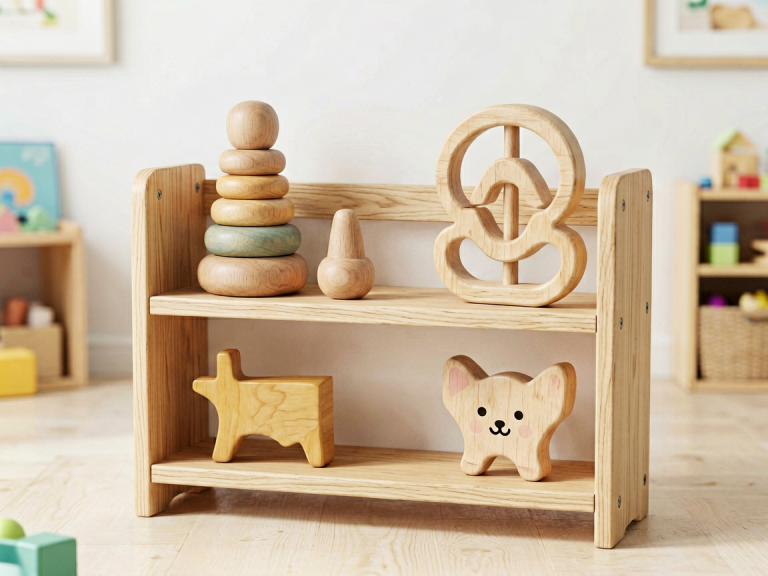
- Simplify toys: Fewer, better-quality open-ended toys (blocks, art supplies, costumes) invite deeper engagement. Rotate them every few weeks to keep interest fresh.
- Embrace loose parts: Collect pinecones, buttons, fabric scraps, and bottle caps. These can become anything a child imagines.
- Design a “yes” space: Make a corner of your home where children can be messy and loud. Lay down a drop cloth, provide washable markers, and let go of perfection.
- Follow the child’s lead: If your child is obsessed with dinosaurs, lean into it. Count dinosaur toys, read dinosaur books, draw dinosaur footprints. This deep dives into one topic build vocabulary and comprehension.
Common Myths About Play-Based Learning—Debunked
Myth 1: “Play-based learning means no structure.”
Truth: Structure comes from the environment, not from adult commands. A predictable daily rhythm (free play, snack, outdoor time, story) provides security while leaving room for child agency.
Myth 2: “My child will fall behind academically.”
Truth: Studies from Finland, New Zealand, and the UK show that children who experience high-quality play-based early education actually outperform peers in reading and math by age 8. They also have stronger social skills and self-regulation.
Myth 3: “I need to be a teacher.”
Truth: You are a facilitator, not a teacher. Your job is to set the stage, ask questions, and celebrate discoveries. You don’t need a lesson plan—just a willingness to observe and respond.
When and How to Gently Introduce More Structured Learning
Play-based learning does not mean avoiding all academics. As children approach kindergarten age, you can naturally weave in pre-reading and pre-math skills through play.
- Literacy through play: Write a shopping list together while playing “store.” Label your child’s artwork with a simple “I <3 you.” Point to words on cereal boxes.
- Math through play: Count stairs as you climb, sort socks by color, or measure ingredients while baking. “How many more cookies do we need to have five?”
- Science through play: “Why does this ice cube melt faster on the metal tray than on the wooden cutting board?” Let your child test hypotheses.
The golden rule: if it stops being fun, stop. Forced play is no longer play.
The Parent’s Role: Observe, Support, and Let Go
The most challenging part of play-based learning for many parents is letting go of control. You may worry that your child is “just playing” and not learning. But watch closely:
- The child building a tower that keeps falling is learning persistence and physics.
- The child playing alone is learning independence.
- The child arguing over a toy is learning negotiation and empathy.
Your role is to:
- Observe without interrupting. Notice what skills are emerging.
- Support with materials, questions, and encouragement.
- Protect the time and space for play. In a busy world, protecting unstructured play is an act of advocacy.
Conclusion: Play Is the Foundation, Not the Frill
Play-based learning is not a luxury or an alternative to “real” learning. It is how children naturally make sense of the world. By embracing this guide, you are giving your child the gift of a joyful, deep-rooted education that will serve them for a lifetime. You don’t need fancy curricula or rigid schedules. All you need is trust in your child’s innate curiosity, a few open-ended toys, and the willingness to get on the floor and play beside them. Remember: when children play, they are building the brains, hearts, and skills they will carry into adulthood. And you get to be part of that beautiful, messy, and magnificent process.
—
*Word count: Approximately 1,150 words (excluding title).*