The Power of Play: How Early Learning Toys Shape Toddlers’ Development
Introduction
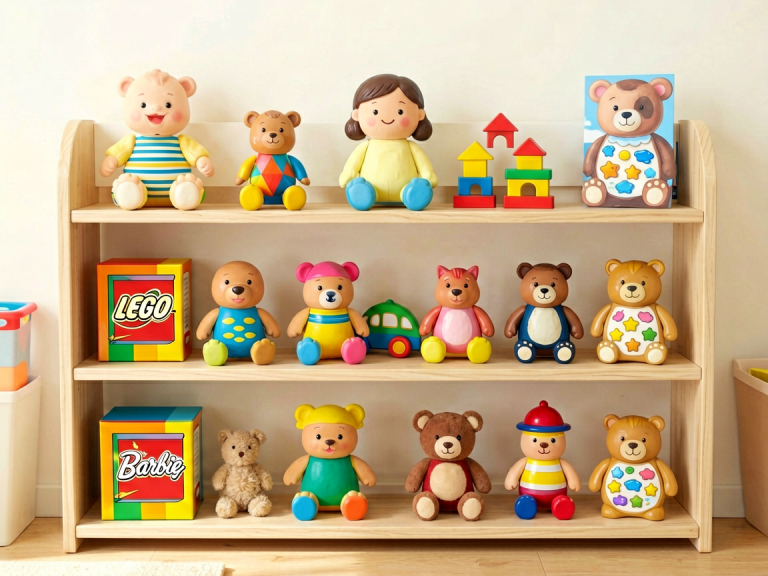
The first few years of a child’s life are a period of extraordinary growth. For toddlers—children aged roughly one to three—every moment is an opportunity to learn about the world around them. While love, nutrition, and sleep form the foundation of healthy development, the tools we offer for play can profoundly influence how a child thinks, moves, feels, and interacts. Early learning toys for toddlers are not mere distractions or entertainment; they are carefully designed instruments that stimulate cognitive, social, emotional, and physical skills. Choosing the right toys at this stage is one of the most impactful decisions a caregiver can make. This article explores the multifaceted benefits of early learning toys, offers guidance on selecting them, and highlights how play becomes the child’s first classroom.
Cognitive Development Through Play
During the toddler years, the brain undergoes rapid neural connection formation. Toys that encourage problem-solving, memory, and cause-and-effect reasoning are essential. Simple shape sorters, for example, require a toddler to recognize geometric forms and match them to corresponding holes. This seemingly simple task builds spatial awareness, hand-eye coordination, and early logical thinking. Stacking rings teach size sequencing and color recognition. Puzzles with large, chunky pieces introduce the concept of parts fitting into a whole—a precursor to reading and mathematics.
Electronic learning toys with buttons, lights, and sounds can also be valuable, provided they require active participation rather than passive watching. A toy that asks, “Where is the cow?” and rewards a correct push with an animal sound reinforces vocabulary and auditory discrimination. However, research consistently shows that the most cognitively enriching toys are those that require imagination and open-ended use. Wooden blocks, for instance, have no fixed purpose. A toddler might use them to build a tower today, a bridge tomorrow, and a pretend phone the next day. This flexibility fosters divergent thinking—the ability to generate multiple solutions to a problem—which is a hallmark of creativity.
Furthermore, early learning toys introduce foundational concepts like numbers, letters, and shapes in a pressure-free context. A set of magnetic alphabet letters on the refrigerator does not demand mastery; it simply allows a toddler to handle, name, and eventually recognize symbols. When these learning experiences are embedded in play, the child develops a positive association with discovery, setting the stage for lifelong curiosity.
Social and Emotional Learning
Play is also a powerful medium for social and emotional growth. Many early learning toys are designed for shared use, teaching toddlers how to negotiate, take turns, and manage emotions. A simple tea set, for instance, invites a child to pour “tea” for a teddy bear or a parent. This pretend play nurtures empathy and the ability to see the world from another’s perspective. Dolls and stuffed animals become companions during times of stress, allowing toddlers to practice caregiving and emotional regulation.
Cooperative games—such as those requiring two players to stack blocks without toppling them—teach patience and teamwork. Even solitary play with toys can help toddlers learn to cope with frustration. When a block tower falls for the tenth time, a child experiences disappointment and must decide whether to try again or seek help. With gentle adult guidance, this becomes a lesson in resilience and problem-solving.
Toys that reflect diverse cultures, family structures, and abilities also support social inclusion. A set of multi-ethnic people figures or a doll with a wheelchair normalizes diversity and helps toddlers develop a sense of fairness and belonging. Early exposure to such toys lays the groundwork for respectful interactions in later life.
Fine and Gross Motor Skills
Physical development is another critical domain addressed by early learning toys. Fine motor skills—the use of small muscles in the hands and fingers—are refined through activities like grasping, twisting, pressing, and pinching. Lacing beads, pegboards, and jumbo crayons all require precise hand movements. Playdough and sensory bins filled with rice or sand strengthen hand muscles while providing tactile stimulation. These skills are directly linked to later abilities such as writing, buttoning a shirt, and using scissors.
Gross motor skills involve larger muscle groups and whole-body movement. Push-and-pull toys, ride-on cars, balance beams, and soft climbing structures encourage walking, running, balancing, and coordination. A simple ball, whether rolled, thrown, or kicked, teaches spatial judgment and timing. Outdoor toys like tricycles or scooters (with appropriate safety gear) build leg strength and cardiovascular health. Importantly, these physical activities also foster confidence. When a toddler successfully climbs a small slide or catches a ball, the sense of accomplishment is immense.
Toys that combine motor challenges with cognitive tasks offer double benefits. For example, a toddler might need to walk a few steps to place a plastic fruit into a basket (gross motor) while simultaneously naming the fruit (cognitive). This integration mirrors real-life multitasking and enhances neural pathways.
Choosing the Right Toys: A Guide for Parents
With countless products on the market, selecting suitable early learning toys can be overwhelming. The most important principle is to choose toys that match the child’s developmental stage and individual interests. A toy that is too advanced leads to frustration; one that is too simple leads to boredom. Observing how a toddler plays—whether they prefer building, sorting, pretending, or moving—can guide choices.
Look for toys that encourage active engagement rather than passive entertainment. Avoid toys that do everything for the child, such as those that light up and sing automatically; instead, favor those that require the child to initiate an action. Materials matter: safe, non-toxic, and durable plastic or natural wood are ideal. Avoid small parts that pose choking hazards for children under three.
Variety is beneficial. A well-rounded toy collection includes items for sensory play (textured balls, musical instruments), constructive play (blocks, magnetic tiles), imaginative play (dress-up clothes, toy kitchens), and movement (balls, tunnels). Rotating toys every few weeks can renew a child’s interest without requiring constant purchases. Remember that the best “toy” is often an adult’s undivided attention. A cardboard box can become a spaceship when a parent sits down to play—proving that creativity matters more than cost.
Safety Considerations
Safety is paramount when it comes to early learning toys for toddlers. Always check age recommendations, but also use common sense. Even toys labeled for ages 2+ may contain pieces that could be dangerous if the child is still mouthing objects. Regularly inspect toys for loose parts, sharp edges, or broken pieces. Batteries should be secured in a compartment that requires a screwdriver to open. Avoid toys with long strings or cords that could pose strangulation risks.
For electronic toys, ensure volume levels are not too loud, and monitor battery hazards. Sensory materials like paint, clay, or slime should be non-toxic and washable. Storage is also a safety issue: toy bins without lids prevent entrapment, and keeping small items off the floor reduces tripping hazards. Finally, supervise play—especially with new toys—to ensure the child uses them appropriately.
Conclusion
Early learning toys for toddlers are far more than pastimes. They are the tools through which a child constructs an understanding of logic, language, relationships, and physical mastery. The right toy, paired with a caring adult who scaffolds the experience, can spark a love for learning that lasts a lifetime. As you watch a toddler concentrate on fitting a puzzle piece or giggle while building a tower, remember that each moment of play is a tiny revolution in brain development. By choosing thoughtfully, playing together, and trusting the child’s natural curiosity, you give the best gift of all: the chance to grow through joyful discovery.