Toys That Build Creativity: Unlocking the Imagination Through Play
Introduction: The Power of Play
In an age of digital saturation, where children are often glued to screens and passive entertainment, the humble toy remains one of the most powerful tools for cognitive development. But not all toys are created equal. While some offer mindless amusement or rote learning, others serve as catalysts for creativity—the very engine of innovation, problem-solving, and personal expression. Toys that build creativity are not merely playthings; they are open-ended invitations to explore, experiment, and imagine. From wooden blocks to advanced robotics kits, these toys encourage children to think divergently, embrace failure, and construct their own worlds. This article examines the essential characteristics of creativity-building toys, explores several archetypal examples across different age groups, and discusses the profound long-term benefits of prioritizing such playthings in a child’s environment.
What Makes a Toy “Creative”?
Open-Endedness and Unstructured Play
The most fundamental attribute of a creativity-boosting toy is its open-ended nature. Unlike a preprogrammed electronic game with fixed outcomes, an open-ended toy has no single correct way to play. A simple set of wooden blocks, for instance, can become a castle, a spaceship, a bridge, or an abstract sculpture. The child is the architect, the narrator, and the engineer. This unstructured play forces the brain to generate novel combinations, which strengthens neural pathways associated with flexible thinking. Research in developmental psychology consistently shows that children who engage in high levels of open-ended play develop better executive functions, including planning, cognitive flexibility, and self-regulation.
Encouraging Process Over Product
Creativity-building toys prioritize the process of creation over the final product. When a child builds a lopsided tower that immediately collapses, the value lies not in the collapsed structure but in the iterative learning: balancing, testing limits, and adjusting strategies. Toys that offer immediate, prescribed outcomes—like a puzzle that must fit exactly—teach convergent thinking, which is also important but vastly different. True creative growth happens when a child feels free to make “mistakes” and treat them as data rather than failures. Therefore, the best toys for creativity are those that reward experimentation and offer infinite possibilities for reconfiguration.
Fostering Intrinsic Motivation
Another hallmark is the promotion of intrinsic motivation. A toy that buzzes, flashes, or cheers automatically can become a source of extrinsic reward, shifting the child’s focus from the joy of creation to the desire for the toy’s programmed response. In contrast, creativity-building toys are quiet allies. They do not impose external validation; instead, they provide raw materials—be they physical, digital, or conceptual—and let the child’s imagination supply the motivation. This autonomy is crucial for developing a lifelong love of learning and creative expression.
Exemplary Toys That Build Creativity
Classic Construction Sets: Blocks, LEGO, and Beyond
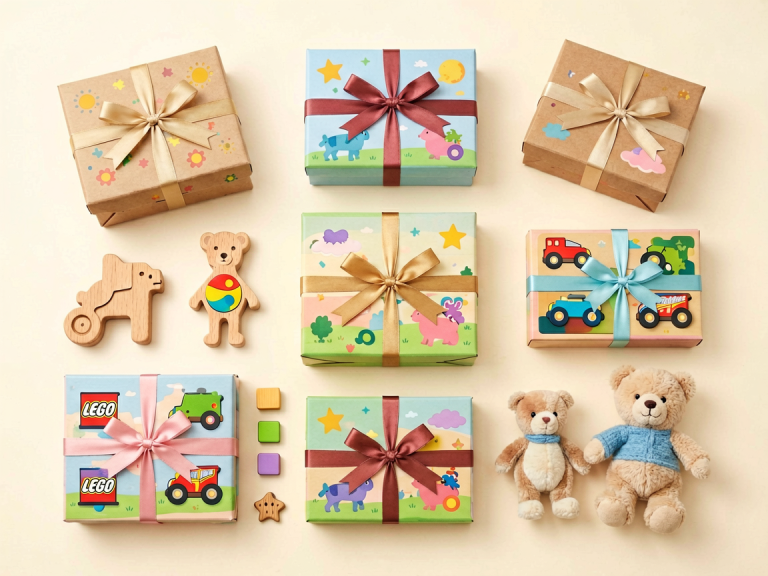
Perhaps the most iconic category is construction toys. Traditional wooden unit blocks have been used in kindergarten classrooms for over a century and remain unmatched in their simplicity and versatility. A child learns about balance, geometry, and gravity without any instruction manual. LEGO bricks add another dimension: they click together with satisfying precision and allow for the creation of complex mechanical systems, vehicles, and entire cities. The recent introduction of LEGO Spike Prime and similar robotics kits combines physical construction with coding, enabling children to program their creations to move, sense, and react. This marriage of tangible building and digital logic is a powerful creativity incubator, as it requires both spatial reasoning and sequential thinking. Moreover, the act of disassembling and rebuilding endlessly teaches resilience—children learn that a failed design is merely a stepping stone to a better one.
Art and Craft Supplies: The Ultimate Raw Materials
Nothing sparks creativity like a blank canvas—or a box of recycled materials. Toys that fall into the arts and crafts category—clay, paint, markers, fabric scraps, glue, and glitter—offer the purest form of open-ended expression. Unlike a coloring book with predefined outlines, a lump of modeling clay invites the child to shape a dragon, a bowl, or an abstract form. The key here is the absence of any prescribed outcome. Even simple items like finger paints encourage sensory exploration and emotional release. For older children, advanced craft kits—such as those for weaving, soap carving, or jewelry making—introduce technical skills while still allowing for personal interpretation. The creative process in art is uniquely valuable because it engages both hemispheres of the brain: the logical side that plans proportions and the intuitive side that chooses colors and textures. Studies have shown that children who regularly engage in self-directed art projects demonstrate higher levels of originality in problem-solving tasks later in life.
Role-Playing and Storytelling Toys: Props for the Imagination
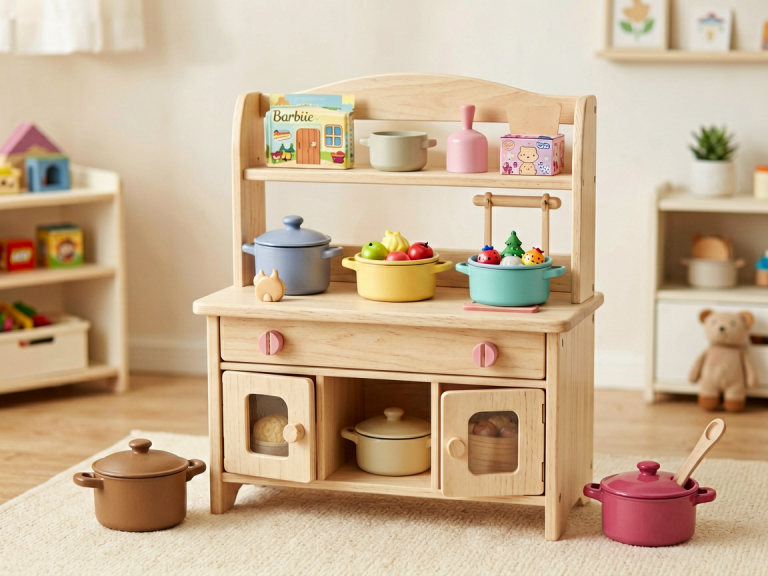
Dress-up costumes, puppets, miniature figurines, and playsets that represent real-world or fantasy environments are powerful engines for narrative creativity. When a child puts on a firefighter helmet or a princess gown, they step into a character and begin improvisational storytelling. This form of play demands the creation of plots, dialogues, and moral dilemmas. It is essentially free theater without a script. Similarly, a set of plastic animals or fantasy creatures can become characters in an elaborate kingdom that the child builds physically or mentally. The beauty of role-playing toys is that they integrate social creativity: children playing together must negotiate roles, resolve conflicts, and co-create a shared fictional universe. This collaborative creativity is a skill that directly transfers to teamwork and innovation in adulthood. Even simple objects like a cardboard box can become a time machine or a pirate ship, proving that the most creative toy is often the one that does the least—and lets the child do the most.
Digital Creativity Tools: Coding Kits and Interactive Apps
In the modern era, digital toys have earned a place alongside traditional ones—provided they are designed with creativity in mind. Interactive coding toys like Osmo, Sphero, or Scratch-based programs allow children to create their own games, animations, and interactive stories. The critical distinction from passive screen time is that the child is the programmer, not the consumer. These tools teach computational thinking—breaking down problems, recognizing patterns, and debugging—all of which are deeply creative processes. For example, a child using a robotics kit must figure out how to make a robot navigate a maze; there are countless solutions, and the child’s unique approach reflects their individual creative style. Furthermore, digital creativity tools often incorporate multimedia elements like sound, color, and motion, expanding the palette of expression far beyond what physical toys alone can offer. The challenge for parents is to choose platforms that emphasize creation over mindless consumption—apps where the child builds a digital diorama rather than simply tapping to advance a static story.
The Long-Term Benefits of Creativity-Building Toys
Cognitive Flexibility and Problem-Solving
Children who grow up surrounded by toys that encourage creativity develop what psychologists call “cognitive flexibility”—the ability to see multiple solutions to a single problem. This skill is invaluable in a rapidly changing world where rigid thinking is a liability. A child who has spent hours rearranging magnetic tiles to form different structures instinctively knows that there is no one “right” answer. They approach challenges with an experimental mindset, which is the foundation of scientific inquiry and artistic innovation alike.
Emotional Resilience and Self-Expression
Creative play also offers a safe space for emotional processing. A child who builds a fortress and then knocks it down may be expressing frustration or testing boundaries. Similarly, creating a painting with dark colors can be a way to work through sadness. Toys that allow for open-ended expression give children the vocabulary—nonverbal at first, then verbal—to communicate their inner worlds. This emotional release reduces anxiety and builds resilience, because the child learns that difficult feelings can be transformed into something tangible and often beautiful.
Preparation for Future Careers
While no one can predict exactly which jobs will exist two decades from now, one certainty is that creativity will be in high demand. Automation and artificial intelligence are taking over routine tasks, leaving uniquely human skills—innovation, empathy, design, and storytelling—as the most valuable. Toys that build creativity lay the groundwork for these skills from the earliest ages. A five-year-old constructing a complex LEGO contraption is already practicing the kind of divergent thinking that a twenty-five-year-old engineer will use to design a sustainable building. A seven-year-old writing a puppet show is rehearsing the narrative intelligence of a future filmmaker or marketing strategist.
Conclusion: Choosing Wisely for a Creative Future
In a marketplace flooded with blinking, singing, and pre-scripted toys, parents and educators must be discerning. The best toys are not necessarily the most expensive or the most technologically advanced. They are often the simplest: blocks, clay, paint, costumes, and open-ended building sets. They are tools that demand active participation, tolerate failure, and reward imagination. By surrounding children with toys that build creativity, we are not just providing entertainment—we are investing in a future of adaptable, innovative, and emotionally intelligent adults. The next time you consider a toy, ask yourself: Does this prompt endless possibilities, or does it prescribe a single path? The answer will determine whether you are giving a child a momentary diversion or a lifelong gift of creative power.