Unlocking Potential: A Comprehensive Guide to Using Toys for Play-Based Learning
Introduction
Play is the natural language of childhood. When children build with blocks, pretend with dolls, or race toy cars, they are not simply passing time—they are actively constructing knowledge about the world. Play-based learning, an educational approach that harnesses children’s innate curiosity and joy, transforms toys into powerful tools for cognitive, social, emotional, and physical development. However, not all toys are created equal, and simply surrounding a child with plastic gadgets does not guarantee learning. The art lies in how we select, present, and interact with toys to spark meaningful exploration. This article offers a detailed roadmap for parents, educators, and caregivers on how to use toys intentionally for play-based learning, covering theoretical foundations, age-appropriate selection, practical strategies, and the indispensable role of adult guidance.
1. Understanding Play-Based Learning and the Role of Toys
Play-based learning is not a chaotic free-for-all; it is a structured yet flexible pedagogy where children take the lead while adults create a rich environment. Research in developmental psychology—from Piaget’s constructivism to Vygotsky’s zone of proximal development—confirms that children learn best when they are actively engaged, motivated, and able to manipulate objects. Toys serve as the physical anchors for this engagement. A simple wooden block can teach balance, spatial reasoning, and cause and effect. A set of costume pieces can ignite storytelling, empathy, and problem-solving. The key is that toys must invite open-ended exploration rather than prescribe a single correct outcome. Closed-ended toys (e.g., a battery-operated robot that does one trick) offer limited learning, while open-ended toys (e.g., clay, magnets, loose parts) scaffold creativity and critical thinking across multiple domains.
2. Choosing the Right Toys for Different Developmental Stages
One size does not fit all. Effective play-based learning requires toys that match a child’s current abilities and challenge them just enough to grow.
*Infants and Toddlers (0–2 years):* Sensory exploration dominates. Soft blocks, rattles, textured balls, and nesting cups support motor skills, object permanence, and cause-effect understanding. Look for toys that are safe, multi-sensory, and encourage grasping, shaking, and mouthing. Avoid overly stimulating electronic toys that do not allow the child to control the pace.
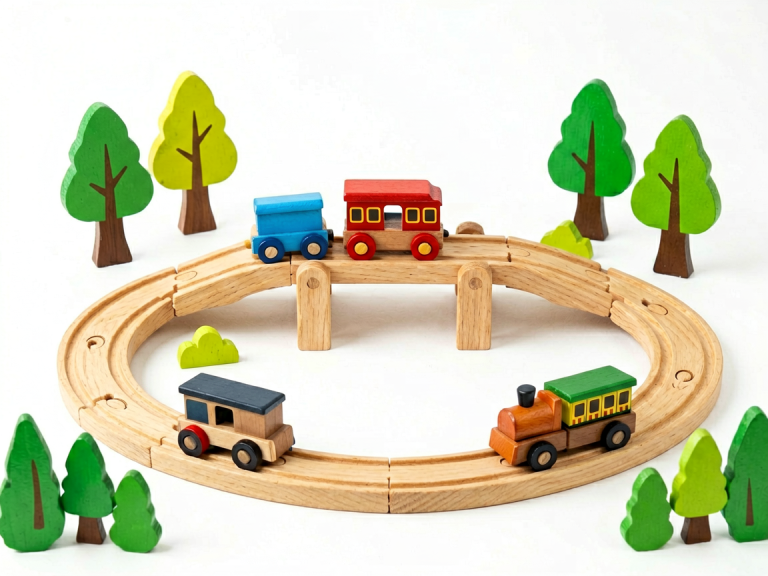
*Preschoolers (3–5 years):* This is the golden age of symbolic play. Dress-up clothes, play kitchens, construction sets (e.g., Duplo), simple puzzles, and art supplies promote language development, social cooperation, and early math concepts. Toys that mimic real-life tools—like play cash registers, doctor kits, or train sets—let children practice roles and negotiate rules. At this stage, choose toys that require manipulation and imagination over passive entertainment.
*Early School-Age (6–8 years):* Logic and systematic thinking emerge. Board games (e.g., Snakes and Ladders, memory games), building kits (Lego, magnetic tiles), science discovery sets, and simple coding toys (like robot mice) foster strategy, patience, and numerical reasoning. Children also benefit from collectible items like trading cards or small figurines that spark classification and narrative creation.
*Older Children (9+ years):* Complex problem-solving and collaboration take center stage. Strategy board games (e.g., Settlers of Catan), engineering kits (e.g., K’Nex, robotic arms), marble runs, and advanced art or craft materials encourage planning, perseverance, and teamwork. Digital toys, such as programmable robots or game-design software, can be exceptionally powerful when used with moderation and adult guidance.
3. Strategies for Integrating Toys into Learning Activities
Owning the right toys is only half the battle. The magic happens when adults intentionally design play scenarios that weave learning objectives into fun.
*Encourage Open-Ended Exploration:* Instead of demonstrating how a toy “should” be used, ask questions. “What do you think this can do?” or “How else could we use these pieces?” For example, with magnetic tiles, a child might build a tower, then a bridge, then a spaceship—each time learning about balance, symmetry, and structural integrity.
*Embed Academic Concepts Naturally:* Use toys to practice counting, sorting, or phonics. While playing with a farm set, count the animals, group them by size, or sound out their names. For older children, a board game like Monopoly Jr. introduces money management, addition, and negotiation. Story-based toys (e.g., puppets or action figures) can be used to retell stories, sequence events, and practice vocabulary.
*Foster Executive Function Skills:* Create challenges that require planning, self-control, and flexibility. For instance, give a child a block set and ask them to build a tower that can hold a cup of water—this forces prediction, trial-and-error, and adaptation. Puzzles and memory games directly strengthen working memory and attention.
*Incorporate Sensory and Motor Development:* Play-dough, sand tables, water beads, and construction toys develop fine motor muscles essential for writing. Balance boards, jump ropes, and obstacle courses (using cushions and toy tunnels) support gross motor skills and spatial awareness.
*Promote Social-Emotional Learning:* Use dolls, action figures, or puppets to act out social scenarios—sharing a toy, resolving a conflict, or expressing emotions. Board games teach turn-taking, patience, and graceful winning or losing. Cooperative games (where players work together toward a common goal) build empathy and teamwork.
4. Practical Examples of Toy-Based Learning Activities
Theory becomes tangible through specific activities. Here are five examples adaptable across ages:
- The Box Economy (Ages 4–8): Give a child a cardboard box, markers, and tape. Ask them to build a “shop.” Then use small toys as merchandise and play money to practice addition and subtraction. The child negotiates prices, gives change, and writes receipts—all while immersed in imaginary play.
- Story Stones (Ages 3–7): Collect smooth stones and paint simple images on them (a tree, a cat, a castle, a star). Place them in a bag. The child pulls out three stones and must weave them into a story. This activity builds narrative skills, vocabulary, and creativity.
- Marble Run Engineering (Ages 5–10): Provide a marble run set or use cardboard tubes and tape. Challenge the child to design a track that takes a marble from a start point to a cup using at least three turns. This teaches physics concepts like gravity, slope, and momentum, as well as iterative problem-solving.
- Emotion Dice (Ages 3–6): Make a large foam cube with different emotions drawn on each face (happy, sad, angry, surprised, scared, calm). Roll the dice, and the child acts out that emotion using a toy animal or doll. This builds emotional literacy and self-regulation.
- Build-a-Bridge Challenge (Ages 6–12): Using only popsicle sticks, clothespins, and glue, ask the child to construct a bridge that can support a small toy car. Test it, then redesign for improvement. This activity integrates measurement, load distribution, and growth mindset.
5. The Role of Parents and Educators: Guided Play and Observation
The most effective play-based learning happens when adults are present but not controlling. This is called “guided play”—a balance between child-led exploration and adult scaffolding.
*Observe First:* Before intervening, watch what the child does. What are they curious about? Where do they get stuck? Observation reveals their current thinking and interests. For example, if a child repeatedly stacks blocks and they fall, the adult can ask, “I wonder what would happen if you used a bigger base?”—prompting discovery without giving the answer.
*Ask Open-Ended Questions:* Replace commands with inquiry. Instead of “Put the red block here,” say, “Which block do you think will fit next?” Questions like “How did you make that?” or “What could we try differently?” encourage metacognition and verbal reasoning.
*Extend the Play:* Add a novel element to sustain engagement. If a child is tired of their train set, introduce a piece of string as a “road” and a small box as a “station.” This tiny twist can reignite creativity. Similarly, create a prop box with random items (feathers, lids, ribbons) to transform any toy into a new adventure.
*Model Language and Skills:* While playing, narrate your own thinking out loud. “I’m putting this big block on the bottom so the tower is steady. What do you think…” This exposes children to problem-solving vocabulary and reasoning patterns without direct instruction.
*Resist Over-Scheduling:* Play-based learning thrives on unhurried time. A child needs at least 45–60 minutes of uninterrupted free play daily to deeply engage with toys and ideas. Resist the urge to fill every moment with structured lessons or screen time.
6. Common Pitfalls and How to Avoid Them
Even well-intentioned adults can undermine play-based learning. Avoid these mistakes:
- *Overloading with Toys:* Too many choices overwhelm a child and lead to shallow play. Rotate toys regularly, keeping only 5–10 available at a time.
- *Focusing on Academic Outcomes:* The goal is not to “teach” but to create opportunities. If a child builds a tower that falls, that failure is a gift. Let them struggle and laugh.
- *Using Toys as Rewards or Punishments:* When toys are withheld or given as bribes, they lose their intrinsic joy. Keep toys as neutral tools for exploration.
- *Ignoring Gender and Cultural Stereotypes:* Offer a diverse range of toys—tools for both boys and girls, dolls of different ethnicities, and toys that represent various professions.
Conclusion
Toys are far more than pastimes; they are the building blocks of a child’s intellect, character, and creativity. By choosing developmentally appropriate, open-ended toys and by adopting a guided-play mindset, adults can transform ordinary playrooms into vibrant laboratories of learning. Remember that the most powerful toy is not the one with flashing lights or the latest franchise—it is the one that sparks a question, invites a hypothesis, and leaves room for a child’s own ideas. Whether it is a simple stick, a set of wooden blocks, or a thoughtfully designed board game, every toy holds the potential to cultivate curiosity, persistence, and joy. The next time a child reaches for a toy, join them, watch them, and marvel at the extraordinary learning unfolding in the ordinary.