Unlocking the World of STEM: Engaging Play Under $50
In an era where technology and innovation shape our future, introducing children to Science, Technology, Engineering, and Mathematics (STEM) has never been more important. Yet many parents and educators worry that quality STEM learning tools come with a hefty price tag. The good news? You don’t need a laboratory budget to spark curiosity, creativity, and critical thinking. With a little ingenuity and less than $50, you can transform everyday objects, affordable kits, and digital resources into powerful STEM play experiences. This article explores a variety of hands-on, budget-friendly activities that prove real learning doesn't have to cost a fortune—and that the best STEM play often comes from what’s already in your hands.
—
The Magic of Coding: Robots That Won’t Break the Bank
Coding is often perceived as an elite skill reserved for expensive laptops and specialized courses. However, several low-cost robotics kits and programmable toys bring the logic of programming into the hands of children for under $50. For instance, Ozobot Bit (often available for around $45–$50) is a tiny, screen-friendly robot that can be programmed using color codes drawn on paper. Children simply mark colored lines and sequences with markers, and the robot follows their commands. This tangible approach demystifies algorithms and sequence logic without requiring a computer screen. Another fantastic option is Sphero Mini (retailing around $45), a small, app-controlled robotic ball that introduces block-based coding through games like driving through mazes or bowling. Its durable design and intuitive interface make it ideal for ages 8 and up.
For even tighter budgets, consider Makey Makey (priced near $50) – a simple invention kit that turns everyday objects like bananas, Play-Doh, or pencils into touchpads and keyboards. By connecting the Makey Makey board to a computer, children can code interactive stories, musical instruments, or game controllers using Scratch (a free online programming language). The combination of physical materials and digital coding fosters a deep understanding of circuits, conductivity, and cause-and-effect. Best of all, the kit is reusable and encourages endless experimentation. Coding play under $50 is not only possible but also incredibly engaging, proving that computational thinking can start with a marker, a banana, or a bouncing ball.
—
Engineering Marvels: Building Sets for Budding Architects
Engineering play often conjures images of massive Lego sets or complex K’NEX structures that drain wallets. Yet affordable building alternatives abound. Strawbees, for example, are flexible connectors that turn ordinary drinking straws into bridges, towers, and geometric shapes. A starter set costs around $20–$25, and additional straws are cheap. Children learn about structural integrity, load distribution, and truss designs by constructing their own miniature buildings or even a functioning catapult. The open-ended nature of Strawbees encourages iterative design—build, test, break, rebuild—a core engineering principle.
Another exceptional low-cost option is Magnetic Tiles like the popular Magna-Tiles or their generic counterparts. A small starter pack of 32–40 pieces can be found for under $40. These translucent, magnetic shapes snap together effortlessly, allowing kids to build 3D structures, geometric solids, and even simple machines. Through play, children intuitively grasp concepts like symmetry, balance, and magnetic polarity. For a DIY twist, you can create your own building blocks from cardboard, rubber bands, and paper clips. Challenge your child to build the tallest tower that can support a small weight, using only newspaper and tape (cost: nearly zero). These engineering exercises develop spatial reasoning, problem-solving, and resilience—all for less than the price of a movie ticket.
—
Chemistry at Home: Safe and Spectacular Experiments
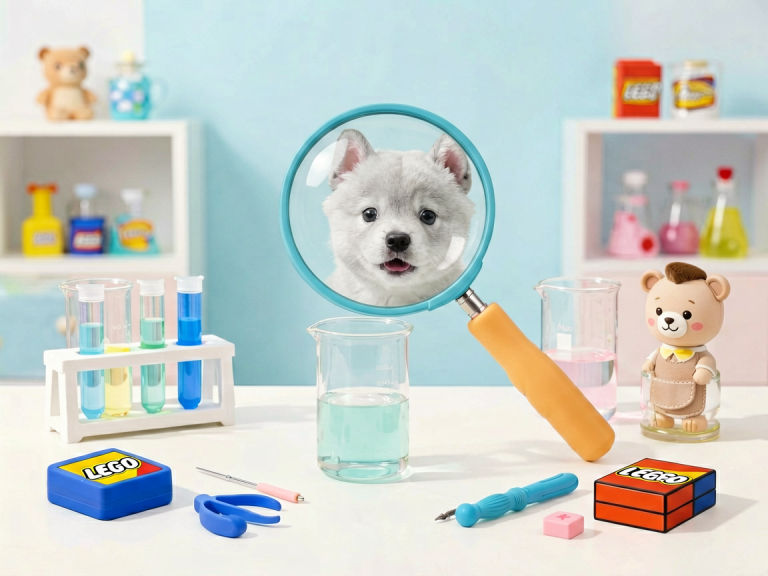
Chemistry sets often intimidate parents with their glassware, chemicals, and high price points. Fortunately, safe, spectacular chemistry experiments can be conducted using common household ingredients. The classic baking soda and vinegar volcano is a perennial favorite, but you can extend the learning far beyond eruptions. For under $10, you can purchase a bag of citric acid, baking soda, and food coloring to create homemade bath bombs, fizzy reactions, and pH indicators using red cabbage juice. A simple DIY slime kit using glue, borax, and water costs less than $5 and introduces concepts of polymerization, viscosity, and non-Newtonian fluids. For a more structured experience, Thames & Kosmos’s “Ooze Labs” sets are often under $30 and include non-toxic chemicals and detailed instruction cards for creating glowing slime, color-changing crystals, and foaming reactions.
To elevate the play, turn your kitchen into a lab notebook. Have children record hypotheses, variables, and observations. For instance, ask: “What happens if we use hot water instead of cold in the slime recipe?” Or “Does the amount of baking soda change the height of the volcano’s eruption?” These simple tweaks transform a fun activity into a genuine scientific inquiry. Additional low-cost materials like coffee filters, salt, and water can be used for paper chromatography experiments that separate the pigments in markers or candy coatings. Chemistry play under $50 is not only budget-friendly but also safely mess-friendly—just keep the vinegar away from the carpet.
—
Nature’s Laboratory: Outdoor STEM Exploration
The natural world is perhaps the richest and most accessible STEM laboratory, and it’s completely free. Outdoor play can be intentionally designed to promote scientific observation, data collection, and engineering thinking. A magnifying glass (less than $10) opens up miniature ecosystems: examine ant colonies, leaf veins, or rock crystals. Pair it with a simple nature journal (a notebook and pencil are all you need) to sketch, measure, and document findings. Children can measure rainfall using a homemade rain gauge (a plastic bottle cut in half), track temperature changes with a cheap thermometer, or build a sundial to understand Earth’s rotation.
Engineering challenges thrive outdoors. Using only natural materials—sticks, leaves, stones, mud—kids can design and build bird nests, dams in a puddle, or bridges over a small stream. The “stick raft” challenge is a classic: gather twigs and string (cost: under $2) to construct a floating vessel, then test its buoyancy and load capacity. This activity introduces concepts of density, balance, and material strength. Another favorite is the leaf color chromatography experiment, where children mash different colored leaves, soak them in rubbing alcohol, and use coffee filters to separate pigments—revealing the hidden colors of autumn. For under $20, you can buy a simple bug catcher or a children’s microscope (pocket models are around $25) that magnifies leaves, insects, and pond water. Outdoor STEM play not only connects children to nature but also cultivates patience, observation skills, and environmental stewardship—all without draining your wallet.
—
Digital Creativity: Programming Games and Apps for Free
Not all STEM play requires physical objects; the digital world offers a vast playground for learning, often at zero cost. Scratch (scratch.mit.edu) is a free, block-based programming platform developed by MIT. Children can create their own animated stories, games, and interactive art by snapping together colorful code blocks. No downloads are needed, and the platform runs in any browser. With a bit of guidance, kids can learn loops, variables, conditional statements, and event-driven programming. The community features millions of shared projects for inspiration. Similarly, Code.org offers free hour-long tutorials featuring popular characters like Minecraft, Frozen, and Star Wars, gradually building coding skills from drag-and-drop to JavaScript.
For older children or those interested in app development, MIT App Inventor allows users to design functional Android apps using a visual interface—again, completely free. Children can make a simple quiz app, a soundboard, or even a calculator. The process teaches logical sequencing, user interface design, and debugging. To combine digital and physical play, consider using free coding games on tablets like “LightBot” (basic version free) or “The Foos” (free on iOS/Android), which teach programming logic through puzzles. Even without a device, you can play “unplugged” coding games using index cards to simulate loops and conditionals—a technique used by computer science educators worldwide. Digital STEM play under $50 is practically limitless because the internet itself is the ultimate resource.
—
The Art of Problem-Solving: Puzzles and Logic Games
Sometimes the simplest tools are the most powerful for developing STEM mindsets. Logic puzzles, strategy games, and brainteasers sharpen critical thinking, pattern recognition, and deductive reasoning—all core competencies for scientists and engineers. Rush Hour by ThinkFun is a classic traffic jam logic game typically priced around $20. Players slide cars and trucks to clear a path for the red car, gradually solving increasingly complex grid-based puzzles. The game teaches spatial reasoning, planning, and forward thinking. Similarly, Kanoodle (around $15) challenges players to fit 3D puzzle pieces into a specific shape, building visual-spatial skills and perseverance.
For a DIY approach, create your own math-based card games using a standard deck (under $2). “Set,” for instance, is a pattern recognition game that can be played with custom cards you design on paper. Children search for sets of three cards where each feature (color, shape, number, shading) is either all the same or all different—excellent training for categorical thinking. Another low-cost option is Sudoku printed from free online sources; start with 4×4 grids for younger kids and progress to 9×9. You can also introduce Tower of Hanoi using three pegs and disks (or even paper circles) to teach recursive problem-solving. These puzzle-based STEM plays require no batteries, no Wi-Fi, and no expensive components—just a curious mind and a willingness to try, fail, and try again.
—
Conclusion: Curiosity Doesn’t Need a Big Budget
The world of STEM play under $50 is vast, vibrant, and surprisingly sophisticated. From coding robots made of cardboard to chemical reactions in the kitchen, from building bridges with straws to solving logic puzzles on paper, every activity in this collection demonstrates that meaningful learning arises not from expensive gadgets but from thoughtful engagement, creativity, and hands-on exploration. The key is to reframe play as an open-ended investigation—ask questions, test hypotheses, and celebrate failures as stepping stones. Whether you invest in a $45 robot or use a free online coding tool, the most important ingredients are time, encouragement, and a spirit of wonder. So the next time you’re tempted by a pricey STEM kit, remember: the best laboratory is the one you build yourself, and the only limit is your imagination. For under $50, you can unlock a universe of discovery—one experiment, one structure, one line of code at a time.