The Power of Play: Language-Boosting Activities for Six-Year-Olds
Introduction
By the age of six, children are standing at a remarkable crossroads in their linguistic journey. They have moved beyond toddler babble and simple sentences, now wielding a vocabulary of several thousand words and the ability to string together complex, multi-clause thoughts. Yet language development at this stage is far from complete. It is a period of rapid expansion in grammar, narrative skills, social communication, and metalinguistic awareness—the ability to think about language itself. The most effective way to nurture this growth is not through flashcards or drills, but through purposeful, joyful play. Play is the natural laboratory of childhood, where words are tested, stories are built, and meaning is negotiated. For a six-year-old, the right kind of play can transform a simple afternoon into a powerful engine for vocabulary acquisition, sentence complexity, and conversational fluency. This article presents a series of research-backed, creative play ideas specifically designed to support language development in six-year-olds, organized into five thematic sections. Each idea is explained in detail, with practical tips for parents, teachers, and caregivers.
—
1. Storytelling Adventures: Building Narratives from Scratch
At age six, children begin to understand that stories have a beginning, a middle, and an end. They also start to grasp the concept of a protagonist, a conflict, and a resolution. Play that centers on storytelling directly strengthens narrative abilities, which are foundational for reading comprehension and written expression later on.
1.1. The "Story Box" Activity
Prepare a box filled with random, intriguing objects: a seashell, a toy car, a feather, a small puzzle piece, a plastic dinosaur, a ribbon, and a key. Ask the child to pull out three objects at random. Their challenge? To create a short story that weaves all three items together in a logical sequence. For example, the dinosaur might find a key that opens a treasure chest filled with feathers. This activity forces the child to make causal connections, use descriptive language (e.g., "the shiny, golden key"), and employ transition words like "then," "because," and "suddenly." To extend the language benefits, ask follow-up questions: "Why did the dinosaur need the key?" or "How did the feather feel when the wind blew?" This encourages the child to add details, thereby expanding their descriptive vocabulary and ability to express cause and effect.
1.2. Collaborative Story Circle
Gather a small group of children (or one child with an adult). The first person starts the story with one sentence, such as, "Once upon a time, a brave rabbit named Pip woke up to find his carrot garden had disappeared." The next person adds a sentence, and so on, building the tale sentence by sentence. This game teaches turn-taking in conversation, active listening, and the need to build logically on someone else’s idea. It also introduces the child to the concept of plot cohesion. Encourage the use of dialogue—"Pip whispered to his friend, 'We must search the forest!'"—which provides practice with quotation marks and indirect speech.
—
2. Word Games That Build Vocabulary and Phonemic Awareness
Six-year-olds are ripe for understanding that words are made of smaller sound units (phonemes) and that meaning can be manipulated by changing those sounds. Word games not only expand vocabulary but also sharpen the auditory discrimination skills essential for reading and spelling.
2.1. "Word Ladder" or "Sound Swap"
Start with a simple, three-letter word like "cat." Ask the child to change only one letter to make a new word. "Cat" becomes "hat" (change the first letter), then "hot" (change the middle vowel), then "hop" (change the final consonant), then "hip," and so on. As they progress, introduce longer words: "train" to "brain" to "braid" to "bread." This game is a powerhouse for phonemic awareness and spelling, but also for vocabulary. When they land on a word they don’t know, pause and give a child-friendly definition. For example: "A braid is when you twist three strands of hair together." Encourage the child to use the new word in a sentence. This contextual learning cements the word in their long-term memory.
2.2. "Who Am I?" Riddle Game
Prepare a collection of simple riddles. The adult thinks of an object (e.g., a clock) and gives clues: "I have a face but no eyes. I have hands but no arms. I tick but I do not talk. What am I?" The child must deduce the answer by listening carefully to the descriptive clues. Then, switch roles: let the child invent their own riddle for a familiar object. Creating a riddle requires the child to think about properties, attributes, and category membership—all advanced language skills. They must choose precise words to describe the object without naming it. This builds semantic networks in the brain, linking new words to existing knowledge.
—
3. Role-Play and Pretend Play: The Social Language Gym
Pretend play at age six often involves elaborate scripts and collaborative negotiation. This is where children practice the pragmatic aspects of language: how to ask for things politely, how to assert a different opinion, how to persuade, and how to read tones of voice. These social scripts are critical for school success and peer relationships.
3.1. The "Restaurant" or "Cafe" Setup
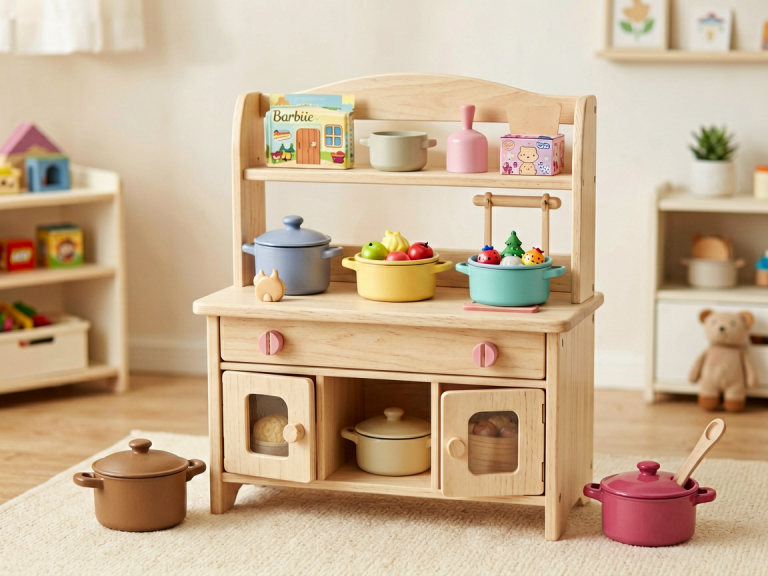
Children love playing restaurant. Set up a small table with a menu (which you create together, writing down the names of dishes—this itself is a literacy activity). One child is the waiter, another is the chef, and others are customers. The waiter must take orders accurately: "I’ll have a grilled cheese sandwich and a glass of orange juice, please." The child playing the waiter must repeat the order back, using complete sentences. The chef then "cooks" using toy food. This scenario forces the use of polite forms ("May I have…?"), negotiates substitutions ("We don’t have orange juice, but we do have apple juice—would that be okay?"), and requires sequential language ("First, I’ll put the bread in the toaster, then I’ll add the cheese"). This kind of role-play is a language-rich environment where vocabulary (grill, toast, slice, pour) is learned in authentic context.
3.2. "Doctor’s Office" with a Twist
Standard doctor play is fine, but try adding a "patient information form" that the child must fill out with simple words (name, symptom, temperature). The child playing the doctor must ask questions: "Where does it hurt?" "When did the pain start?" "Does it hurt more when you move?" This encourages the use of question forms and clauses (e.g., "I think you have a sprained ankle because you fell off your bike"). It also reinforces vocabulary related to body parts, illnesses, and treatments. To boost language, introduce a "prescription pad" where the child writes a simple instruction: "Take one pill every morning. Rest for two days." This merges literacy with oral language.
—
4. Sensory and Art-Based Language Play
Language is not only about words spoken aloud; it is also about the sensory experiences that give those words meaning. Activities that engage multiple senses—touch, smell, sight, hearing—give children a richer reservoir of adjectives and verbs to draw from. Art and sensory play also encourage descriptive monologues (talking to oneself while creating), which is a crucial stage in language internalization.
4.1. "Texture Stories"
Prepare a tray filled with different textured materials: sandpaper, velvet, a piece of sponge, a smooth stone, a rough bark, a soft feather, a crinkly piece of cellophane. Blindfold the child (or ask them to close their eyes) and let them feel an object. They must describe it using as many sensory words as possible: "It feels bumpy and rough, like a lizard’s skin." Then, together, create a short story featuring a character who encounters that texture. For example, "The princess walked through a forest and touched a tree that felt like sandpaper. It scratched her hand!" This activity expands the child’s repertoire of tactile adjectives (smooth, scratchy, silky, gritty) and encourages metaphorical thinking.
4.2. "Paint Your Feelings"
Give the child watercolors or finger paints and ask them to create a picture that represents a specific emotion: joy, sadness, anger, surprise, or fear. Then, have them "read" the painting to you—explain what the colors and shapes represent. For instance, "These jagged red spikes are my anger because my little brother broke my toy. The blue circle is my sadness floating away." This activity not only builds emotional vocabulary but also teaches cause-and-effect reasoning about feelings. The child learns to articulate internal states using precise language, which is a vital component of social-emotional and language development.
—
5. Movement-Based and Outdoor Language Games
Six-year-olds are bundles of kinetic energy. They learn best when their bodies are moving, and language can be woven into active games without requiring them to sit still. These activities are excellent for before-school energy release or afternoon wind-down.
5.1. "Simon Says" with a Language Twist
Standard Simon Says is good for listening skills, but you can boost the language component by requiring more complex instructions. Instead of "Simon says touch your nose," try "Simon says touch something that is the same color as grass" (the child must understand the adjective "green" and the concept of "same color"). Or "Simon says pretend you are a butterfly and fly to the chair" (the child must interpret the verb "fly" and the prepositional phrase "to the chair"). To increase challenge, use commands with two or three steps: "Simon says hop three times, then clap twice, then say the word 'bubblegum'." This exercises working memory and complex sentence comprehension.
5.2. "I Spy" Variations
The classic game of "I Spy" can be adapted to target specific parts of speech. For example, "I spy with my little eye something that starts with the sound /sh/." (The child must identify a word like "shoe" or "shell.") Or "I spy something that is an adjective—like 'sparkly' or 'enormous'." For older six-year-olds, try "I spy something that is a compound word" (e.g., "sunflower," "rainbow," "playground"). This variation pushes the child to think metalinguistically—to treat language itself as a game piece. It also reinforces phonics skills and morphological awareness (the understanding that words are built from smaller meaningful parts).
5.3. Obstacle Course with Verbal Commands
Set up a simple obstacle course in the yard or living room (crawl under a table, hop over a cushion, spin around three times, throw a beanbag into a bucket). Instead of just doing the course, the child must give you the verbal instructions in the correct order before they can start. Alternatively, you can give them a sequence of instructions verbally, and they must execute them in order. For example: "First, crawl under the table. Next, jump over the blue pillow. Then, pick up the red ball and place it on the chair. Finally, say 'I am a champion!'" This activity builds procedural language (first, next, then, finally) and auditory memory, which are critical for following classroom instructions.
—
Conclusion
Language development in six-year-olds is not a passive process; it is an active, social, and playful one. The ideas presented here—from collaborative storytelling and sound games to restaurant role-play and sensory texture stories—are designed to embed language learning within the natural, motivating context of play. When adults become co-players, not instructors, children feel free to experiment with words, test new sentence structures, and stretch their communicative muscles. The key is to follow the child’s lead, ask open-ended questions, and celebrate every attempt at expression. By intentionally weaving language-rich opportunities into everyday play, we give six-year-olds the most powerful gift of all: the confidence and competence to use their voices to connect, imagine, and understand the world. So put away the worksheets. The best classroom is a living room floor strewn with toy dinosaurs, a backyard with a homemade obstacle course, or a kitchen table transformed into a bustling café. Play on.