The Mindful Playroom: A Learning-Through-Play Guide to Avoiding Toy Clutter
Introduction: The Paradox of Plenty
Every parent knows the scene: a living room carpet buried under a landslide of plastic dinosaurs, broken crayons, and mismatched puzzle pieces. The child, overwhelmed by choice, flits from one toy to the next, never settling into the deep, immersive play that researchers promise is essential for cognitive development. We buy more toys in the earnest hope of enriching our children’s learning, only to discover that abundance often sabotages the very goal we set out to achieve. This paradox—that more toys can actually hinder learning—lies at the heart of a growing movement toward mindful play.
The key to resolving this tension is not to eliminate toys altogether, but to transform the way we think about playthings. A learning-through-play approach does not require a warehouse of gadgets; it requires intention, curation, and a willingness to let children lead. This guide offers a practical, research-backed roadmap for creating a play environment that fosters deep learning while keeping toy clutter at bay. By embracing fewer, better toys and implementing smart organizational systems, you can give your child the richest possible play experience without drowning in stuff.
—
1. The Philosophy of Less: Why Fewer Toys Foster Deeper Learning
The first step in avoiding toy clutter is understanding why less truly is more. A landmark study from the University of Toledo found that toddlers who played with fewer toys engaged in longer, more creative play sessions, while those surrounded by many toys became easily distracted and switched toys every few minutes. This phenomenon mirrors what developmental psychologists call “choice overload”: when faced with too many options, the brain struggles to commit, leading to shallow engagement.
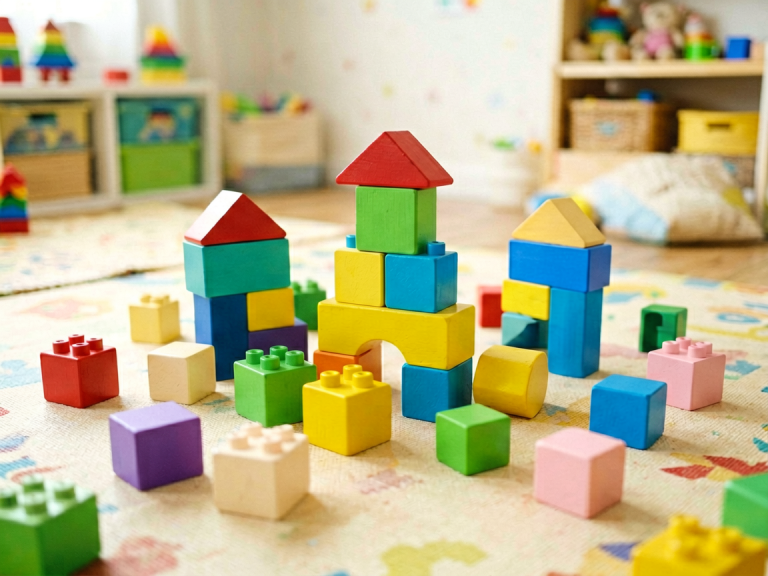
In learning-through-play, depth matters more than breadth. A single set of wooden blocks, for example, can become a castle, a spaceship, a bridge, or a math lesson in symmetry. The same child, surrounded by a dozen specialized toys—a plastic castle, a spaceship, a bridge toy—never needs to imagine. The toy does the work for them, robbing them of the cognitive stretch that fuels problem-solving, creativity, and executive function.
Therefore, the first principle of a clutter-free playroom is ruthless curation. Start by removing at least half of your child’s current toys. Donate, sell, or store them. Keep only those that are open-ended, durable, and truly loved. This initial purge is painful for many parents because we associate love with quantity, but the payoff is immediate: a calmer space, a more focused child, and a learning environment that invites deep play.
—
2. Choosing Quality Over Quantity: Selecting Open-Ended Toys
Once you have weeded out the excess, the next step is to ensure that the toys you keep are high-quality learning tools. Open-ended toys—those that can be used in multiple ways without a prescribed outcome—are the gold standard. They include wooden blocks, building bricks, magnetic tiles, art supplies, dress-up clothes, play silks, and simple dolls. These items do not dictate play; they respond to the child’s imagination.
Contrast these with “closed” toys: electronic gadgets that sing songs, push-button toys that perform a single function, or kits that can only be assembled one way. While these may teach a specific skill (e.g., letter names), they rarely encourage sustained creativity. Worse, they often break quickly, adding to clutter without adding to learning.
When shopping for new toys, ask: “Will this toy still be interesting in six months? Can it be used in more than one way? Does it require the child to think, imagine, or problem-solve?” If the answer is no, skip it. Investing in a small collection of sturdy, beautiful open-ended toys not only reduces clutter but also builds a foundation for lifelong learning habits. Remember: a child’s most powerful “toy” is often a cardboard box, a stick, or a pile of laundry—materials that cost nothing and inspire everything.
—
3. The Toy Rotation System: A Practical Strategy
Even the best-curated collection can feel stale if all toys are available all the time. Enter the toy rotation system, a time-tested method that keeps play fresh while controlling clutter. The idea is simple: divide your child’s toys into several groups, keep only one or two groups accessible at a time, and swap them every week or two.
To implement this, purchase a few clear plastic bins or baskets (avoid opaque ones that hide the contents). Group toys by category—for example, a “construction bin” with blocks and vehicles, a “pretend play bin” with kitchen items and costumes, a “fine motor bin” with puzzles and beads. Place one bin on a low, accessible shelf in the play area. The rest go into a closet or under the bed.
When your child loses interest in the current bin, rotate it out and bring in a new one. The toys that were “hidden” suddenly feel new again, sparking renewed curiosity and deeper engagement. This method reduces the visual overwhelm that causes children to dump entire bins onto the floor. It also teaches patience and delayed gratification—valuable emotional skills. Studies show that toy rotation can extend a child’s attention span by up to 300%, while simultaneously reducing parental frustration over messy rooms.
A variation of this system works for older children, too: rotate board games, craft supplies, or science kits. The principle remains the same: less visible options lead to more focused play.
—
4. Embracing the "One In, One Out" Rule
No matter how carefully you select toys, new ones will inevitably arrive—birthday gifts, holiday presents, hand-me-downs from friends. To keep clutter from creeping back, adopt the “one in, one out” rule. For every new toy that enters the home, one existing toy must leave. The leaving toy can be donated, given to a younger child, recycled, or simply stored away if it has sentimental value.
This rule forces families to make conscious decisions about what truly adds value. When a child receives a new toy, involve them in the selection of an old toy to part with. This teaches children that possessions are not permanent, and that letting go is an act of generosity rather than loss. Over time, the “one in, one out” habit becomes second nature, and the toy collection stabilizes at a manageable size.
Be firm about exceptions. A well-meaning grandparent might bring a noisy, single-purpose toy that clashes with your philosophy. Rather than creating conflict, politely accept the gift, play with it for a short time, and then quietly pass it along to a charity while thanking the giver for their thoughtfulness. The goal is not to deprive your child but to protect their learning environment from accidental clutter.
—
5. Organizing for Independence: Low Shelves, Clear Bins
Clutter is not just about the number of toys; it is also about how they are stored. A mountain of toys in a large bin invites dumping and chaos. A system of low, open shelving with clearly labeled containers, on the other hand, encourages children to choose one item at a time and return it before taking out another. This organizational approach supports independent play and self-regulation.
Install shelves at the child’s eye level—no higher than 36 inches for toddlers. Use shallow bins or trays so that each holds a logical set of toys. For example, one bin might hold only wooden train tracks, another only animal figurines. Avoid bins that are too deep; they become black holes where small pieces get lost. Clear bins allow children to see what is inside without dumping everything out.
Label each bin with a picture (for pre-readers) or a word (for emerging readers). This simple act turns toy storage into a literacy activity. When children know where each toy lives, they can (and will) put things away independently—not always perfectly, but with growing competence. The result is a play space that stays tidy for longer, freeing up time for actual play rather than cleanup battles.
Remember that organization is a skill to be taught, not a demand to be enforced. Spend a few minutes each day modeling how to return toys to their homes. Sing a cleanup song. Make it a game. Over time, the routine becomes automatic, and clutter loses its power.
—
6. The Role of Loose Parts and Natural Materials
Some of the best learning-through-play materials are not toys at all. “Loose parts”—items that can be moved, combined, redesigned, and taken apart—are the unsung heroes of a clutter-conscious playroom. Think of pinecones, pebbles, shells, fabric scraps, cardboard tubes, bottle caps, buttons, and wooden rings. These materials are free, infinitely versatile, and naturally clutter-resistant because they can be stored in a single small jar or basket.
Loose parts encourage open-ended exploration. A handful of small stones can become dinner for a doll, counters in a math game, or characters in a story. A cardboard tube can be a telescope, a building support, or a marble run. By incorporating loose parts, you reduce the need for specialized toys while expanding the possibilities for creative learning.
To avoid clutter, keep loose parts organized in small, transparent containers. Rotate them like regular toys—put out a basket of natural objects in autumn, a jar of colorful fabric squares in spring. The novelty of new materials will sustain interest without adding bulk. Moreover, loose parts align beautifully with the Montessori and Reggio Emilia philosophies, which emphasize that children learn best by manipulating real-world objects.
—
7. Digital Detox: Screen-Free Play as a Clutter Antidote
In the modern home, digital clutter is just as disruptive as physical clutter. Tablets, gaming consoles, and app-based “toys” often masquerade as learning tools, but they come with hidden costs: addictive interfaces, passive engagement, and an endless stream of in-app purchases that clutter your digital space and distract your child. Research from the American Academy of Pediatrics warns that excessive screen time in early childhood can impair attention, language development, and social skills.
A learning-through-play approach intentionally limits digital toys. Reserve screens for occasional, high-quality content (e.g., a nature documentary or a creative app like a drawing tool). Better yet, create “screen-free zones” in the playroom. When screens are absent, children naturally gravitate toward hands-on play with real objects—blocks, dolls, books, and loose parts. This not only reduces the clutter of cords and devices but also reconnects children with their innate curiosity.
If you do have digital toys, treat them like physical toys. Apply the same rotation and “one in, one out” rules. Keep only a few apps installed at a time. Unsubscribe from toy subscription boxes that deliver plastic junk monthly. The goal is to make every toy—digital or physical—purposeful and cherished, not abundant and ignored.
—
8. Involving Children in the Process: Teaching Stewardship
Finally, avoiding toy clutter is not something you do *to* your child; it is something you do *with* them. Children as young as two can participate in toy curation. Ask them: “Which toys do you love the most? Which ones are broken and can be recycled? Which toys might make another child happy?” By involving them in sorting, donating, and organizing, you teach the value of stewardship over ownership.
Make decluttering a regular family ritual. Every season, set aside an afternoon to review the toy collection. Spread everything out, play with forgotten treasures, and decide what stays and what goes. For older children, this can be a lesson in minimalism and gratitude. For younger ones, it builds decision-making skills and emotional resilience (letting go of a favorite toy is hard, but manageable with support).
When children feel ownership of their play space, they are more likely to maintain it. They become partners in the fight against clutter rather than adversaries. And the deeper lesson—that play is about imagination, not accumulation—will serve them for a lifetime.
—
Conclusion: Play with Intention
A clutter-free playroom is not a sterile, toy-deprived zone. It is a thoughtfully designed space where every object has a purpose, where children can lose themselves in deep, joyful learning, and where parents can breathe without stepping on a Lego. The journey begins with a shift in mindset: from “more is better” to “better is more.” By choosing open-ended toys, rotating them wisely, embracing loose parts, limiting screens, and involving children in the process, you create an environment where learning through play flourishes naturally.
Toy clutter is not a sign of wealth or generosity; it is often a sign of distraction. The greatest gift you can give your child is not another plastic gadget, but the space to imagine, to concentrate, and to play deeply. Start small. Purge one bin. Rotate one shelf. Watch how your child responds. You may be surprised to discover that when you clear the clutter, you make room for wonder.
*Word count: approximately 1,320 words.*