The Ultimate Guide to Safe Math Toys for Kids: Learning Through Play Without Compromising Safety
Introduction
Mathematics is often considered a challenging subject, but when introduced early through play, it can become an exciting adventure. The right math toys transform abstract concepts like numbers, shapes, and patterns into tangible, hands-on experiences. However, as parents and educators, we face a critical question: Are these toys safe for my child? The market is flooded with colorful, interactive math toys, but not all of them meet rigorous safety standards. This article explores the essential qualities of safe math toys for kids, why safety should never be an afterthought, and how to choose products that nurture both mathematical thinking and physical well-being. From toddlers exploring counting beads to older children using fraction tiles, safety remains the foundation upon which all learning should rest.
Why Safety in Math Toys Matters More Than You Think
Children learn best when they feel secure, and that includes physical safety. Unsafe toys can lead to choking hazards, chemical exposure, sharp edges, or small parts that are easily swallowed. Math toys often include small manipulatives—counters, dice, rods, or geometric shapes—which can become dangerous if not designed with child‑appropriate sizes and materials. Moreover, young children frequently put objects in their mouths, so non‑toxic, BPA‑free, and lead‑free materials are non‑negotiable. Beyond physical risks, emotional safety also plays a role. Toys that are too complex or frustrating can cause anxiety, while those that break easily may discourage a child from exploring. Safe math toys are not only physically harmless but also developmentally appropriate, supporting a child’s confidence and curiosity.
Key Features of Safe Math Toys
When evaluating math toys, look for these critical features to ensure they meet safety standards:
1. Non‑Toxic and Durable Materials
The best safe math toys are made from natural wood, food‑grade silicone, or high‑quality plastic that is free from phthalates, lead, and BPA. Wooden blocks with water‑based paints, for example, are excellent because they are sturdy and have no harmful coatings. Silicone counting mats and number puzzles are soft yet resilient, reducing the risk of injury from hard edges.
2. Choking Hazard Prevention
For children under three, any part smaller than 1.25 inches in diameter is a potential choking hazard. Reputable manufacturers clearly label age recommendations. Safe math toys for toddlers often feature oversized counting pieces (e.g., large foam numbers or chunky wooden beads) that cannot be swallowed. Always check for loose parts or detachable components.
3. Smooth Edges and Sturdy Construction
Sharp corners or rough surfaces can cause cuts or splinters. High‑quality math toys are sanded, rounded, and assembled with child‑safe adhesives rather than metal staples or nails. Magnetic boards should have magnets securely embedded, not loose. Additionally, toys should withstand drops and rough handling—broken pieces create new hazards.
4. Washable and Hygienic Design
Math toys are touched constantly, often by multiple children. Washable surfaces (like plastic or silicone) allow for easy cleaning and disinfection. Fabric‑based toys, such as felt number charts, should be machine‑washable. Avoiding porous materials that trap bacteria is especially important in preschools or daycare settings.
Educational Benefits of Safe Math Toys
When safety is guaranteed, children can fully engage with the learning potential of math toys. Here are some of the key educational advantages:
Building Number Sense
Counting bears, numbered stacking rings, and abacuses help children understand one‑to‑one correspondence, sequencing, and basic addition. Safe, tactile objects allow them to physically move items as they count, reinforcing the concept that “three” means a quantity.
Introducing Geometry and Spatial Reasoning
Shape sorters, pattern blocks, and magnetic tangrams develop spatial awareness. Children learn to recognize 2D and 3D shapes, symmetry, and fractions by fitting pieces together. Durable, non‑toxic blocks ensure that experimentation—even when pieces are knocked over—remains safe.
Enhancing Problem‑Solving and Logic
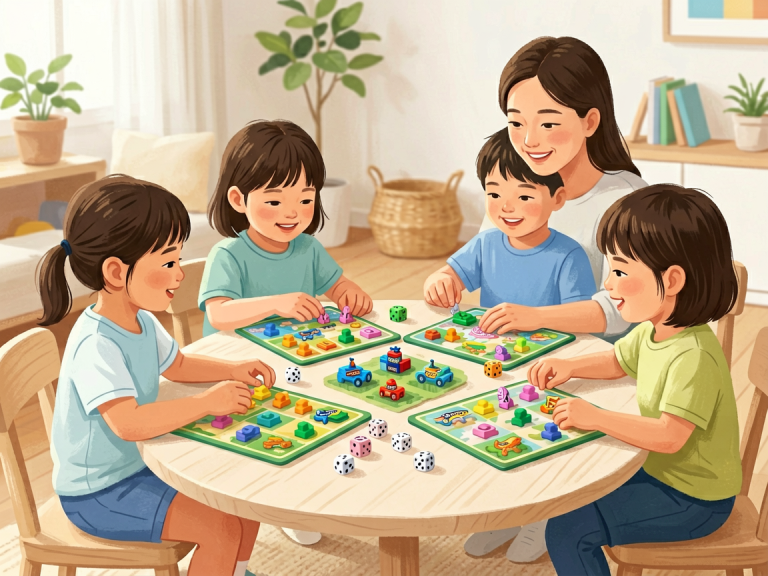
Math board games, dominoes, and dice games encourage strategic thinking. Safe dice with rounded corners and large, easy‑to‑read dots reduce frustration. Games that involve matching, sorting, or sequencing build early logical reasoning skills without pressure.
Promoting Fine Motor Skills
Picking up small counting counters, threading beads onto laces, or placing number tiles into boards strengthens hand‑eye coordination and dexterity. These fine motor movements are crucial for later writing and math manipulation.
How to Choose Safe Math Toys: A Practical Checklist
Navigating the toy aisle can be overwhelming. Use this checklist to evaluate any math toy before purchase:
1. Check the Label
Look for safety certifications such as ASTM (American Society for Testing and Materials), CE (Conformité Européenne), or EN71 (European standard for toy safety). These indicate that the toy has undergone rigorous testing.
2. Consider Age Appropriateness
A toy labeled for ages 3+ may contain small parts unsuitable for a 2‑year‑old. Even if your child is advanced, follow age guidelines for safety. For infants and toddlers, choose toys without strings longer than 12 inches (to avoid strangulation) and with no detachable parts.
3. Test for Sturdiness
If possible, squeeze, drop, or shake the toy in the store. Does it feel solid? Are there any loose pieces? For wooden toys, check for splinters or peeling paint. For plastic toys, ensure no sharp seams remain from molding.
4. Read Reviews from Other Parents
Online reviews often highlight safety issues that manufacturer descriptions omit. Look for comments about broken parts, smell (indicating toxic chemicals), or choking incidents.
5. Prioritize Open‑Ended Toys
Toys that can be used in multiple ways—like counting stones, stacking cups, or number puzzles—grow with the child and reduce the need for constant new purchases. Fewer toys means less exposure to potential hazards.
Examples of Safe Math Toys for Different Age Groups
To make the concept concrete, here are specific examples of math toys that combine safety with educational value:
Ages 0–2: Sensory Math Mats
Soft, silicone number mats with raised numerals allow babies to explore shapes with their hands and mouths. These mats are dishwasher‑safe and free of harmful chemicals. Large stacking rings (each ring at least 2 inches wide) introduce size comparison without choking risk.
Ages 2–4: Wooden Counting Farm Animals
A set of chunky wooden animals numbered 1 to 10 can be used for counting, sorting, and simple addition. The paints are non‑toxic, and the pieces are too large to swallow. The set often includes a fabric bag for storage, which prevents loose parts.
Ages 4–6: Magnetic Number Tiles and Board
A magnetic board with large, colorful number tiles (each at least 2 inches) helps children practice number recognition and basic equations. Magnets should be securely glued inside the tiles, and the board should have rounded corners. Avoid sets with tiny magnetic letters or numbers.
Ages 6–8: Fraction Cubes and Dice Games
Soft foam fraction cubes (or interlocking plastic cubes) teach parts of a whole. The foam is lightweight and safe, while plastic versions should be made of food‑grade silicone or thick ABS plastic. Pair with large‑sided dice (1.5 inches or larger) for math games.
Ages 8+: Geometry Construction Kits
Architectural sets with large, flexible plastic rods and connectors (like Geomag or classic Tinkertoys) allow older children to build 3D shapes and explore angles. The rods should have smooth ends, and the connectors should be non‑splintering. Always check that magnets in magnetic construction kits are encased in solid plastic.
Conclusion
Safe math toys for kids are not a luxury—they are a necessity. By choosing toys made from non‑toxic materials, designed with age‑appropriate sizes, and free from sharp edges or loose parts, we create an environment where children can explore mathematics with joy and confidence. The investment in high‑quality, safe toys pays dividends in both learning and peace of mind. Remember, a toy that is safe is not just one that avoids injury; it is also one that empowers a child to touch, manipulate, fail, and try again without fear. Whether you are a parent, a teacher, or a caregiver, let safety be the first equation you solve. After all, the most important math lesson is that learning should always be protected.