The Power of Play: Selecting Educational Toys for Early Learning at Age 4
Introduction: Why Age 4 Is a Critical Window for Learning
At the age of four, a child’s brain is developing at an astonishing rate. Synapses are forming faster than at almost any other stage of life, and the capacity for language, social interaction, logical reasoning, and emotional regulation is expanding dramatically. This is the moment when play ceases to be mere amusement and becomes a profound vehicle for learning. Educational toys for early learning at age 4 are not simply tools to keep a child occupied; they are carefully designed instruments that can shape cognitive architecture, nurture creativity, and build foundational skills that will support academic success and lifelong curiosity.
Parents and educators often face a bewildering array of options, from brightly colored plastic gadgets to simple wooden blocks. Yet the most effective educational toys share common principles: they are open-ended, they encourage active engagement rather than passive consumption, and they are developmentally appropriate for the unique needs of a four-year-old mind. This article explores the multifaceted role of educational toys for children at age four, offering guidance on selection, discussing specific types of toys and their benefits, and providing practical advice for integrating these tools into daily routines.
Understanding the Developmental Milestones of a Four-Year-Old
Cognitive Growth and Symbolic Thinking
By age four, children have moved beyond simple sensorimotor exploration into the realm of symbolic thought. They can use one object to represent another, engage in pretend play with complex narratives, and begin to understand cause-and-effect relationships. Educational toys that leverage this symbolic capacity—such as play kitchens, doctor kits, or building sets that allow for imaginative construction—are particularly valuable. A simple set of wooden blocks, for example, can become a castle, a spaceship, or a city, teaching spatial reasoning, geometry, and even physics through the act of balancing and stacking.
Language Explosion and Narrative Skills
The vocabulary of a four-year-old typically expands from several hundred words to more than a thousand, and complex sentences become the norm. Toys that incorporate storytelling, letters, and phonetic sounds can accelerate this linguistic development. Alphabet puzzles, magnetic letters, and picture books with interactive elements help children connect sounds to symbols, paving the way for early reading. Moreover, toys that encourage dialogue—such as puppets or storytelling cubes—allow children to practice narrative sequencing and expressive language in a low-pressure, playful context.
Fine Motor Skills and Hand-Eye Coordination
At this age, children are refining their fine motor control. They can hold a pencil with a mature grip, use scissors, and manipulate small objects with increasing precision. Educational toys that challenge these skills include lacing beads, threading sets, play dough with tools, and construction kits with large pegs or snap-together pieces. These activities not only prepare children for writing but also enhance bilateral coordination and visual tracking, which are essential for reading and mathematics.
Social and Emotional Development
Four-year-olds are deeply engaged in learning how to navigate social relationships. They are beginning to understand sharing, taking turns, empathy, and conflict resolution. Cooperative games, board games designed for young children, and role-playing sets that involve multiple participants help children practice these social skills in a structured yet fun environment. Additionally, toys that allow for independent play can foster self-regulation and emotional resilience, as a child learns to cope with frustration when a tower falls or a puzzle piece doesn't fit.
Categories of High-Impact Educational Toys for Age 4
Building and Construction Sets
Perhaps no category of educational toys is as versatile as building sets. From classic wooden unit blocks to magnetic tiles and interlocking plastic bricks, these toys teach foundational concepts in mathematics, physics, and design. When a four-year-old stacks blocks to create a stable structure, they are experimenting with balance, weight distribution, and symmetry. When they build a bridge or a tunnel, they are engaging in basic engineering. The open-ended nature of these toys means that no two play sessions are alike, which encourages repeated exploration and deeper learning over time.
For age four, magnetic tiles are especially recommended because they offer easy connection and disconnection, reducing frustration while still providing ample challenge. Children can create 2D shapes and 3D structures, learning about angles, sides, and volume. Some sets include wheels and axles, introducing simple mechanical principles. The social aspect is also significant: building together with siblings or peers fosters collaboration, negotiation, and communication.
Puzzles and Problem-Solving Games
Puzzles are a classic educational toy that deserves a prominent place in any four-year-old’s collection. Jigsaw puzzles with 12 to 48 pieces help develop visual-spatial reasoning, pattern recognition, and persistence. Beyond jigsaw puzzles, logic puzzles—such as simple mazes, tangrams, or matching games—challenge a child’s ability to think systematically. A pattern block puzzle, for example, requires a child to identify shapes, rotate them mentally, and fit them into a design. This process strengthens executive function skills like planning and cognitive flexibility.
Board games tailored for age four are another excellent resource. Games like “Hi-Ho! Cherry-O” teach counting and simple addition, while “Zingo” reinforces vocabulary and visual matching. Cooperative board games, where all players work together against the game itself, are particularly beneficial because they eliminate the pressure of competition and emphasize teamwork and shared problem-solving.
Pretend Play and Role-Playing Toys
Imaginative play reaches its peak around age four, and toys that facilitate this are invaluable for cognitive and emotional development. A play kitchen with pots, pans, and plastic food allows a child to mimic cooking, practicing sequencing (first chop, then stir, then serve) and social roles (host, chef, customer). A doctor’s kit encourages empathy as the child “treats” a stuffed animal, learning about body parts and the concept of care. Costumes, puppets, and dollhouses extend this play, enabling children to explore different identities and rehearse real-world scenarios.
Importantly, these toys should be simple and open-ended rather than overly prescriptive. A generic set of wooden food items is more versatile than a plastic pizza that can only be “cut” one way. The more flexibility a toy offers, the more opportunities for creative problem-solving and narrative development.
Art and Creative Expression Supplies
At age four, children are developing fine motor control and beginning to represent ideas visually. Art supplies such as washable markers, crayons, watercolor paints, child-safe scissors, and collage materials foster creativity while strengthening hand muscles. However, the most educational art toys go beyond mere open-ended creation. For instance, a set of stencils can help a child practice shape recognition and tracing, which supports pre-writing skills. Modeling clay and play dough with tools (rolling pins, cookie cutters, shape molds) encourage three-dimensional thinking and planning.
Art also provides a unique opportunity for language development. When a parent asks, “Tell me about your drawing,” the child must formulate a narrative, describe colors and shapes, and explain relationships between elements. This kind of dialogue enriches vocabulary and builds confidence in self-expression.
STEM-Focused Toys for Early Science and Math
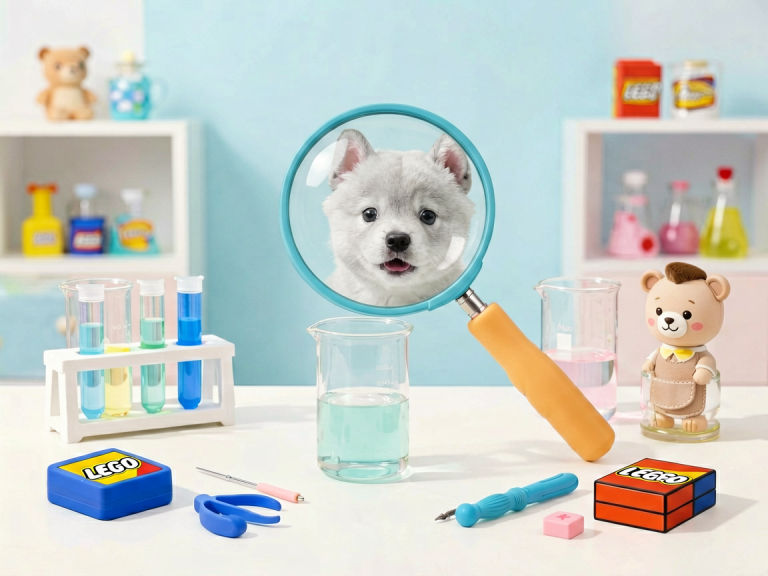
While the term “STEM” might seem advanced for a four-year-old, the foundational concepts of science, technology, engineering, and mathematics can be introduced through play. Simple counting toys—like abacuses, number boards, and counting bears—teach one-to-one correspondence and basic arithmetic. A balance scale that uses weights or small objects introduces the idea of comparison and measurement. Magnifying glasses, bug catchers, and simple microscopes (safe for children) spark curiosity about the natural world, encouraging observation, classification, and questioning.
Coding toys designed for preschoolers have also become popular. Products like programmable floor robots (e.g., Botley or Code-a-Pillar) allow children to arrange sequence cards or buttons to direct a robot’s movements. This teaches foundational logic, sequencing, and cause-and-effect without requiring screen time. The hands-on, tangible nature of these toys is ideal for a four-year-old’s learning style.
How to Choose the Right Educational Toy for a Four-Year-Old
Prioritize Open-Endedness Over Specific Outcomes
The best educational toys are those that can be used in multiple ways. A set of wooden blocks can be a castle one day and a rocket ship the next. A collection of fabric scraps and ribbons can become a costume, a fort decoration, or a sorting activity. Avoid toys that have only one correct way to play—especially electronic toys that simply light up or play sounds when a button is pressed. These passive toys limit creativity and often fail to engage a child’s problem-solving abilities.
Look for Toys That Encourage Active Manipulation
Four-year-olds learn best through physical interaction. Toys that require building, sorting, connecting, or moving engage multiple senses and reinforce learning through muscle memory. For example, a child learning the alphabet through magnetic letters on a refrigerator is actively selecting, placing, and rearranging symbols. This kinesthetic experience is far more effective than watching a video. Similarly, a counting game that involves placing objects into a container one by one is more impactful than a digital counting app.
Ensure Safety and Durability
Age four children are still prone to putting objects in their mouths occasionally. All toys should be made of non-toxic materials, have no small parts that could be choking hazards, and be durable enough to withstand dropping, throwing, and enthusiastic use. Look for certifications like ASTM or CE marking. Wooden toys, while sometimes more expensive, are often safer than cheap plastic alternatives because they are less likely to break into sharp pieces.
Consider Your Child’s Individual Interests and Needs
Every four-year-old is unique. A child who loves movement and physical activity might benefit from a balance board, a tricycle, or a set of large building blocks that allow for gross motor play. A child who is more contemplative might prefer puzzles, art supplies, or quiet sorting games. Observing your child’s natural inclinations is the best guide. Additionally, if a child is struggling with a particular skill—such as fine motor control—choose toys that explicitly target that area, such as lacing cards or pegboards.
Limit Screen-Based Toys
While there are some high-quality educational apps and digital games, research consistently shows that physical, hands-on play is superior for early learning. Screen time can be overstimulating and passive, reducing opportunities for social interaction and creative problem-solving. If you do choose a digital toy, ensure it is interactive, requires physical movement (like a dance-along game), and is limited in duration. The majority of a four-year-old’s play should involve tangible objects.
Practical Strategies for Integrating Educational Toys into Daily Life
Create a Dedicated Play Space
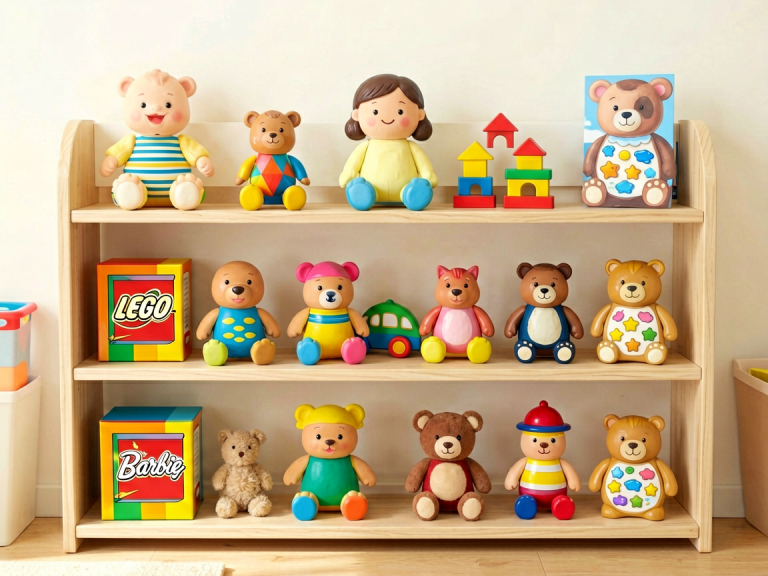
A well-organized play area with low shelves and labeled bins allows a child to independently choose and return toys. This fosters a sense of ownership and responsibility. Rotate toys every few weeks to maintain novelty and prevent boredom. When a toy is “new” again after being stored away, it often gains renewed interest.
Play Along, But Don’t Take Over
Parental involvement is crucial for maximizing the learning potential of educational toys. However, the adult’s role is to scaffold, not to direct. Ask open-ended questions: “What do you think will happen if we put this block here?” or “How can we make this tower taller?” Offer encouragement and help only when the child is clearly frustrated. The goal is to let the child discover solutions on their own, building confidence and persistence.
Use Toys to Reinforce Everyday Learning
Educational toys should not be confined to a single “playtime.” Incorporate them into daily routines. For instance, use counting bears to set the table (“One bear for each plate”). Use magnetic letters to spell the names of family members. Use a play kitchen to practice sequencing while cooking real food together. The more seamlessly learning is woven into life, the more naturally a child will absorb new concepts.
Balance Structured and Unstructured Play
While educational toys with specific goals are valuable, free, unstructured play is equally important. A child needs time to explore a toy without any adult-imposed agenda. This is when the most creative and unexpected learning happens. A pile of building blocks can become a volcano, a rocket, or a bed for a stuffed animal. That kind of spontaneous problem-solving cannot be scripted.
Conclusion: The Lifelong Gift of Purposeful Play
Selecting educational toys for a four-year-old is not about buying the most expensive or technologically advanced products. It is about understanding the developmental needs of this remarkable age and choosing tools that invite exploration, challenge, and joy. A well-chosen toy can spark a love of numbers, letters, or science that lasts a lifetime. It can teach patience, resilience, and collaboration. It can build the neural pathways that underpin all future learning.
As parents and educators, we have the privilege of guiding children through these formative years. By investing in high-quality, open-ended, and developmentally appropriate toys, we provide more than entertainment. We give children a foundation for thinking critically, creating boldly, and connecting deeply with the world around them. The best educational toys are those that transform play into discovery—and at age four, every moment of discovery is a step toward a brighter future.
—
*Word count: approximately 1,280 words (excluding title and subheadings).*