The Power of the Unscripted: How Open-Ended Play Shapes Learning in Toddler Boys
Introduction: Beyond the Toy Box
In the modern world of parenting, a curious dichotomy has emerged. On one hand, shelves are lined with flashing, talking, singing, and light-up toys designed to “teach” colors, numbers, and letters. On the other hand, a quieter, more ancient form of learning is gaining renewed attention: open-ended play. For toddler boys—those whirlwinds of energy, curiosity, and emerging independence—this type of play is not merely a pleasant diversion; it is a fundamental engine of cognitive, social, and emotional development. Open-ended play, defined as child-directed activity with materials that have no fixed purpose or predetermined outcome, offers a unique landscape for learning. Unlike closed toys (e.g., a puzzle with one correct solution, a button that plays one song), open-ended materials invite endless possibilities. A cardboard box becomes a spaceship, a castle, a cave for a bear, or a car. A set of wooden blocks can be a tower, a road, a bridge, or a zoo enclosure. For toddler boys, who are often drawn to action, movement, and problem-solving, this unstructured freedom is not chaos—it is the most sophisticated classroom they will ever enter. This article explores how open-ended play specifically fosters learning in toddler boys, why it is essential in an age of structured activities, and how parents and caregivers can create environments that invite exploration without scripts.
The Neuroscience of Unstructured Play: Why Boys Need Open-Ended Experiences
To understand why open-ended play is particularly potent for toddler boys, we must first glimpse the developing brain. Between the ages of one and three, a toddler’s brain is undergoing a spectacular explosion of synaptic connections—up to one million new neural connections per second, according to Harvard’s Center on the Developing Child. This period is critically sensitive for executive function skills: impulse control, working memory, and cognitive flexibility. Open-ended play is the brain’s natural gymnasium for these skills. When a toddler boy decides to stack blocks, knock them down, and then stack them again in a new configuration, he is not merely making noise; he is practicing planning, evaluation, and adaptation. Research in developmental psychology suggests that boys, on average, may be more inclined toward spatial reasoning and physical experimentation than girls at this age—though individual variation is enormous. Open-ended play capitalizes on this inclination. A set of magnetic tiles, for example, allows a boy to explore geometry, balance, and cause-and-effect without any adult instruction. He learns that a tall tower needs a wide base, that magnets repel when mismatched, that a gentle nudge collapses a structure but a deliberate placement strengthens it. These are lessons in physics, mathematics, and resilience—all embedded in joyful, self-directed activity.
Moreover, open-ended play supports the development of the prefrontal cortex, which governs attention regulation. In a world of screens and immediate rewards, toddler boys are often labeled as “hyperactive” or “distractible.” Yet when given the freedom to engage deeply with materials of their own choosing, many show remarkable sustained focus. A truck on a ramp, a pile of sand, a set of nesting cups—these can hold a child’s attention for twenty minutes or more if the environment is calm and the adult refrains from directing. This depth of engagement is the antithesis of the scattered, rapid-fire stimulation of electronic toys. It teaches the toddler boy that concentration yields satisfaction, that sticking with a problem leads to discovery.
The Skills Cultivated: From Problem-Solving to Social Negotiation
Open-ended play is not one-dimensional; it cultivates a suite of interconnected skills that are crucial for kindergarten readiness and lifelong learning. For toddler boys, the following domains are especially enriched:
- Cognitive Flexibility and Divergent Thinking
When a toy has only one function, the child learns that there is one right answer. In open-ended play, there are infinite answers. A simple scarf can be a superhero cape, a blanket for a baby doll, a river to jump over, or a cloth to wipe a pretend spill. This practice in divergent thinking—generating multiple solutions to a single problem—is a hallmark of creativity. Toddler boys who engage in open-ended play are more likely to approach real-world challenges with an experimental mindset: “What if I try another way?” rather than “I can’t do it.”
- Fine and Gross Motor Development
Consider a toddler boy playing with a set of large Duplo blocks (a borderline open-ended toy). He reaches, grasps, twists, and presses. His shoulder muscles stabilize, his fingers coordinate, his eyes track motion. When he decides to build a bridge that spans over a “river” drawn on the floor with chalk, he is integrating visual-spatial planning with precise motor control. Similarly, pouring water from a pitcher into a cup, scooping sand into a bucket, or threading large beads onto a string—all open-ended activities—refine the dexterity needed later for writing with a pencil.
- Language and Narrative Development
A common misconception is that talking toys accelerate language. Actually, research on parent-child interaction suggests that language thrives in back-and-forth conversation, not monologue. In open-ended play, a toddler boy might say, “My car goes vroom vroom up the mountain,” as he drives a block across a pillow. The adult can respond, “Oh! That mountain is very steep. Does the car need help?” This exchange—open, responsive, and child-led—builds vocabulary, syntax, and narrative skills. Moreover, boys who are less talkative in structured settings often find their voice during play. The safety of an imagined world allows them to practice new words, express emotions, and create stories.
- Emotional Regulation and Resilience
One of the most profound benefits of open-ended play for toddler boys is the safe space it provides for failure. In an unstructured context, there is no “wrong” outcome—only unexpected ones. A tower that falls is not a mistake; it is an invitation to rebuild. A drawing that looks like scribbles is not a failure; it is a record of motion and energy. This gentle environment allows boys to experience frustration without shame, to try again, and to discover that persistence leads to new possibilities. These early experiences lay the groundwork for a growth mindset—the belief that ability can be developed through effort.
- Social and Cooperative Skills
While toddler play is often parallel (side-by-side, not interactive), open-ended materials naturally invite collaboration. Two boys playing with a set of wooden blocks may begin by each building their own tower, but soon one’s tower touches the other’s, and a negotiation begins: “You can put your block here if I put mine there.” Shared pretend play—like building a “garage” for toy cars—requires listening, turn-taking, and compromise. These micro-experiences are the building blocks of empathy and friendship. Importantly, because the play is not directed by an adult, the power dynamics are horizontal; boys learn to read each other’s cues and adjust their behavior accordingly.
Practical Strategies for Creating Open-Ended Play Rich Environments
Creating an environment that supports open-ended play does not require a large budget or a home filled with expensive wooden toys. It does require a shift in mindset: from “What can I teach my son?” to “What is my son teaching himself?” Here are several practical, evidence-informed strategies for parents and caregivers of toddler boys:
- Curate, Don’t Overwhelm
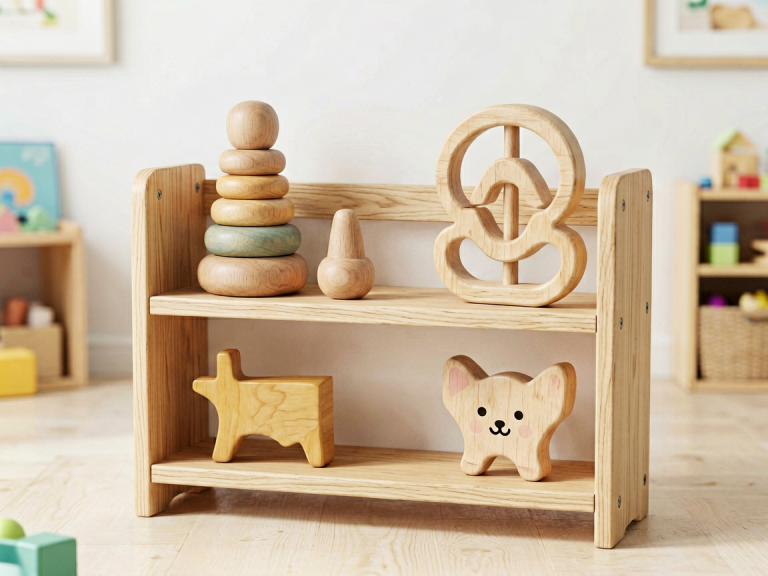
A cluttered playroom can overwhelm a toddler. Instead, rotate a small selection of open-ended materials: a set of blocks, a basket of scarves, a few cardboard boxes, some cups and spoons, a tray of sand or rice, and a handful of toy animals or vehicles. Too many choices can lead to shallow, distracted play. Fewer, richer options invite depth.
- Embrace Loose Parts
The concept of “loose parts” (from architect Simon Nicholson’s theory) holds that the more movable, uncontrolled parts an environment has, the more creative activity it inspires. Gather pinecones, pebbles, bottle caps, fabric scraps, empty spools, and corks. Supervise for choking hazards, but do not underestimate a toddler boy’s ability to transform a simple stick into a magic wand, a fishing rod, or a drumstick.
- Prioritize Natural Materials
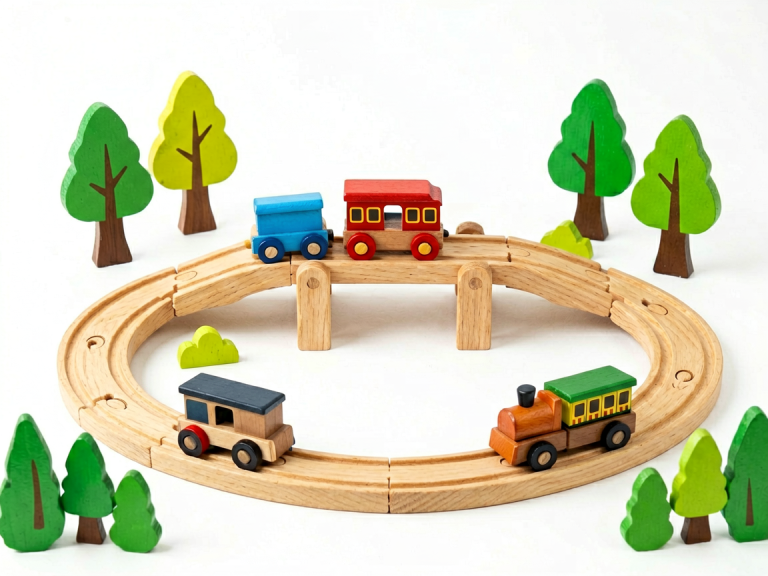
Natural materials—wood, cotton, wool, stone, clay—engage multiple senses. They smell, feel, and sound differently than plastic. A wooden block makes a satisfying *thunk*; a silk scarf drifts gently in the air. These sensory qualities ground the child in the physical world, which is especially important for boys who may be prone to screen addiction later. Nature-based play also supports scientific thinking: water flows, sand pours, leaves crumble.
- Resist the Urge to Intervene
This is the hardest strategy for many parents. When a toddler boy struggles to fit a square peg into a round hole, the instinct is to show him the “right way.” Instead, wait. Observe. If he becomes frustrated, offer a simple prompt: “I wonder if there’s another way.” If he persists in “wrong” placements, let him discover that the round hole accepts the round peg. The frustration and subsequent triumph are the learning. Adult interference, however well-intentioned, can short-circuit the process of discovery.
- Create Invitations, Not Instructions
An “invitation to play” is a carefully arranged set of materials that suggests a possibility without prescribing a result. For example, place a tray of sand next to a spoon and a small plastic dinosaur. Do not say, “Let’s bury the dinosaur.” Let the child discover the relationship. This approach honors the child’s agency and respects his internal learning agenda.
- Include Gross Motor Opportunities
Toddler boys often have abundant physical energy. Channel this with open-ended large-scale play: a pile of pillows for jumping, a cardboard box large enough to sit inside, a sidewalk with chalk, a water table with buckets and funnels. Movement is not the enemy of learning; it is a vehicle for it. The boy who climbs, jumps, and runs is also building spatial awareness, balance, and proprioception—all cognitive skills.
- Model Play Without Directing
Children learn through imitation. If you, the adult, sit on the floor and quietly build a tower or arrange pebbles in a pattern, your son may join you—or may do something completely different. The key is that you are playing, not teaching. Your presence communicates that this activity is valuable. Your silence communicates that you trust his process.
Overcoming Common Myths About Boyhood and Play
Despite the clear benefits of open-ended play, cultural myths often steer parents of boys toward structured, competitive, or “educational” activities. Let us address a few:
- Myth: “Boys need rules and structure to learn self-control.”
Reality: Self-control is best learned through voluntary regulation, not external enforcement. In open-ended play, a boy decides when to stop and start, when to share and when to protect his creation. These internal decisions build genuine self-discipline.
- Myth: “Open-ended play is for girls; boys prefer action and competition.”
Reality: Boys do enjoy action, but action and open-endedness are not opposites. A ramp for cars, a ball to roll, a set of foam swords—these are open-ended, active, and deeply engaging. Competition emerges naturally in play (e.g., “My tower is taller!”) but should not be imposed by adults. The goal is not to eliminate competition, but to let it arise organically within a safe, non-scripted context.
- Myth: “We need to prepare boys for school; they must learn letters and numbers early.”
Reality: Academic readiness flows from play. A boy who builds with blocks is internalizing proportional reasoning. A boy who pretends to cook in a play kitchen is learning sequencing and measurement. A boy who sorts pebbles by size is practicing classification—the foundation of mathematics. Pushing formal instruction before age five can actually backfire, creating anxiety and resistance. Play is the optimal preparation for school.
Conclusion: Letting Boys Lead the Way
The toddler years are a brief, luminous window of unparalleled neural plasticity. During this time, a boy’s brain is sculpted not by lessons, but by experiences. Open-ended play offers the richest possible curriculum: one that honors his curiosity, his physicality, his emerging sense of self, and his need to make meaning of the world through his own hands. It is not a luxury; it is a necessity. In a culture that often expects even toddlers to perform and achieve, open-ended play is a radical act of trust—trust in the child’s innate drive to learn, trust in the process of discovery, and trust that the best teacher is not a screen, a worksheet, or a parent’s instructions, but a simple block, a pile of sand, and the boundless creativity of a boy at play. So the next time your toddler son turns a cardboard box into a spaceship, resist the urge to correct him and remind him it’s “just a box.” Instead, sit down beside him, hand him a paper towel tube for a control panel, and ask, “Where are we flying today?” In that moment, you are not just playing; you are building the architecture of a lifetime of learning.