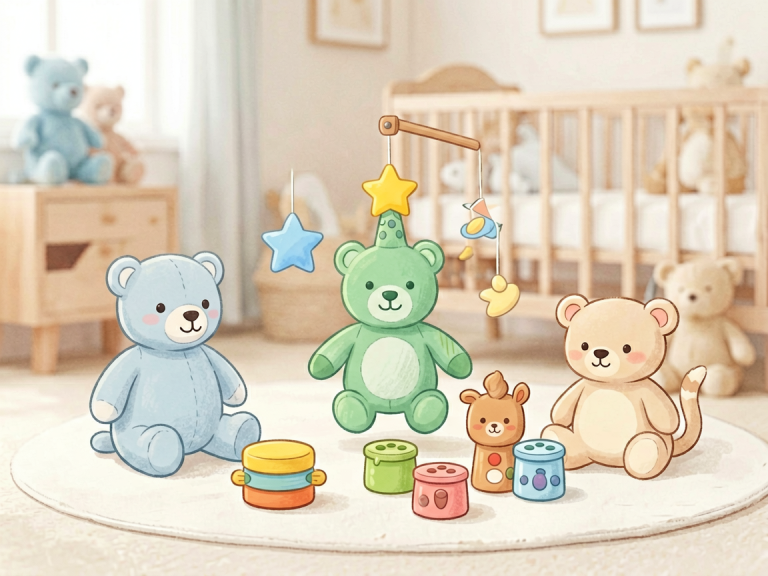
The Vital Shift: Why Screen-Free Play Must Replace TV Time for Babies
Introduction: A New Priority for Early Development
In the modern household, the television often hums in the background, providing a fleeting sense of calm for parents while their infants gaze at the flickering screen. Yet a growing body of research in pediatrics and developmental psychology sounds an alarm: screen time during the first two years of life—even in small doses—can disrupt critical neural wiring, delay language acquisition, and reduce the quality of parent-child interaction. The American Academy of Pediatrics recommends zero screen time for children under 18 months (with the exception of video chatting), and for toddlers aged 18–24 months, only high-quality programming co-viewed with a caregiver. But the real solution is not merely limiting screens; it is actively replacing TV time with purposeful, screen-free play. This article explores why a complete shift from passive TV viewing to active, unstructured play is essential for babies, and offers concrete strategies for parents to make that transition successfully.
The Hidden Harms of Early Screen Exposure
Many parents assume that educational baby videos or calm cartoons are harmless, even beneficial. However, the evidence paints a different picture. During the first two years, the brain triples in size and forms more than one million new neural connections every second. This period is a “critical window” for sensory integration, motor development, and social-emotional bonding. Screen-based stimuli—fast edits, bright colors, and unnatural sounds—overwhelm the infant’s developing nervous system. Instead of promoting learning, they can create a state of “passive attention” that inhibits the baby’s natural drive to explore the real world.
Studies show that each additional hour of daily screen time at 12 months is associated with a significant increase in the likelihood of language delays at 24 months. Furthermore, background TV—even if the baby is not directly watching—reduces the quantity and quality of words a parent speaks to the child. Every minute spent staring at a screen is a minute lost for face-to-face interaction, which is the single most important factor for language development. There is also growing concern about the impact on attention regulation: infants habituated to rapid screen transitions may struggle later with slower-paced real-world activities like puzzle play or book reading. Replacing this passive consumption with active, screen-free play is not a luxury—it is a developmental necessity.
The Unmatched Benefits of Screen-Free Play
Screen-free play is not just the absence of a screen; it is the presence of rich, multisensory experiences that build the foundation for lifelong learning. When a baby grasps a wooden rattle, shakes it, hears the sound, and watches it move, they are engaging in cause-and-effect reasoning, fine-motor practice, and auditory discrimination—all simultaneously. Unlike a television show that dictates the narrative, play is self-directed. The baby decides which toy to explore, how long to focus, and when to shift attention. This autonomy cultivates executive function skills such as impulse control, working memory, and cognitive flexibility.
Moreover, screen-free play fosters physical development. Tummy time on a soft mat strengthens neck and shoulder muscles. Reaching for a dangling toy refines hand-eye coordination. Crawling through a tunnel builds gross motor planning. These achievements cannot be replicated by even the most interactive app. Socially, play with a caregiver—peek-a-boo, stacking blocks together, or making silly sounds—creates the emotional attunement that is the bedrock of secure attachment. The baby reads facial expressions, learns turn-taking, and experiences joy in shared discovery. No screen can mirror the warmth of a parent’s smile or the responsiveness of a gentle touch. By replacing TV time with such play, parents give their babies the most potent developmental tool available: their own loving, attentive presence.
Practical Ideas for Screen-Free Play by Age
*0–6 Months: Sensory Foundations*
At this stage, the baby’s world is built on sensations. Replace the television with a simple “sensory gym” on the floor. Use a black-and-white contrast book propped open for visual tracking. Hang a mobile with unbreakable mirrors above the changing table so the baby can watch their own reflection. Offer a soft fabric book with crinkly pages for tactile exploration. The key is to keep the environment calm: too many toys can be as overstimulating as a screen. Rotate out items every few days to maintain novelty. Sing nursery rhymes while making eye contact—this is “play” that builds phonological awareness and social bonding.
*6–12 Months: Movement and Manipulation*
As babies begin to sit, scoot, and crawl, they crave motion and objects they can grasp, bang, and transfer. Create a low shelf with 4–5 open-ended toys: a set of stacking cups, a wooden egg shaker, a textured ball, and a few board books. Lay a large mirror flat on the floor so the baby can watch themselves crawl—this self-awareness is a major cognitive leap. Play “object permanence” games: hide a rattle under a scarf and delight when they uncover it. Take short “nature walks” outdoors—let them touch grass, leaves, and bark. Every real-world texture and sound is a learning experience that no screen can provide.
*12–24 Months: Imagination and Problem-Solving*
Toddlers are natural explorers. Move beyond passive entertainment to active challenges. Provide a “busy board” with knobs, latches, and zippers. Offer simple puzzles with 2–3 large pieces. Fill a shallow bin with dried beans and measuring cups for scooping and pouring (supervised). Engage in “pretend play” by offering a toy phone, a doll, or a play kitchen. The parent’s role is to narrate and ask open-ended questions: “Where is the baby going? Oh, she is sleeping!” This language-rich interaction is far more valuable than any TV program. Also, incorporate music: shake a tambourine together, dance to a drum beat, or make shakers from rice-filled bottles. The rhythm and movement support motor planning and emotional regulation.
How to Transition from TV Time to Play Time
Breaking the habit of relying on the television can be challenging, but it is entirely possible with a gradual, intentional approach. First, identify the “trigger” moments when you most often turn on the TV— maybe during diaper changes, meal preparation, or evening fussiness. For each trigger, design a simple, screen-free alternative. For example, keep a basket of special toys (like a baby-safe mirror or a set of stacking rings) that only comes out during diaper changes. For mealtime prep, place the baby in a high chair with a suction-cup toy or a soft silicone teether. For the witching hour, create a calming ritual: dim the lights, put on lullaby music (audio only), and offer a gentle massage or a rocking chair with a board book.
Second, commit to a “TV-free zone” such as the baby’s play area or nursery. Move the television out of sight or at least cover it. Out of sight often leads to out of mind. Third, embrace the power of “floor time.” Set aside 10–15 minutes several times a day to sit on the floor, put your phone away, and follow the baby’s lead. This focused attention is the ultimate replacement for a screen. Finally, be patient with yourself. Some days will be hard. But each time you choose a rattle over the remote, you are investing in your baby’s developing brain.
The Role of Parents: Creating a Screen-Free Sanctuary
Ultimately, the success of replacing TV time with screen-free play depends on parental mindset and environment. Babies absorb their parents’ habits. If adults are constantly checking phones or watching television, infants will naturally be drawn to those glowing rectangles. model the behavior you wish to see. Keep the television off unless you are truly watching a specific program for yourself—and avoid using it as a background noise machine. Instead, fill the home with the sounds of real life: water running, a parent humming, leaves rustling outside, or the gentle clatter of kitchen utensils.
Create a physical space that invites play. A clear floor, a few well-chosen toys, and a soft rug are all a baby needs. Rotate toys to maintain interest, but resist the urge to overwhelm with quantity. Too many choices can lead to the same passive, distracted state that screens induce. Simplicity allows the baby to dive deeply into one activity. Also, build community: connect with other parents who value screen-free play. Share ideas, swap toys, and celebrate small wins. Remember that the goal is not perfection but connection. Every moment of screen-free play is a moment of discovery—a chance for the baby to learn that the most interesting things in the world are not on a screen, but right in front of them, in the warmth of a smile, the texture of a pinecone, and the sound of a parent’s voice.
Conclusion: A Gift That Lasts a Lifetime
The decision to replace TV time with screen-free play is one of the most powerful choices a parent can make. It requires effort, creativity, and sometimes a radical rethink of daily routines. But the payoff is immense: a baby who is more alert, more engaged, and more securely attached. Infancy is a fleeting window. The screens can wait. What cannot wait is the need for real hands, real faces, and real play. By turning off the television and getting down on the floor, parents give their babies the ultimate gift—a childhood rich in sensory wonder, autonomous exploration, and loving connection. That is the foundation upon which every other skill will be built, and it is far more valuable than any show ever produced.