The Thoughtful Parent’s Toy Guide: How to Cultivate Joyful Play Without the Clutter
Introduction
Walk into any modern playroom, and you may be greeted by a kaleidoscope of plastic, blinking lights, missing puzzle pieces, and an avalanche of stuffed animals. The scene is all too familiar: toys overtaking the living room, tripping hazards in the hallway, and a constant background hum of “I’m bored” despite a mountain of possessions. The reality is that toy clutter does more than stress out parents—it can paradoxically overwhelm children, reducing their ability to engage in deep, imaginative play. When children are surrounded by too many choices, their attention fragments, and the true value of play—creativity, problem-solving, and emotional regulation—can get lost in the noise.
This guide is written for parents who are ready to break the cycle. It is not about depriving your child of joy; it is about redefining what a “good toy” really is. By adopting a mindful approach to toy selection, inflow management, storage, and rotation, you can create a home that feels spacious and peaceful, while simultaneously nurturing your child’s development. The goal is not a sterile, toy-free environment, but a curated collection that sparks wonder, encourages independence, and leaves room for the mess that matters.
<h2>Understanding the Root of Toy Clutter – Why Less Really Is More</h2>
Before we dive into practical strategies, it is essential to understand why toy clutter accumulates in the first place. The modern parent is bombarded with marketing messages, peer pressure, and the emotional pull of “the perfect gift.” Grandparents, well-meaning friends, and birthday parties add to the influx. Meanwhile, children are wired to seek novelty; every new toy generates a short-lived dopamine hit, then quickly loses its appeal. Without a deliberate system, the average household ends up with hundreds of toys, most of which are rarely used.
Research in child development supports the idea that fewer, higher-quality toys lead to better play. A classic 2017 study from the University of Toledo found that toddlers with fewer toys (four versus sixteen) played with each item for longer periods, engaged in more creative scenarios, and demonstrated more sustained attention. Less choice reduces decision fatigue and allows a child to build a deeper relationship with their playthings. In short, the quantity of toys is inversely related to the quality of play.
Moreover, toy clutter is a hidden source of parental stress. Constant visual noise raises cortisol levels, making it harder to relax at home. When toys are everywhere, both parent and child feel a lack of control. The first step toward a clutter-free home is a mindset shift: understand that every toy you bring in comes with an invisible cost—the space it occupies, the time spent picking it up, and the mental energy required to manage it. Embracing this reality empowers you to become a gatekeeper, not a hoarder.
<h2>The Mindful Toy Selection Framework – Quality over Quantity</h2>
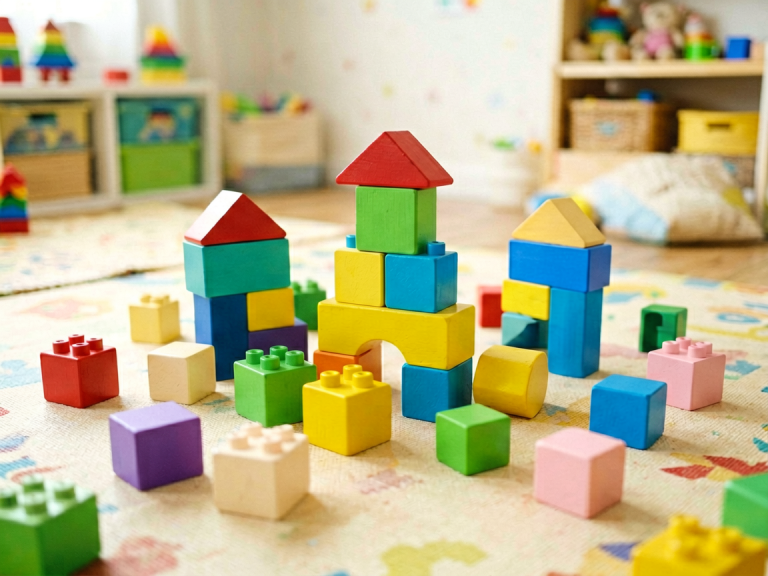
So how do you decide which toys are worth inviting into your home? The key is to adopt a framework based on several core principles: open-endedness, durability, developmental appropriateness, and versatility. An open-ended toy—like wooden blocks, a set of stacking cups, or a simple doll—can be used in countless ways, growing with your child rather than being discarded after a few months. In contrast, a single-purpose plastic toy that makes one specific noise or does one specific action will quickly become obsolete.
Begin by asking yourself three questions before any toy purchase: (1) Does this toy spark my child’s imagination, or does it do the imagining for them? (2) Will it still be engaging six months from now? (3) Is it made of materials that can withstand rough play and can be passed on to another child? If the answer to any of these is no, reconsider. Prioritize toys that support lateral thinking, such as magnetic tiles, construction sets, art supplies, and pretend-play props like fabric scraps or cardboard boxes. These items rarely end up in the “ignore pile.”
Also, consider the toy’s shelf life in your home. A toy that is only appropriate for a three-month window (e.g., a specific battery-operated shape sorter) may be better borrowed or purchased secondhand. And remember: children often prefer real-world objects over commercial toys. Kitchen utensils, measuring cups, and old scarves can provide hours of engrossing play. By shifting your definition of “toy” to include everyday items, you naturally reduce the clutter count without sacrificing fun.
<h2>Strategies for Managing Toy Inflow – Gifts, Hand-Me-Downs, and Special Occasions</h2>
Even the most discerning parent cannot control every source of toys. Birthdays, holidays, and visits from well-meaning family members will inevitably bring new items into the house. Without a proactive strategy, these events become clutter bombs. The solution is to create clear boundaries and communication channels.
First, have a gentle conversation with relatives about your family’s values. Explain that you are trying to keep your home manageable and that you prefer experiences, consumables (art supplies, tickets to a children’s museum), or contributions to a college fund. Suggest a “wish list” of carefully chosen toys so that gift-givers feel guided rather than rejected. If someone insists on buying a toy, you can adopt a “one in, one out” rule: for every new toy that enters the home, an old one must leave. This rule works surprisingly well with older children, as it teaches them about trade-offs and priorities.
Hand-me-downs from friends or older siblings are another common source of clutter. It can feel rude to refuse them, but you have every right to pass on items that do not fit your home. Accept only what you genuinely feel will be used, and immediately donate or pass along the rest. For toys that arrive as surprises, give yourself permission to return or regift them. Many parents feel guilty about this, but remember that an unused toy is a burden, not a blessing.
Special occasions like Christmas can be carefully curated. Instead of an avalanche of presents, consider a modified gift-giving approach: “Something they want, something they need, something to wear, something to read.” This limits the number to four meaningful gifts, plus perhaps a small stocking filler. Alternatively, you can delay the opening of some gifts, introducing them during a “boredom” period months later. This extends the novelty and prevents the holiday frenzy from flooding your playroom all at once.
<h2>The Art of Toy Rotation – Keeping Play Fresh Without the Pile</h2>
One of the most effective techniques for avoiding clutter while maintaining children’s interest is toy rotation. The idea is simple: instead of having all toys accessible all the time, you store the majority out of sight and rotate a small, curated selection into the play area every few weeks. This creates a sense of novelty—the “new” toys from storage feel exciting again, and children rediscover them with fresh enthusiasm.
Start by dividing your child’s toys into several bins or baskets, each containing a balanced mix of categories: building, pretend play, puzzles, art, and fine motor. Keep only one bin in the play area at a time. Rotate every two to three weeks, or sooner if you notice your child losing interest. The key is to observe your child’s engagement. If a toy has been completely ignored for multiple cycles, it may be time to let it go entirely.
Toy rotation also reduces cleanup time. With fewer items out, children can see what they have and are more likely to put things away. Moreover, the rotation process itself becomes a bonding activity. Involve your child in selecting which bin to bring out next, and let them help pack away the previous selection. This gives them a sense of ownership and teaches that “out of sight” does not mean “gone forever.” Many parents report that after rotation, their children play with the same old toys with renewed joy, simply because the environment felt fresh.
<h2>Creating a Clutter-Resistant Toy Storage System</h2>
Even with mindful selection and rotation, you need a storage system that works daily. The enemy of a tidy playroom is not the number of toys but the lack of clear homes for them. Without designated spots, toys migrate to every surface, and cleanup becomes a dreaded chore. A clutter-resistant system is one that is visual, accessible, and low-maintenance.
Use open shelving at the child’s eye level rather than deep bins where items disappear. Clear containers or baskets with labels (pictures for non-readers) help children—and parents—know exactly where each type of toy belongs. Avoid toy boxes that are large, dark, and bottomless; they become black holes where small parts get lost and treasures are forgotten. Instead, use shallow trays or divided compartments for small items like LEGOs, art supplies, or figurines.
Incorporate a “toy jail” concept for overflow. If a toy’s designated container is already full, that toy cannot stay—unless you remove something else. This forces a cap on quantity. For larger items like dollhouses or train tables, consider furniture with built-in storage, such as a bench with a lift-up seat. Remember that the goal is not a picture-perfect room but a functional space where your child can independently access and put away toys. Reduce the number of steps required for cleanup: if a toy has a home, it takes only seconds to return it. Routinely involve your child in a daily five-minute tidy-up to build habits.
<h2>The Hard Part: Letting Go – How to Involve Your Child in Decluttering</h2>
Perhaps the most challenging aspect of avoiding toy clutter is the emotional process of letting go. Children, like adults, can develop attachments to objects even if they haven’t touched them in months. Forcing a purge without their consent can lead to tears and resistance. However, with the right approach, decluttering can become a positive life skill.
Start by modeling the behavior yourself. Talk about how you donate clothes or books that you no longer need, emphasizing that someone else will enjoy them. Use a “maybe box”—a temporary holding space where toys you are unsure about can sit for a month. If they remain untouched, it is easier to part with them. For children aged three and up, you can introduce a “toy adoption” ritual: explain that the toys are going to a new home where a child will love them again. Let your child help pack them in a box and, if possible, drive them to a donation center together.
For younger children, avoid decluttering in front of them. Instead, work during their sleep or out of sight, and when they ask about a missing toy, you can honestly say, “We gave it away to a friend who needed it.” With older children, frame the process as a chance to earn new experiences. For example, “If we clear out ten toys, we’ll have room to set up that marble run you wanted.” The key is to avoid shame or punishment; decluttering should feel like making space for joy, not losing treasures.
<h2>Beyond Toys – Fostering Creativity with Open-Ended Play</h2>
At its core, the quest to avoid toy clutter is really a quest to refocus on what matters: meaningful play. When we strip away the excess, children are forced to become more resourceful. They use a cardboard box as a rocket ship, a stick as a wand, and a blanket as a castle. Open-ended materials—clay, paint, fabric scraps, nature items like pinecones and stones—offer infinite possibilities and produce minimal long-term clutter. These items can be rotated, reused, or composted.
Consider replacing many plastic toys with a “loose parts” collection. Loose parts are natural or recycled objects that children can move, combine, and transform. A bin of wooden rings, shells, bottle caps, and fabric squares can engage a preschooler for hours. Not only do these materials reduce clutter, but they also support the highest forms of cognitive development—divergent thinking, problem-solving, and symbolic play.
Finally, remember that the best “toy” is often your presence. Time spent reading, cooking, gardening, or simply talking with your child builds connection and creativity far more than any store-bought item. By prioritizing experiences over things, you naturally reduce the physical volume of toys while enriching your child’s world. The goal is not perfection; it is intentionality. Every toy in your home should have a purpose, a place, and a lifespan. When you embrace this philosophy, you free your family from the tyranny of clutter and open the door to deeper, more joyful play.
Conclusion
Toy clutter is not inevitable; it is a symptom of a culture that equates love with accumulation. As a thoughtful parent, you have the power to rewrite that narrative. By understanding the psychology of play, curating toys with care, managing inflow, rotating selections, building clean systems, and involving your child in the process, you can create a home that breathes. Your child will not miss the quantity—they will thrive in the quality. And you? You will reclaim your living space, your peace of mind, and the simple pleasure of watching a child lose themselves in a single, beautiful toy. Start small. Choose one corner, one shelf, one bin. The transformation will ripple outward, and soon you will wonder why you ever did it any other way.