Taming the Toy Tornado: A Parent’s Guide to Avoiding Toy Clutter for 8-Year-Olds
Every parent of an 8-year-old knows the feeling: you step into your child’s bedroom and a wave of plastic, cardboard, and forgotten treasures threatens to engulf you. Toys that once sparked joy now lie in tangled heaps, tripping feet and frustrating everyone. At eight, children are at a unique developmental crossroads—they are old enough to understand responsibility, yet still young enough to be overwhelmed by their own possessions. Toy clutter is not just an aesthetic problem; it can cause anxiety, reduce creativity, and strain parent-child relationships. This guide offers practical, research-backed strategies to help you reclaim your home and teach your child lifelong organizational <a href="https://www.playlearningguide.com/category/skills/”>skills—without starting a war over every Lego brick.
—
Understanding the 8-Year-Old Toy Landscape
Before diving into solutions, it is essential to understand why eight-year-olds accumulate toys so rapidly. At this age, children are developing more complex interests: they may love building sets (LEGO, magnetic tiles), craft supplies, board games, action figures, remote-control cars, and electronic gadgets. Birthday parties, holidays, and well-meaning relatives add to the flood. Moreover, eight-year-olds often have strong emotional attachments to toys, even those they rarely play with. A broken toy might represent a happy memory, while a nearly-complete set feels like an unfinished project. This emotional connection makes decluttering a minefield.
Additionally, eight-year-olds are capable of rational thought but still lack executive function skills to organize independently. They can sort items by category if guided, but they cannot consistently judge what to keep or discard. The parent’s role is not to impose a rigid system, but to create a framework that respects the child’s autonomy while preventing chaos.
—
The Golden Rule: Less Is More – Curation over Accumulation
The most effective way to avoid toy clutter is to prevent it from entering your home in the first place. Adopt a mindset of curation rather than accumulation. This means treating your child’s toy collection like a museum exhibit: every item should earn its place by being genuinely loved, regularly used, or developmentally valuable.
Start by implementing a “one-in, one-out” rule. For every new toy that arrives (whether purchased, gifted, or earned), an old toy must leave the house. Make this a family policy, not a punishment. Explain to your child that their room has finite space, and keeping only their favorite toys allows them to actually enjoy each one. Involve them in the process—let them choose which toy to donate or recycle. This builds decision-making skills and reduces resentment.
Equally important is rethinking how you buy toys. Before purchasing, ask yourself: Does this toy encourage open-ended play? Will it still be interesting in three months? Does it require 50 tiny parts that will inevitably scatter under the sofa? Avoid trend-driven impulse buys. Instead, invest in high-quality, durable items that can be used in multiple ways—such as building blocks, art supplies, or board games that grow with the child.
—
Implementing a Smart Storage System
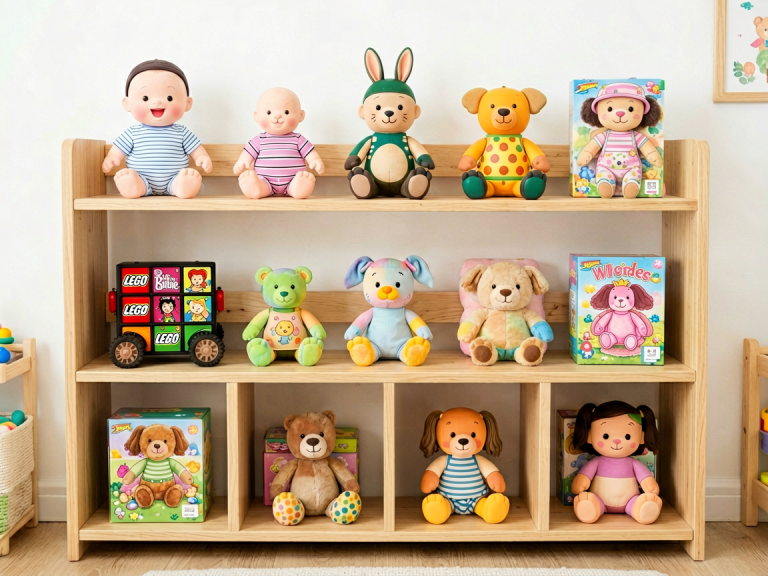
Once you have reduced the inflow, you need a storage system that works for an eight-year-old’s daily life. The key is visibility and accessibility. If toys are hidden in opaque bins or stacked too high, they will be forgotten, only to resurface during a desperate search. Use clear bins, open shelves, and labeled containers. Labeling with both words and pictures (since reading skills vary) helps the child know exactly where each category belongs.
Categorize toys logically: a bin for building blocks, another for action figures, a drawer for art supplies, a shelf for board games. Avoid the dreaded “mixed bin” where everything goes; that is a recipe for chaos. Use low shelving so your child can reach everything independently. A cube storage system with fabric bins works well because each cube holds a specific type of toy, and the fabric hides visual clutter while the front labels remain visible.
For larger items like dollhouses or train tables, invest in furniture that doubles as storage, such as a bench with a lift-up seat or a bed with drawers underneath. Wall-mounted shelves can display prized items while freeing floor space. Remember: the goal is not to hide all toys but to make putting them away as easy as possible. If returning a toy to its spot takes more than 30 seconds, the system will fail.
—
Teaching Your Child the Art of Organization
No storage system survives without a child’s cooperation. At age eight, children can learn the habit of “clean-up time” without constant nagging—but only if you make it a predictable ritual. Establish a daily 10-minute tidy-up before dinner or bedtime. Use a timer and turn it into a game: “Can you put away all the cars before the timer beeps?” Praise effort, not perfection.
Teach them the “Toy Patrol” method: Have them walk around the room with a laundry basket, picking up anything out of place. Then they sort the basket contents into the correct bins. This is more effective than telling them to “clean your room” because it breaks the task into concrete steps.
Model organization yourself. Children learn by watching. If your own desk or kitchen counters are cluttered, your child will mirror that behavior. Also, avoid overcorrecting. If the child puts a dinosaur in the car bin, let it slide unless it becomes a habit. The goal is consistent effort, not museum-level precision. Over time, they will internalize the system.
—
The Gift-Giving Dilemma: Strategies for Relatives and Friends
Grandparents, aunts, uncles, and family friends often contribute significantly to toy clutter. They mean well, but their gifts can overwhelm your careful curation. The solution is not to reject generosity but to guide it diplomatically.
Start a wish list. Before birthdays or holidays, share a curated list of toys your child actually needs or wants—preferably items that align with your less-is-more philosophy. Many relatives will appreciate the direction. For those who insist on surprising your child, gently suggest consumable gifts: art supplies, craft kits, science experiment sets, or experience gifts like museum memberships or tickets to a show. Consumable toys are used up or completed, leaving no permanent clutter.
Another tactic is the “gift delay.” Ask relatives to hold off giving physical presents until your child’s next visit, or suggest they contribute to a savings account for a larger future purchase (like a bicycle). If they still show up with a giant plastic spaceship, thank them warmly and then quietly store it in a “rotation bin” (see next section). Over time, your relatives will learn that your family values experiences and quality over quantity.
—
The Six-Month Toy Audit: Rotating and Purging
Even with a strict inflow control, toy collections naturally expand. Schedule a toy audit every six months—perhaps on New Year’s Day and before summer break. This is a calm, deliberate process, not a frantic clean-out.
Involve your child fully. Take all toys out of their storage and lay them on the floor. Have three boxes labeled: “Keep,” “Donate/Give Away,” and “Trash/Recycle.” Ask your child to sort each toy, but set ground rules: broken or missing-parts toys go to trash; toys they haven’t touched in three months are candidates for donate; and toys they love stay. If they hesitate, ask: “If we had to move to a smaller house tomorrow, would you take this toy with you?” This forces a value judgment.
For toys that are sentimental but rarely used—like a baby rattle or a special stuffed animal—allow a “memory box” (a small shoebox) where they can keep a few special items that don’t need to be played with. This honors emotions without cluttering the play space.
Rotating toys is a powerful alternative to purging. Keep a “toy library” in your garage or closet. Every month, swap out half the toys. The “new” ones from storage will feel fresh and exciting, while the rotated toys reduce decision fatigue. This method works especially well for LEGO sets, dolls, and action figures. It also teaches delayed gratification and appreciation.
—
Beyond Toys: Managing Crafts, Games, and Collections
By age eight, many children develop hobbies that produce their own clutter: art projects, trading cards, puzzles, science kits, and collectibles like rocks or seashells. These items require specialized strategies.
For crafts, set up a designated “creation station” with a small table and clearly labeled jars for markers, glue, scissors, and paper. Display finished artwork on a wall or in a binder—limit physical accumulation by photographing creations and storing them digitally. For trading cards or small collectibles, use a divided binder or a compartmentalized box. Teach your child that collections can be curated, too: they don’t need every single card of a set; it’s okay to focus on favorites.
Board games and puzzles should be stored upright with rubber bands around boxes to prevent pieces from spilling. If a game is missing pieces, either replace them or discard it. For puzzle lovers, invest in a puzzle mat or roll-up case to save space.
Finally, consider digital alternatives. An e-reader can reduce the number of physical books, and tablet apps can replace some plastic toys. However, balance is key—not all screen time is beneficial, and physical play remains crucial for development.
—
Conclusion: Building Lifelong Habits
Avoiding toy clutter at age eight is not about achieving a perfectly tidy room. It is about teaching your child that their environment reflects their choices, and that taking care of their belongings is an act of respect—for themselves, for their family, and for their home. By curating toys, implementing smart storage, enforcing routines, managing gifts, and conducting regular audits, you transform a daily battle into a collaborative life skill.
Your child will not learn this overnight. There will be messes, tears, and the occasional lost piece. But every time you walk past a neatly organized shelf, you will see more than order—you will see a child learning to value what they have, to let go of what they don’t need, and to create space for imagination. That, in the end, is the greatest gift you can give.
Sources and further reading
For additional evidence-based guidance, consult these authoritative resources: