The Best Educational Toys for Kids: Unlocking Learning Through Play
Introduction
In a world where digital screens often dominate children’s attention, the value of hands-on, thoughtfully designed toys has never been greater. Educational toys are not merely pastimes—they are powerful tools that foster cognitive development, creativity, problem-solving skills, and social-emotional growth. But with thousands of options on the market, what truly qualifies as the “best” educational toy? The answer lies in a toy’s ability to engage a child’s natural curiosity while subtly teaching concepts in science, math, language, art, and logic. This article explores the most effective categories of educational toys for kids, offering guidance for parents, educators, and gift-givers who want to make playtime both fun and academically enriching.
Why Educational Toys Matter
Before diving into specific recommendations, it is essential to understand why educational toys hold such significance. Children learn best when they are actively involved—when they can touch, manipulate, experiment, and make mistakes in a safe environment. Educational toys scaffold this learning by providing structured challenges that align with a child’s developmental stage. For instance, a simple stacking toy teaches an infant cause and effect and spatial awareness, while a more complex building set encourages a preschooler to plan and execute a design.
Research from child development experts shows that play-based learning strengthens neural connections, enhances memory retention, and improves attention span. Moreover, educational toys often require collaboration or independent problem-solving, which builds resilience and perseverance. In an age of instant gratification, toys that demand patience and iterative thinking are invaluable. They also bridge the gap between abstract concepts (like geometry or phonics) and tangible, relatable experiences. This is why the best educational toys are not those that promise to make a child “smarter” overnight, but rather those that invite sustained, joyful exploration.
The Best Categories of Educational Toys for Kids
1. STEM Building and Construction Toys
STEM (Science, Technology, Engineering, and Mathematics) toys have gained tremendous popularity, and for good reason. Building sets such as magnetic tiles, interlocking blocks, and gear systems allow children to experiment with balance, symmetry, gravity, and structural integrity. A child who constructs a tower and watches it topple learns more about engineering principles than any worksheet could teach.
Among the best in this category are magnetic building tiles. They are colorful, easy to connect, and encourage open-ended creativity. A three-year-old might stack them into a simple cube, while a seven-year-old can create intricate bridges and 3D geometric shapes. Another excellent choice is a basic coding toy, like a floor robot that children direct using arrow commands. These toys introduce early programming logic without requiring a screen, teaching sequencing, debugging, and critical thinking. For older kids (ages 8+), chemistry sets or crystal-growing kits provide hands-on experiments that align with school curricula while sparking lifelong scientific curiosity.
2. Language and Literacy Development Toys
Reading and writing are foundational skills, but the journey to literacy should be playful, not pressured. The best educational toys for language development include letter puzzles, phonics games, and storytelling kits. For toddlers, chunky wooden alphabet letters that can be traced and matched to pictures help build letter recognition and phonetic awareness. As children grow, magnetic poetry sets or word-building boards allow them to form simple words and later sentences, reinforcing spelling and vocabulary.
A particularly impactful type of language toy is the story cube or story card set. These tools prompt children to connect images, sequence events, and narrate their own tales. This not only enhances verbal expression but also develops narrative thinking and empathy—because children must imagine characters’ motives and feelings. Additionally, bilingual toys that introduce a second language through songs, flashcards, or interactive play can give young learners a cognitive advantage and cultural awareness. The key is to choose toys that make language a game rather than a chore, so children voluntarily return to them again and again.
3. Problem-Solving and Logic Puzzles
Nothing sharpens a child’s mind quite like a well-designed puzzle. From simple jigsaw puzzles for two-year-olds to complex logic grids for preteens, puzzles teach pattern recognition, spatial reasoning, and the ability to think several steps ahead. One of the most versatile options is a set of tangrams. These ancient Chinese puzzles consist of seven geometric pieces that can form hundreds of shapes. Children learn about fractions, symmetry, and angles without ever opening a textbook.
Another fantastic logic toy is the single-player strategy game that uses color matching or path-building tasks. For example, a “rush hour” style traffic jam puzzle challenges kids to move cars in a grid to allow a target vehicle to exit. Such games require planning, trial-and-error, and metacognition—thinking about one’s own thinking. They also provide immediate feedback, which is highly motivating. Even classic board games like chess or checkers, when introduced at an appropriate age, serve as exceptional educational toys that teach strategy, patience, and sportsmanship.
4. Creative and Artistic Expression Toys
Education is not only about numbers and letters—it is also about nurturing imagination and emotional intelligence. Art supplies, modeling clay, and craft kits are essential educational toys that allow children to express ideas, work through emotions, and develop fine motor skills. The best creative toys are not those with predetermined outcomes; instead, they offer endless possibilities. For instance, a set of high-quality watercolor paints with a variety of brush sizes encourages experimentation with color mixing and texture. Modeling clay or play dough helps young children strengthen hand muscles needed for writing, while also allowing them to sculpt characters and stories.
For older kids, design-based toys like a paper-making kit or a simple weaving loom combine artistry with science (chemistry of pulp, mechanics of thread tension). Even digital creative tools—such as a child-safe drawing tablet that teaches graphic design basics—can be educational when used in moderation. The key distinction is that the toy should prioritize process over product: the joy of creating, failing, and trying again is far more valuable than a perfect final masterpiece.
5. Social and Emotional Learning Toys
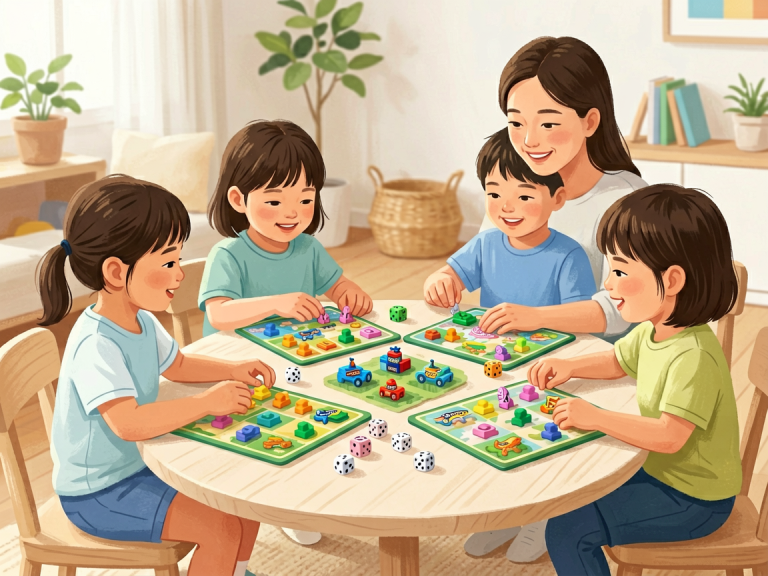
Education is increasingly recognizing the importance of social-emotional learning (SEL). Toys that facilitate cooperative play, empathy, and communication are just as vital as those that teach academic concepts. Board games that require taking turns, negotiating rules, and handling winning or losing gracefully are powerful SEL tools. Likewise, role-playing sets (kitchen sets, doctor kits, tool benches) allow children to practice real-life scenarios, develop language for complex emotions, and understand different perspectives.
Puppets are another outstanding educational toy for SEL. Children often feel safe expressing feelings through a puppet, which can help parents and educators address topics like sharing, fear, or kindness in a non-threatening way. Even simple emotion cards that depict faces with different expressions can help toddlers identify and name what they feel. These toys build the emotional vocabulary that is crucial for healthy relationships and academic success. When selecting SEL toys, look for those that encourage collaboration rather than competition, and that invite children to tell their own stories.
How to Choose the Best Educational Toys for Your Child
With so many excellent options, how do you select the right ones? First, consider your child’s developmental stage. A toy that is too simple will bore them; one that is too complex will frustrate them. Look for the “zone of proximal development”—toys that offer a slight challenge just beyond their current ability. Second, observe your child’s natural interests. A child who loves dinosaurs may engage more with a dinosaur-themed counting game than with a generic puzzle. Third, prioritize open-ended toys. The best educational toys are those that can be used in multiple ways, growing with the child. A set of wooden blocks, for example, can be a tower for a toddler, a math tool for a first-grader, and a physics experiment for a third-grader.
Finally, avoid toys that do too much of the “thinking” for the child. Battery-operated toys that light up and talk may entertain briefly, but they often leave no room for imagination or problem-solving. Instead, choose toys that require active participation: building, questioning, testing, and reflecting. Remember that the most educational toy in the world is useless if it sits on a shelf. The best toy is the one that a child reaches for again and again, not because it is “educational,” but because it is deeply, intrinsically fun.
Conclusion
The best educational toys for kids are those that seamlessly blend learning with play. They invite children to experiment, create, fail, and succeed in a safe and joyful context. Whether it is a set of magnetic tiles that introduces engineering, a storytelling game that sparks a love of language, or a simple puzzle that builds patience, each toy has the potential to shape a child’s mind and heart. As parents and educators, our role is not to dictate every moment of learning, but to provide the tools that make discovery irresistible. By choosing wisely—focusing on open-endedness, developmental appropriateness, and genuine engagement—we can turn playtime into a foundation for a lifetime of curiosity and achievement. In the end, the best educational toy is the one that leaves a child asking, “Can we play with this again tomorrow?”