The Art of Less: How Parents Can Avoid Toy Clutter and Foster Mindful Play
Introduction
Walking into a playroom that resembles a retail toy aisle after a tornado is a familiar scene for many parents. The colorful plastic bins overflow, LEGO bricks lurk under every sofa cushion, and stuffed animals multiply like tribbles. Toy clutter is not merely an aesthetic nuisance; it can overwhelm children, reduce their capacity for deep play, and strain a household’s sanity. According to a 2023 survey by the National Toy Association, the average American child owns 239 toys but plays with only 12 on a daily basis. The excess not only wastes money but also teaches children that accumulation is normal. However, avoiding toy clutter is not about depriving children of joy; it is about curating a thoughtful ecosystem of playthings that spark creativity, encourage independence, and respect the family’s living space. This article offers practical, research-backed strategies to help parents break the cycle of toy accumulation and cultivate a home where less truly becomes more.
1. Implement a Rigorous “One In, One Out” Rule
The most straightforward way to stem the tide of toy clutter is to establish a clear boundary: every time a new toy enters the home, an old toy must leave. This rule applies to birthday gifts, holiday presents, and even the freebies from fast-food kids’ meals. The key is to make it non-negotiable and involve the child in the process. Before a birthday party, sit down with your child and discuss which toys they would be willing to donate to other children or recycle. Frame the departure not as a loss but as a generous act that makes room for a new friend. For younger children, keep a designated “out box” in the playroom. When a new toy arrives, they place one—or more—into that box. Over time, this routine trains children to value quality over quantity and to understand that possessions are temporary stewardships, not permanent hoards. Parents should model the same behavior with their own belongings to reinforce the lesson.
2. Rotate Toys to Keep Play Fresh Without Accumulating
Toy rotation is a powerful, evidence-based technique to combat clutter while simultaneously boosting a child’s engagement. The premise is simple: divide all toys into several groups (e.g., three to four sets). Keep only one group accessible at a time, and store the rest out of sight in a closet, basement, or under-bed bins. Every two to four weeks, swap the current set with a new one. The effects are remarkable. When children see fewer options, they focus longer, invent more complex scenarios, and fight less over possessions. Moreover, a rotated toy that has been away for a month feels almost new again, reviving interest without any purchase. From a clutter perspective, rotation ensures that only a fraction of the total toy collection occupies the living space. For parents, this means a tidy playroom that can be tidied quickly. Label each bin clearly (e.g., “Building Set,” “Pretend Play,” “Puzzles”) so swaps are efficient. The system works especially well for children aged 1–6, but even older kids benefit from rotating board games and craft supplies.
3. Prioritize Quality, Open-Ended Toys Over Trendy Junk
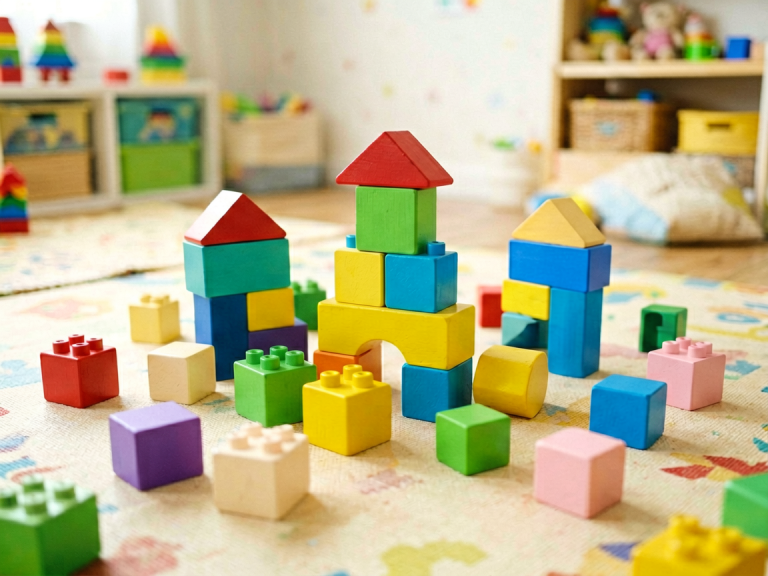
One of the most insidious sources of toy clutter is the relentless marketing of cheap, single-use plastic gadgets—those light-up spinny things from the check-out aisle, Happy Meal toys, and the latest movie-licensed junk that breaks in a week. These items rarely sustain a child’s interest for more than ten minutes, yet they accumulate in drawers and corners, contributing visual noise and sending the message that novelty equals happiness. Instead, parents should invest in “open-ended” toys: items that can be used in multiple ways and grow with the child. Building blocks (wooden or magnetic), LEGO bricks (basic sets, not themed kits), art supplies (clay, paper, paint), dolls and dollhouses, wooden train tracks, play silks, and simple musical instruments are classic examples. A single set of high-quality wooden blocks can provide years of architectural, mathematical, and imaginative play, while a bin of cheap plastic trinkets will clutter. When buying gifts, apply the “twenty-dollar test”: if the toy costs less than $20 and runs on batteries, think twice. Better to give one beautiful, durable item than a handful of throwaway distractions.
4. Involve Children in Decluttering as a Regular Family Practice
Many parents secretly purge toys while children are asleep, hoping to avoid tears. This approach often backfires, because children feel violated and may cling even harder to their possessions. Instead, make decluttering a transparent, regular ritual that teaches life skills. Set a recurring date—once per season or before every birthday—for a “toy audit.” Seat your child beside you and go through each category together. Ask open-ended questions: “Do you still enjoy playing with this? Does it have all its pieces? Could a younger child love it now?” Help them sort toys into three piles: keep, donate, and toss (broken or missing parts). For items they find hard to let go, suggest taking a photograph before donating; the image preserves the memory without the clutter. For younger children, limit the session to 15 minutes to avoid fatigue. The goal is not to achieve minimalism overnight but to build a habit of mindful ownership. When children themselves choose to let go of toys, they feel empowered rather than deprived.
5. Create Designated, Child-Friendly Storage Systems
Clutter often arises not from having too many toys but from having no dedicated home for each toy. When every item has a clear, accessible storage spot, cleanup becomes a mechanical task rather than a daily negotiation. Parents should invest in low, open shelving (so children can see and reach toys), clear bins with labels (pictures for pre-readers), and drawer organizers for small parts like craft beads or action figures. The golden rule is “everything in its place, and a place for everything.” For example, all doll accessories go in one bin labeled “Doll Clothes”; all car tracks in a specific box; all art supplies in a rolling cart. Avoid using large, deep toy chests that become “black holes” where tiny items disappear. Instead, use shallow bins that force categories to stay separate. Teaching children to put away one toy before taking out another requires patience, but a well-designed storage system makes the expectation realistic. Additionally, limit the number of toys that can be out at any one time. A simple rule like “only two bins out at once” can dramatically reduce the spread of clutter across the living room floor.
6. Set Boundaries with Gift-Giving Relatives and Friends
Grandparents, aunts, and family friends often love to shower children with toys, yet they may be oblivious to the clutter crisis they create. Instead of suffering in silence, parents can gently but clearly communicate their preferences. Before birthdays and holidays, create a wish list that emphasizes experiences, consumable items, or small, specific toys that align with your child’s current interests. Suggest non-toy gifts such as museum memberships, magazine subscriptions, art classes, or contributions to a college savings fund. For relatives who insist on physical gifts, direct them toward high-quality, open-ended options (e.g., a set of magnetic tiles) and kindly ask them to avoid large plastic playsets or noisy electronic gadgets. Another strategy is to propose a “one gift” rule: each giver picks one thoughtful present rather than a pile of trinkets. For second cousins or distant friends, consider hosting a “book-only” birthday party or asking guests to bring a favorite childhood book instead of a toy. These conversations may feel awkward at first, but they protect your home, your child’s attention, and the sanity of everyone who lives there.
7. Resist the Lure of “Deals” and Secondhand Accumulation
Thrift stores, garage sales, and clearance bins can be tempting treasure troves for parents on a budget. However, buying a bag of toy dinosaurs for three dollars when your child already owns forty is not a bargain—it is clutter in the making. Adopt a strict policy: before purchasing any secondhand toy, ask yourself, “Does this fill a genuine gap in our collection? Will it be played with regularly for at least a month?” If the answer is no, walk away. Also, be wary of subscription boxes that deliver new toys monthly. While convenient, they can quickly overwhelm a child’s play space unless you simultaneously rotate out older items. The same principle applies to freebies from kids’ meals, party favors, and conference giveaways. Designate a small “freebie bin” and enforce a capacity limit: when the bin is full, something must go. By consciously resisting the cheap thrill of acquisition, parents model delayed gratification and teach children to value what they already have.
8. Embrace the Power of Minimalist Playrooms
Finally, consider a radical shift: reduce the total number of toys to a curated collection that fits comfortably within a defined area. Designate a single room or a portion of the living room as the play zone, and store all toys there. If the bins overflow the shelf, it is time to cull. A minimalist playroom does not mean a joyless room. On the contrary, it creates space for a reading nook, a small table for art, and open floor area for dancing, building with blankets, or practicing yoga. When children have fewer distractions, they invent their own games with blankets, pillows, and imagination. Many parents report that after a major purge, their children actually play more, fight less, and show greater creativity. The transition may be rocky for a day or two, but children quickly adapt. A spare, calm environment benefits the whole family: parents feel less stressed, cleaning takes minutes, and the home breathes.
Conclusion
Avoiding toy clutter is not about being a strict, joyless parent. It is about reclaiming control over your home and your child’s play experience. By implementing a “one in, one out” rule, rotating toys, investing in quality open-ended items, involving children in decluttering, creating smart storage, setting gift boundaries, resisting deals, and embracing a minimalist mindset, parents can transform a chaotic playroom into a haven of focused, joyful play. The journey requires consistency and courage, especially in a culture that equates love with material abundance. Yet every time a child chooses to spend an hour building with blocks rather than digging through an avalanche of plastic, you will know the effort was worth it. Less clutter means more space for what truly matters: connection, creativity, and calm.