Smart Play on a Budget: The Best Learning Toys Under $25
Introduction
In an era where children’s screen time is constantly on the rise, the value of hands-on, educational play cannot be overstated. Parents and educators alike seek toys that not only entertain but also foster cognitive development, creativity, and problem-solving skills. However, the perception that high-quality learning toys must come with a hefty price tag often discourages families on a tight budget. The good news is that the market is rich with engaging, durable, and genuinely educational toys—all under $25. From science kits that spark curiosity to puzzles that build logic, these affordable gems prove that smart play does not have to break the bank. This article explores why budget-friendly learning toys matter, reviews key categories worth investing in, and offers practical tips for choosing the right toy for your child’s unique developmental stage.
The Importance of Affordable Learning Toys
Before diving into specific recommendations, it is essential to understand why learning toys under $25 deserve serious consideration. First and foremost, economic accessibility democratizes education. When learning tools are affordable, more families can provide their children with opportunities to explore STEM concepts, language arts, and fine motor skills without financial strain. Studies have shown that early exposure to constructive play correlates with improved academic performance and social-emotional growth. Yet, the cost of many branded educational toys can exceed $50 or even $100, creating an unnecessary barrier.
Secondly, inexpensive toys often encourage more open-ended play. A $20 set of building blocks, for example, can be used in countless ways—constructing a tower, sorting by color, or even acting out stories. This versatility fosters imagination and problem-solving far more than a single-purpose electronic gadget. Finally, budget-friendly toys reduce the pressure of “getting it right.” Parents can experiment with different types of learning tools without guilt if a particular toy does not engage their child. In short, low cost does not mean low value; it simply means smarter, more inclusive design.
Top Categories of Learning Toys Under $25
STEM Toys: Science, Technology, Engineering, and Math
STEM education is a cornerstone of modern learning, and many excellent STEM toys are available for under $25. Look for chemistry sets that include safe, non-toxic materials for simple experiments like growing crystals or making slime. Brands such as Scientific Explorer and Thames & Kosmos offer affordable mini kits that introduce principles of physics and chemistry through hands-on activities. Magnetic building tiles are another fantastic option: a 30-piece starter set can be found for around $20, allowing children to construct 2D shapes and 3D structures while learning about geometry, balance, and magnetism.
Coding toys have also become more accessible. ThinkFun’s “Robot Turtles” board game (approximately $20) teaches programming logic without a screen. For slightly older kids, Snap Circuits Jr. (often on sale for $20–$25) lets them build working circuits for lights, fans, and alarms. These toys not only teach technical concepts but also build resilience—children learn that if a circuit doesn’t work, they must troubleshoot and try again.
Language and Literacy Toys
Reading readiness starts with playful exposure to letters, sounds, and words. Under $25, parents can find alphabet puzzles, magnetic letter sets, and story-building flashcards. For instance, “Alphabet Go Fish!” cards (around $8) combine a classic card game with letter recognition. Another popular choice is the “Sight Words” bingo game, which reinforces high-frequency words through repetition and friendly competition.
For children who love storytelling, blank story cubes (often six dice with pictures) cost less than $15. Rolling the dice prompts children to weave tales based on random images, boosting vocabulary, narrative structure, and creativity. Meanwhile, pocket-sized word-matching games and phonics flip books are perfect for car rides or quiet time. The key is to choose toys that make language learning feel like play—not homework.
Creative Art and Craft Kits
Art supplies provide some of the richest learning experiences, from fine motor development to emotional expression. A set of watercolor paints, a pad of quality paper, and a pack of brushes can cost as little as $10 and provide hours of experimentation. For structured creativity, consider craft kits like “Make Your Own Slime” or “DIY Birdhouse” sets, which typically retail between $12 and $20. These kits teach following instructions, planning, and patience.
Another wonderful option is modeling clay or dough. A 12-pack of non-toxic, reusable clay in vibrant colors costs around $15. Children can mold animals, letters, or imaginary creatures, enhancing their hand strength and spatial awareness. For older kids, embroidery or weaving kits (often under $20) introduce basic sewing skills and pattern recognition. The best part? Creative toys have no “wrong” answers, which builds confidence and a growth mindset.
Puzzles and Brain Teasers
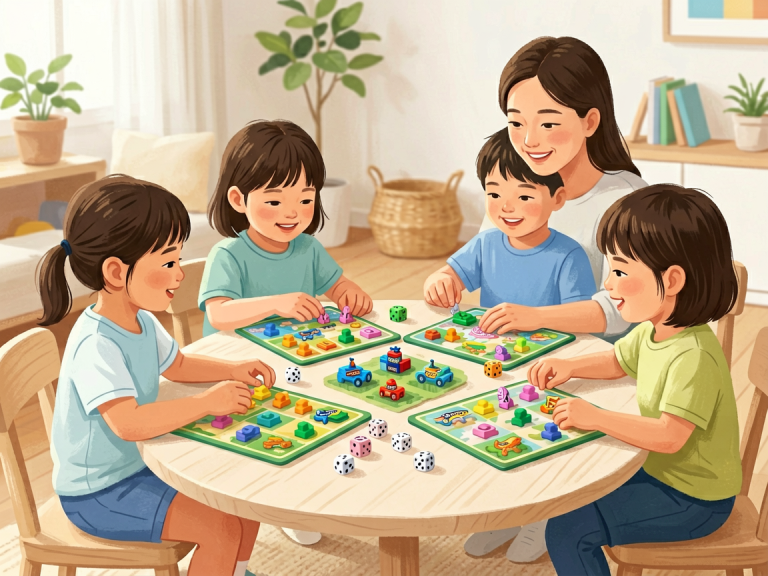
Puzzles are timeless learning tools that boost cognitive skills such as logic, pattern recognition, and persistence. Jigsaw puzzles with 24 to 100 pieces can be found for $10–$20, often featuring themes like maps, animals, or famous artworks. For a different challenge, try logic puzzles like “Rush Hour” or “Kanoodle” (both under $20), which require arranging pieces to solve traffic jam patterns or 3D shapes. These games sharpen spatial reasoning and executive function.
Wooden tangrams and geometric shape puzzles are also excellent. A classic tangram set costs less than $10 and can be used in countless configurations. Many children enjoy the meditative process of fitting shapes together, and it subtly teaches fractions and symmetry. Puzzle-based toys are especially valuable because they can be enjoyed alone or cooperatively, promoting social skills when played in groups.
How to Choose the Right Learning Toy for Your Child
With so many options under $25, narrowing down the best choice can feel overwhelming. Here are four simple criteria to guide your decision:
- Age and Developmental Stage: Always check the manufacturer’s age recommendation, but also consider your child’s current abilities. A toy that is too advanced may frustrate, while one that is too simple may bore. For toddlers, focus on sensory and motor skills (e.g., stacking rings, shape sorters). For preschoolers, introduce puzzles and simple board games. For school-aged children, opt for STEM kits or strategy games.
- Open-Ended Play Potential: The best toys can be used in multiple ways. A set of building bricks is open-ended; a pre-molded dinosaur that only roars is not. Prioritize toys that encourage imaginative reuse.
- Safety and Durability: Cheap does not have to mean flimsy. Look for non-toxic materials, rounded edges, and sturdy construction. Check for small parts that could be choking hazards for children under three.
- Child’s Interests: A toy aligned with your child’s existing passions (dinosaurs, space, art) will be more engaging. If they love numbers, a math-themed card game will be a hit. If they love stories, storytelling dice will spark joy.
Conclusion
Learning toys under $25 are not a compromise—they are a smart investment in a child’s development without straining the family budget. By exploring STEM kits, language games, art supplies, and puzzles, parents can build a rich play environment that promotes essential skills from problem-solving to creativity. The most important factor is not the price tag, but the quality of engagement: a simple set of alphabet magnets used during morning breakfast can teach more than an expensive tablet app ever could. As you browse for your next gift or impulse purchase, remember that the best learning toy is the one that makes your child excited to explore, experiment, and grow. Affordable, accessible, and endlessly imaginative—these budget-friendly treasures prove that the most valuable things in childhood rarely cost a fortune.