STEM Toys for Beginners: A Gateway to Fun Learning
Introduction
In an age where technology and science dominate nearly every aspect of our lives, parents and educators are increasingly looking for ways to introduce young minds to the foundational concepts of science, technology, engineering, and mathematics—collectively known as STEM. Yet many beginners, whether children or adults new to these fields, can feel intimidated by textbooks, equations, and complex theories. This is where STEM toys come into play. Far from being mere entertainment, STEM toys for beginners are carefully designed tools that transform abstract ideas into hands-on, playful experiences. They build confidence, spark curiosity, and lay a strong foundation for future learning. This article explores what STEM toys are, why they matter for beginners, the best types available, how to choose the right ones, and the lasting benefits they offer.
What Are STEM Toys?
STEM toys are playthings that intentionally integrate principles from science, technology, engineering, and mathematics. Unlike traditional toys that focus solely on fantasy or motor skills, STEM toys encourage problem-solving, critical thinking, and experimentation. For beginners, these toys are especially valuable because they lower the barrier to entry: instead of struggling with a formula, a child can build a simple circuit and see a light bulb glow; instead of memorizing definitions, they can assemble a robot and watch it move.
Examples of STEM toys range from building blocks like LEGO Technic to chemistry sets, coding robots, and even simple magnetic tiles. The key is that they are designed to be accessible—no prior knowledge is required, and the learning happens naturally through trial and error. For a beginner, the best STEM toy is one that feels like a game but secretly teaches something profound.
Why Are STEM Toys Important for Beginners?
Starting a journey into STEM can be daunting. Many beginners, especially young children, develop a fear of failure or a belief that they are "not good at math or science." STEM toys counteract this by making mistakes a normal part of the fun. When a tower collapses or a robot does not move as expected, the beginner is motivated to try again, thus developing resilience and a growth mindset.
Moreover, STEM toys for beginners bridge the gap between abstract concepts and tangible results. A child who plays with a simple pulley system understands mechanical advantage far better than one who only reads about it. This concrete experience creates lasting neural connections. Research from the American Educational Research Association has shown that hands-on learning significantly improves retention and enthusiasm for STEM subjects. For beginners, this early positive exposure can set the stage for advanced studies and even careers in these fields.
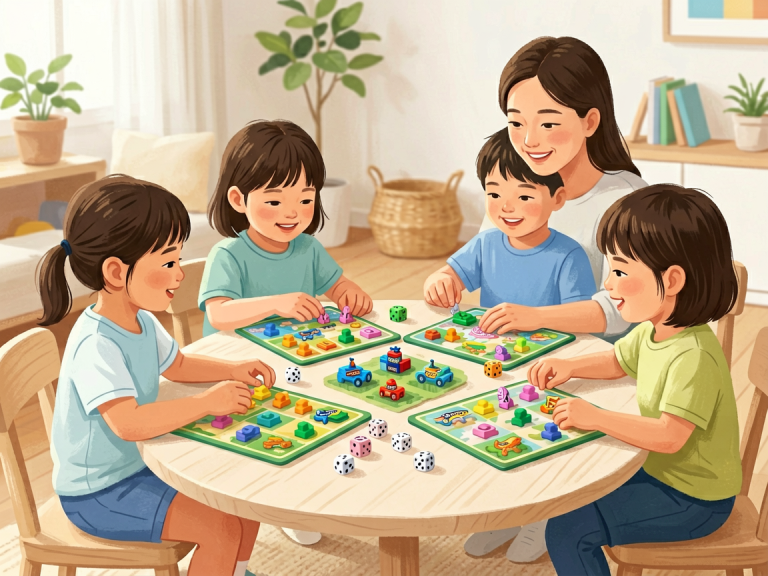
Additionally, STEM toys often encourage collaboration. Many are designed for group play, teaching beginners how to communicate ideas, share roles, and solve problems together—skills essential in the modern workforce.
Top Types of STEM Toys for Beginners
1. Building and Construction Toys
Building toys are perhaps the most classic entry point. For beginners, sets like LEGO Classic or Mega Bloks allow open-ended creativity, while more structured kits like LEGO Technic introduce gears, axles, and levers. Magnetic tiles (e.g., Magna-Tiles) are excellent for younger children, teaching geometry and spatial reasoning without frustration. For slightly older beginners, K’NEX or Erector sets offer real engineering challenges, such as building bridges or working Ferris wheels.
2. Coding and Robotics Kits
Coding can seem intimidating, but beginner-friendly robotics kits make it approachable. Products like the Botley 2.0 by Learning Resources require no screen—children use a remote programmer to code sequences. Sphero Mini is a small robot that responds to simple block-based coding via a smartphone app. For those ready to graduate, the LEGO Boost Creative Toolbox combines building with programming through a friendly app interface. These toys teach logical sequencing, debugging, and cause-effect relationships in a game-like environment.
3. Science Experiment Kits
Chemistry, physics, and biology come alive with beginner science kits. The "National Geographic Earth Science Kit" includes experiments like growing crystals and excavating fossils. The "Thames & Kosmos Chem C1000" offers safe, guided experiments that teach basic chemical reactions. For physics, the "Sweet Creations Physics Kit" uses everyday items like magnets and pulleys. These kits are perfect for beginners because they include step-by-step instructions and safety gear, ensuring a frustration-free introduction.
4. Electronics and Circuit Kits
Understanding electricity is a core STEM skill, and beginner circuit kits make it safe and simple. "Snap Circuits" by Elenco is a leading example: components snap onto a board without soldering, allowing beginners to build a doorbell, a radio, or a light-sensitive alarm. The "littleBits" system uses magnetic pieces that click together to create electronic inventions. For the very young, "Elenco’s Snap Circuits Jr." has large, color-coded pieces that teach the basics of current flow.
5. Math and Logic Puzzles
Not all STEM toys require batteries or motors. Puzzles that teach mathematical thinking are equally valuable. "Brain Teaser" puzzles like "Gravity Maze" or "ThinkFun’s Roller Coaster Challenge" encourage spatial logic. "Numberblocks" blocks or "MathLink Cubes" are excellent for counting, addition, and pattern recognition. These toys prove that math is not about memorization but about how patterns fit together.
How to Choose the Right STEM Toy for a Beginner
Selecting the perfect STEM toy for a beginner depends on several factors:
- Age and developmental stage: A three-year-old needs large, safe pieces without small parts; a ten-year-old can handle more complex kits. Always check recommended age ranges, but also consider the child’s individual interests. A six-year-old who loves animals might prefer a biology kit; a sports enthusiast might enjoy a marble-run building set.
- Open-ended vs. structured play: Some beginners thrive with free-building toys like blocks, which encourage creativity. Others need clear instructions to feel successful. A good mix is ideal: start with a guided kit to build confidence, then move to open-ended materials.
- Screen time vs. hands-on: Many coding toys use screens, but for beginners, screen-free options (like Botley or Code-a-pillar) are recommended to avoid overstimulation. Look for toys that emphasize physical interaction over passive watching.
- Safety and durability: Beginners often drop, throw, or chew toys. Choose non-toxic, BPA-free materials with rounded edges. Well-known brands like LEGO, Melissa & Doug, and Learning Resources are reliable.
- Interest alignment: A child obsessed with dinosaurs will engage more with a fossil-digging kit than a circuit set. The goal is to hook them on STEM through their existing passions.
Benefits of STEM Toys for Beginners
The advantages extend far beyond the playroom. First, STEM toys improve fine motor skills through assembly and manipulation. Second, they enhance executive function—planning, organizing, and self-monitoring. Third, they normalize failure: when a beginner’s robot crashes, they learn that mistakes are data, not disasters. This mindset is invaluable in school and later in life.
Furthermore, STEM toys can close the gender gap in technical fields. By exposing girls and boys equally to these toys from an early age, stereotypes about who "belongs" in STEM are dismantled. Many toy companies now design gender-neutral packaging and themes to encourage all children to participate.
Finally, STEM toys for beginners create a positive feedback loop: success leads to curiosity, which leads to deeper learning. A child who successfully builds a working flashlight may then want to understand how batteries store energy, and from there, a lifelong interest in electrical engineering can bloom.
Conclusion
STEM toys for beginners are not just educational tools—they are invitations to explore, ask questions, and discover joy in learning. From simple building blocks to programmable robots, these toys turn abstract concepts into tangible experiences that build confidence and skills. For parents, teachers, or even adult beginners looking to dip their toes into STEM, choosing the right toy can make all the difference. The key is to start simple, follow the learner’s curiosity, and remember that every expert was once a beginner who played. So whether you are a five-year-old constructing a tower or a fifty-year-old assembling a circuit, a STEM toy awaits to unlock the engineer, scientist, or mathematician within you. Happy building, coding, and experimenting—because the journey of a thousand discoveries begins with a single snap, brick, or code block.