The Power of Play: How Educational STEM Toys Are Shaping the Future of Learning for Kids
In an era where technology evolves at breakneck speed and the job market increasingly demands skills in science, technology, engineering, and mathematics (STEM), parents and educators are constantly seeking innovative ways to prepare children for the challenges of tomorrow. Traditional classroom instruction often falls short of sparking genuine curiosity and hands-on exploration. Enter the world of educational STEM toys—a rapidly growing category of playthings that seamlessly blend fun with foundational learning. These toys are not just about keeping children occupied; they are powerful tools that cultivate critical thinking, problem-solving, creativity, and resilience. From building robots to coding simple programs, STEM toys transform abstract concepts into tangible, engaging experiences. This article delves into why these toys matter, what types are most effective, how to choose them wisely, and the profound impact they have on a child's cognitive and emotional development.
The Science Behind STEM Toys: Why Play Matters for Learning
Children are natural explorers. Long before they enter a classroom, they learn about the world through play—stacking blocks, pouring water, and observing cause and effect. Educational STEM toys harness this innate drive by offering structured yet open-ended challenges. Research in developmental psychology and neuroscience consistently shows that active, hands-on learning significantly outperforms passive instruction when it comes to long-term retention and deep understanding. When a child builds a bridge with a construction set and watches it collapse, they are not just experiencing failure; they are internalizing principles of physics, balance, and material strength. This process activates multiple regions of the brain—motor cortex, visual-spatial areas, and prefrontal cortex responsible for planning and reasoning—simultaneously. Moreover, the playful context reduces anxiety and encourages a growth mindset. Mistakes become stepping stones, not setbacks. STEM toys also promote executive function skills such as sustained attention, working memory, and cognitive flexibility, all of which are critical for academic success and lifelong learning.
Categories of Educational STEM Toys: A Diverse Landscape for Every Age and Interest
Not all STEM toys are created equal, and the best choice depends on a child's age, developmental stage, and personal interests. Below are some of the most effective and popular categories, each targeting specific skills.
Building and Construction Sets: The Foundation of Engineering Thinking
From classic wooden blocks to advanced magnetic tiles and complex gear systems, construction toys are the quintessential STEM tool. They teach spatial reasoning, structural integrity, and iterative design. For toddlers, large interlocking bricks help develop fine motor skills and basic cause-and-effect understanding. As children grow, sets like LEGO Technic or K'NEX introduce gears, pulleys, and motors, allowing them to build moving machines. The open-ended nature of these toys fosters creativity—a child might design a tower, a bridge, or a vehicle, each time experimenting with different configurations. Furthermore, many modern sets come with instructional apps that provide step-by-step challenges, bridging physical play with digital literacy. The key is to choose sets that offer a mix of guided projects and free play, so children learn both following instructions and inventing their own solutions.
Robotics and Coding Kits: Bringing Technology to Life
Perhaps the most exciting category for school-age children is robotics and coding toys. These kits range from simple programmable floor robots like Bee-Bot for preschoolers to sophisticated Arduino-based robots for tweens and teens. The primary objective is to demystify technology—to show children that computers and machines are not magic but are controlled by sequences of logical commands. Through block-based coding interfaces (like Scratch or Blockly), children learn concepts such as loops, conditionals, and variables without needing to type complex syntax. They then see their code come to life as a robot moves, beeps, or avoids obstacles. This immediate feedback loop is incredibly motivating. Popular examples include LEGO Mindstorms, Sphero, Makeblock, and Osmo Coding. Beyond coding skills, these toys also teach troubleshooting, algorithmic thinking, and the importance of precision. For older children, advanced kits introduce sensors, microcontrollers, and even Python programming, preparing them for future STEM careers.
Science Experiment Kits: Turning the Home into a Laboratory
For children fascinated by chemistry, physics, biology, or earth science, hands-on experiment kits are invaluable. These kits typically include materials and instructions for conducting safe yet impressive experiments—growing crystals, building volcanoes, extracting DNA from fruit, or constructing simple circuits. The magic of these toys lies in making abstract scientific principles visible and memorable. Instead of reading about chemical reactions, a child mixes baking soda and vinegar and watches the fizz. This direct sensory experience cements understanding far more effectively than a textbook diagram. Moreover, these kits encourage scientific habits: observation, hypothesis formation, data recording, and drawing conclusions. Many modern kits also incorporate digital elements, such as apps that guide experiments and explain the underlying science. Parents should look for kits aligned with national science standards and that include enough supplies for repeated experiments, since the deepest learning comes from iteration and exploration.
Math and Logic Games: Sharpening the Mind Through Puzzles
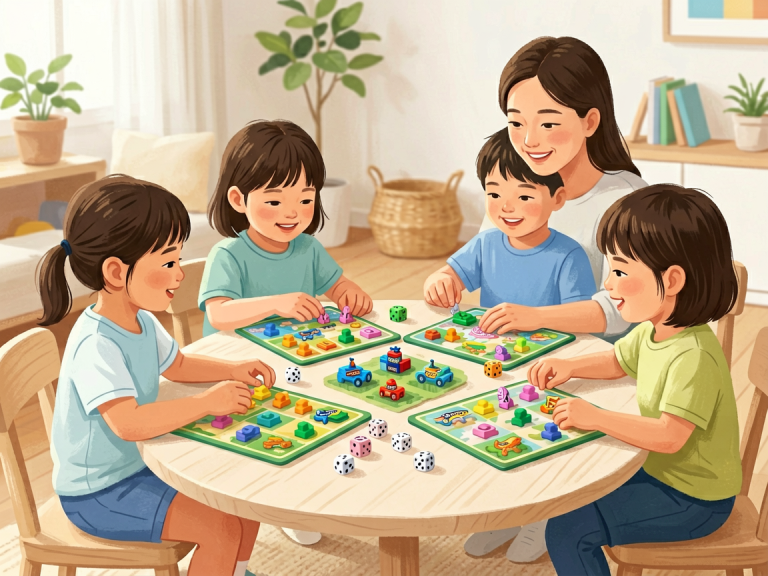
Mathematics can be a source of anxiety for many children, but when presented through games and puzzles, it becomes an enjoyable challenge. Educational STEM toys in this category include logic mazes, pattern-matching games, abacuses, and even board games that require arithmetic or geometric reasoning. For example, the game “Prime Climb” teaches multiplication and division through a colorful board, while “Rush Hour” develops logical deduction and sequential thinking. Digital games like “DragonBox” use playful characters to teach algebra concepts without explicit equations. The key is to embed mathematical thinking in contexts that feel like play—competition, collaboration, or exploration. These toys help children develop number sense, spatial visualization, and strategic planning. They also build perseverance, as children learn to try different strategies when initial attempts fail. For parents, the best approach is to play alongside the child, asking open-ended questions like “What if you try this?” or “Why do you think that happened?”
Choosing the Right STEM Toys: A Parent’s Guide to Quality, Safety, and Engagement
With thousands of products on the market, selecting the right educational STEM toys can feel overwhelming. However, by focusing on a few key criteria, parents can make informed decisions that maximize learning and minimize waste.
Age Appropriateness and Open-Endedness
First and foremost, choose a toy that matches the child’s developmental stage. A toy that is too simple will bore the child; one that is too complex will frustrate them. Look for age recommendations on the packaging, but also consider the child's individual abilities and interests. Equally important is the toy’s potential for open-ended play. The best STEM toys offer multiple ways to use them, encouraging creativity and repeated engagement. A kit that allows only one fixed outcome (like a single pre-designed robot) provides limited learning compared to a set of modular parts that can be recombined infinitely. Open-ended toys also grow with the child—a magnetic tile set used by a toddler for stacking can later be used by an eight-year-old to build complex geometric structures.
Screen Balance and Hands-On Experience
In today’s digital age, many STEM toys come with companion apps or online platforms. While these can enhance learning, it is crucial to maintain a balance. The primary benefit of physical toys is the tactile, kinesthetic experience—the feeling of snapping pieces together, the weight of a block, the sound of gears meshing. These sensory inputs are essential for brain development and cannot be replicated by a touchscreen. Therefore, parents should prioritize toys that have a substantial physical component, with digital elements used as supplements rather than replacements. For example, a robot that is programmed via a tablet but then moves in the real world strikes an excellent balance. Additionally, limit screen time to recommended durations and ensure that the digital content is ad-free and educationally sound.
Quality, Durability, and Inclusivity
STEM toys should withstand enthusiastic use. Cheap plastic parts that break easily will only lead to frustration. Invest in well-reviewed brands that use non-toxic, BPA-free materials and have a reputation for durability. Also consider the toy’s inclusivity. Look for kits that feature diverse characters or scenarios, and that avoid gender stereotypes. Research shows that children of all genders benefit equally from STEM play, and the messaging of the toy can influence their sense of belonging. Finally, consider the toy’s potential for collaborative play. Many STEM concepts are best learned in pairs or small groups, as children discuss strategies, share ideas, and learn from each other. Board games, building challenges, and robotics competitions are excellent for fostering social skills alongside STEM learning.
The Long-Term Impact: Beyond Academic Skills
The benefits of educational STEM toys extend far beyond improved grades in math or science. These toys cultivate a mindset that is invaluable in the 21st century: adaptability, curiosity, and a willingness to experiment. Children who grow up playing with STEM toys are more likely to pursue STEM education and careers, but more importantly, they develop transferable skills that apply to any field. They learn to break complex problems into manageable steps; they become comfortable with ambiguity and failure; they gain confidence in their ability to learn new technologies. In an age where automation and artificial intelligence are reshaping industries, these human skills—creativity, critical thinking, collaboration—are precisely what will set future generations apart. Moreover, STEM play can strengthen the parent-child bond. When a parent sits down to build a circuit or solve a puzzle with their child, they are not just teaching—they are modeling curiosity, patience, and the joy of discovery. This shared experience creates positive associations with learning that can last a lifetime.
Conclusion: Invest in Play, Invest in the Future
Educational STEM toys are far more than clever marketing gimmicks—they are profoundly effective learning tools that transform play into a foundation for lifelong growth. By engaging children in hands-on, exploratory activities, these toys make abstract concepts concrete, demystify technology, and foster essential problem-solving abilities. Whether it is a toddler stacking blocks, a seven-year-old programming a robot, or a teenager building a microcontroller-based weather station, each child is building knowledge, confidence, and a sense of agency. As parents and educators, our role is not to force learning but to provide the right tools and environment. By thoughtfully selecting age-appropriate, open-ended, high-quality STEM toys, we give children the gift of discovery. The result is not just better test scores, but more curious, resilient, and innovative human beings. So the next time you watch a child deeply absorbed in building, coding, or experimenting, remember: they are not just playing—they are shaping the future. And that future starts with a single block, a single line of code, and a single spark of wonder.