How Many Toys Should a Child Have? What the Research Says
The short answer
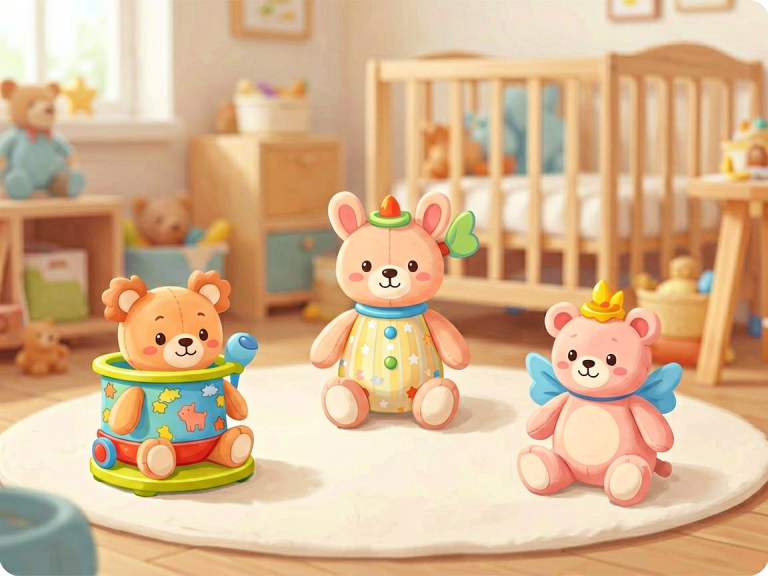
Most children do better with four to twelve toys within reach at any one time, and the rest stored away and rotated. The exact number matters less than the ratio: if a child can see everything they own at once, they will usually play with none of it for long.
That is far below what most families actually have. In a survey of 2,000 American parents commissioned by the Toy Industry Association, the average household owned 71 toys for children aged 2 to 12. One in five households had more than 100. One in ten had more than 200.
So this is not a question about whether you are spoiling your child. It is a question about what is actually in the room while they play.
What the research actually shows
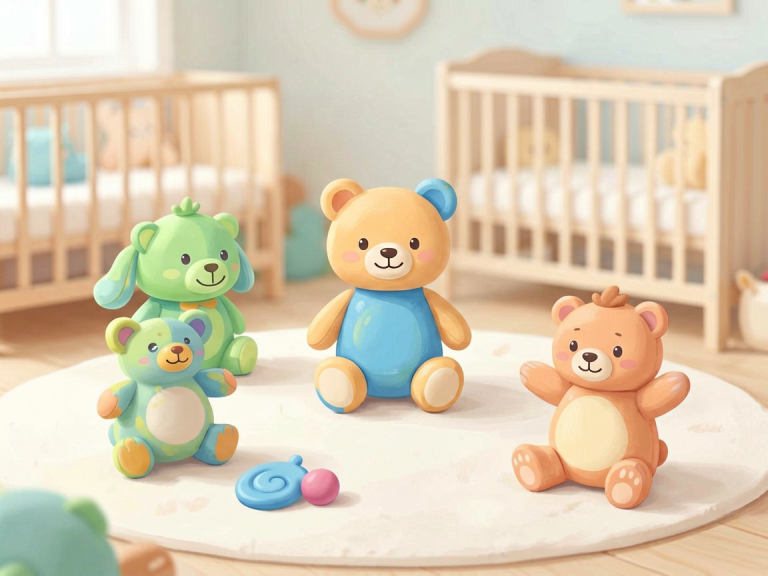
The most useful study on this is small but unusually direct. Researchers at the University of Toledo put toddlers in a room with either 4 toys or 16 toys and watched what happened. With four toys, the children played with each one longer and in more different ways. With sixteen, they moved between toys more often and spent less time exploring any single one.
The difference is not about the toys. It is about attention. A toddler’s job is to go deep on one thing — to turn it over, bang it, try it a different way, and find out what it does. A pile of sixteen interrupts that job every few seconds, because there is always something more interesting in peripheral vision.
There is a common claim that the four-versus-sixteen study proves “four toys is the ideal number”. It does not. It shows that sixteen is worse than four for toddlers. Nobody has established an optimum, and the number will be different for a two-year-old and a seven-year-old.
Why more toys can mean less play
Three things go wrong when the number gets too high, and none of them are about the child’s character.
The choice itself costs something. Deciding what to play with is a small executive-function task. Young children are still building that skill, so a large choice set uses up the mental effort that should have gone into the play.
Shallow play looks like busy play. A child moving quickly between toys looks engaged. In practice they are sampling rather than building — picking something up, confirming it is what they thought, putting it down. The deep, repetitive, slightly obsessive play that actually builds skills needs a toy to stay interesting for twenty minutes.
Nothing feels special. When a toy is one of seventy, it does not get the care that a toy gets when it is one of eight. This is also why the toys children love most are usually the ones they asked for and waited for, not the ones that arrived in a batch.
How many is right, by age
These are working numbers, not rules. The lower end suits children who play deeply; the upper end suits children with siblings or a wide age spread.
| Age | Toys out at once | What that looks like |
|---|---|---|
| 0–12 months | 3–5 | A few sensory items, one or two for tummy time, a soft book. Babies this age cannot manage more. |
| 1–2 years | 4–6 | One thing to stack, one to push, one to put things into, one soft comfort toy, one book. |
| 3–4 years | 6–10 | Add pretend play and one construction set. This is where most homes have the biggest overshoot. |
| 5–6 years | 8–12 | Construction, drawing materials, one game, one pretend set, plus whatever is currently obsessing them. |
| 7–8 years | 10–15 | Older children can handle more, and their interests narrow. Keep the current project out; store the rest. |
Notice how much lower these numbers are than 71. Almost every family reading this owns several times what is on the list. That is fine — the goal is not to own less, it is to have less out.
“But my child has 400 LEGO pieces — is that one toy?”
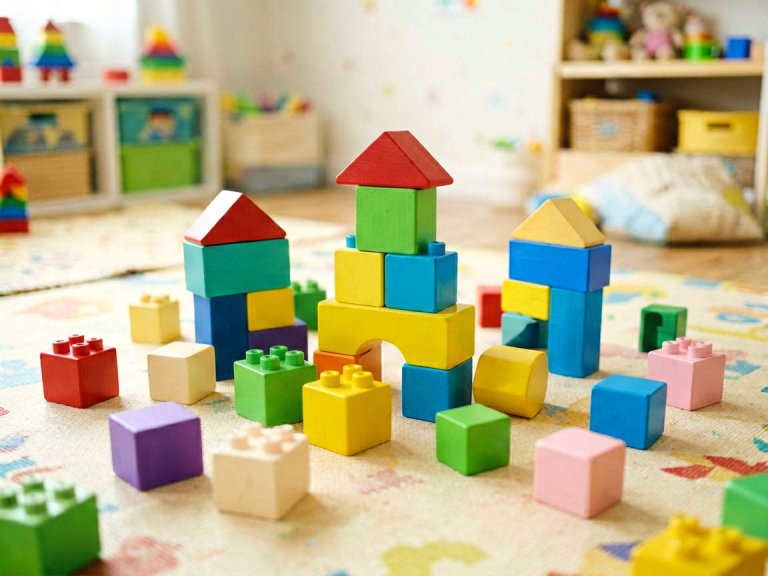
Yes, and this is where counting by object goes wrong. A building set is one play system, not four hundred toys. The same applies to a train set, a dollhouse with furniture, a marble run, or a box of magnetic tiles.
A more useful way to count is by play pattern. How many different kinds of play can your child start without leaving the room? If the answer is stacking, pretending, drawing, building, and a board game, that is five — regardless of how many individual pieces are involved.
That is also why the “71 toys” figure sounds worse than it is. Many of those 71 items belong to a handful of sets.
How to get down to a workable number
You do not need to throw anything away. The mechanism that works is rotation, and it takes about twenty minutes a month.
- Take everything out of the room and put it in one place. All of it. This is the only step that feels bad.
- Put back six to ten things, chosen for the play patterns your child currently uses — not for what they might grow into.
- Box the rest by type, not by child. A box of construction, a box of pretend, a box of games, a box of art.
- Swap one box every two to four weeks. When a box comes back out it is genuinely new, because it has been gone long enough to be forgotten.
- Retire the broken and the outgrown as you go. A toy with a missing piece is not a toy, it is clutter that teaches a child that sets do not stay whole.
What children notice is not the absence of toys. They notice that the thing in front of them is more interesting than it was last month. If you want the detailed version of this process, this toy rotation guide walks through the schedule, and this guide to managing toy storage covers what to put it all in.
When fewer toys is not the answer
There are honest exceptions, and it is worth naming them because “fewer toys” has become its own kind of advice-column cliché.
If your child is in a phase of intensive building — a marble run phase, a LEGO phase — they need volume. A hundred pieces is not too many for a child designing a track; it is the minimum. Store the other categories away instead.
If there are siblings close in age, the visible count will be higher simply because two children are playing. Judge the number per child, not per room.
If a child has a disability or developmental delay, the access question matters more than the count. Toys that are reachable and usable without help are worth keeping out even if it pushes the number up.
If the toys are not the problem, do not fix the toys. A child who will not play alone usually needs a starting point and a present adult more than they need a smaller shelf. The number of toys is a lever, not a cure.
Questions parents ask
Is 100 toys too many for one child?
Not if most of them are stored. It is too many if all 100 are visible while the child is trying to play. The research is about what is in the environment during play, not about what the family owns.
Does this apply to babies?
Even more so, and for a different reason: babies cannot manage choice at all. A four-month-old with five toys in reach is not deciding between them, they are just noticing what is there. Three to five items is plenty and reduces the mess you are managing.
My child has a huge extended family. How do I handle gifts?
Ask for consumables (art supplies, bubbles, bath colours), experiences, or contributions to one bigger thing. If that feels rude, the practical alternative is a “one in, one out” rule applied quietly after the giver has gone home. Children do not usually notice, and the giver is not usually counting.
Will taking toys away make my child upset?
For a day, possibly. What most parents report is the opposite of what they expect: the child plays longer with what is left, and the room is calmer. The toys that were stored are not gone, which matters — the child can still ask for one, and getting it back is a small event rather than a loss.
Does this mean my child will be behind?
No. There is no evidence that owning more toys improves outcomes, and the developmental benefits people attribute to toys come from how children play with them, not how many they have. A child with six toys and an adult who talks to them will do better than a child with sixty and a quiet room.
Bottom line
Put out six to ten things. Box the rest by category. Swap a box every few weeks. Keep the building sets whole and the broken things out. The number 71 is what most families have; the number that supports good play is closer to eight. The gap between those two numbers is not a parenting failure — it is just a storage decision you have not made yet.
If the clutter is the part that overwhelms you rather than the toy count, this decluttering guide starts with the room rather than the toys.